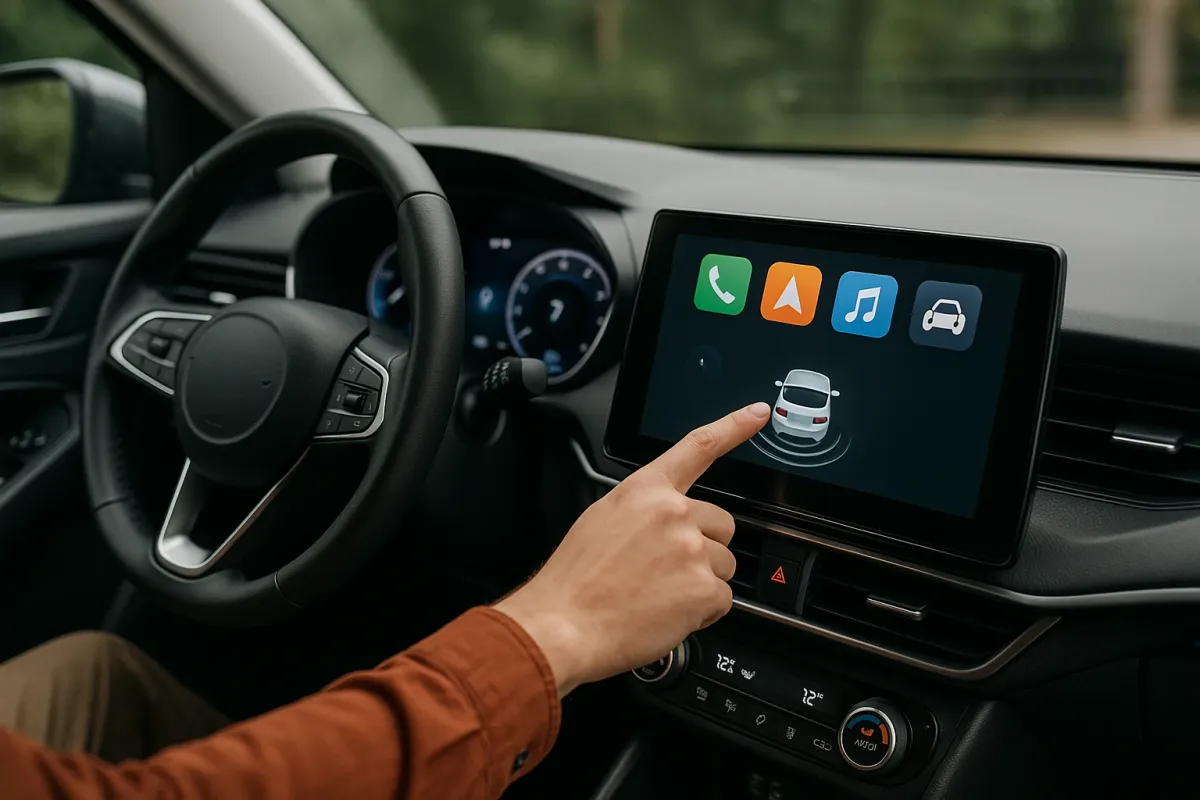
This guide walks through five timely, tech-driven habits you can start using today. They’re practical, don’t require being a “car nerd,” and are perfect for sharing with friends who also aren’t using half the features they paid for.
Turn Your Phone Into A Real-Time Car Health Monitor
Most newer cars quietly track a ton of data long before they ever illuminate a “check engine” light. You can tap into a lot of this right now with a Bluetooth OBD-II scanner and an app on your phone.
Plug a small OBD-II dongle into the diagnostic port (usually under the steering column) and pair it with a reputable app (OBD Fusion, Car Scanner, or Torque Pro are popular, affordable choices). You’ll see live engine temps, battery voltage, misfire counts, fuel trims, and more. Set alerts in the app so you get warned if your battery is getting weak, your coolant runs hotter than normal, or your catalytic converter efficiency drops—often weeks or months before anything obvious breaks. This is especially valuable for used cars and high-mileage commuters: catching a weak battery or failing thermostat early is way cheaper than dealing with a no-start or an overheated engine on the side of the road. Screenshot key data after oil changes or repairs so you have a “healthy baseline” to compare against later.
Use Built-In Driver Profiles To Slash Stress (And Arguments)
Driver profiles used to be a luxury-car thing; now they’re common in mainstream models and EVs. Most owners only use them for seat memory, but they can control much more if you take five minutes to set them up properly.
Create a separate profile for each regular driver and dig into the settings: steering weight, drive mode (eco/normal/sport), mirror positions, HUD height and brightness, radio presets, driver-assist sensitivity, and even ambient lighting on some models. Modern vehicles often link these profiles to individual keys or to your phone, so the car automatically adjusts as soon as you unlock it. If you share a car, this resolves the constant “who messed up my seat/mirrors?” fight and makes every drive feel familiar and predictable. For EV owners, go further and set profile-specific climate preferences and charging limits (for example, cap daily charging at 80% to extend battery life, but allow 100% on your “road trip” profile).
Make ADAS Work For You Instead Of Fighting It
Advanced driver-assistance systems (ADAS) are everywhere now—lane-keeping assist, adaptive cruise control, traffic sign recognition, blind-spot monitoring, auto emergency braking. Many drivers either leave these fully off because they’re annoying, or fully on by default without tailoring them. Both approaches waste what the tech can do.
Dive into your car’s driver-assistance menu and customize each system. Reduce lane-keep steering intensity if it feels “tuggy,” but leave lane-departure warning sounds active. Adjust following distance on adaptive cruise so it matches your comfort level in city versus highway traffic. Turn off overly chatty alerts (like steering-wheel vibration plus beeps plus cluster messages) and keep only what you actually respond to. On many late-model vehicles you can also set these preferences as default so they don’t reset every time you start the car. The result: assistance that actually assists, rather than tech you constantly battle or ignore—especially helpful for long commutes or nighttime highway driving.
Treat Your Car’s Camera System Like A Safety Multi-Tool
As backup cameras became standard and 360° camera systems trickled down from luxury models to compact SUVs, most people started using them only for tight parking. But a modern camera suite can be a broader safety and convenience tool if you intentionally build habits around it.
First, learn every view your car supports: wide-angle rear, top-down (bird’s-eye), curb-side, trailer hitch zoom, or front camera for nose-out parking. Use the front or surround view when creeping out of alleys, parking-garage ramps, or blind driveways with pedestrians and cyclists. In tight urban or apartment parking, switch to the side-camera view to avoid scraping expensive wheels or side skirts. If your vehicle supports “camera cleaning” jets or heated lenses, keep those activated in winter and on rainy days; camera-based safety systems (like cross-traffic alerts) are only as good as their visibility. Finally, some brands now allow you to save camera snapshots or short clips—use these for documenting minor parking-lot incidents or curb rash before turning in a lease.
Automate Your Battery And Tire Care With Built-In Alerts
Two things that quietly wreck reliability and fuel economy are low tire pressure and a weak battery. Newer vehicles already watch both for you, but many owners treat warnings as “background noise” instead of making them part of a preventive routine.
Your tire-pressure monitoring system (TPMS) isn’t just about flats. Low pressure by just 5–10 psi can hurt range (in EVs) and fuel economy, and it affects handling and braking. Check your TPMS screen monthly, not just when the light comes on. Record the “good” numbers on a note or in your phone when tires are cold and properly inflated, so you know what normal looks like. For EVs and some newer ICE cars, the main screen or app will show 4-tire pressures and sometimes even temperature; use this info before long trips to top off at a gas-station air pump or a portable inflator.
Battery-wise, watch for “accessory voltage” readouts in EV apps and for 12V battery status in many newer vehicles. If your car doesn’t surface that, use your OBD-II setup or a simple plug-in voltmeter for the cigarette lighter. Set a reminder in your phone to check battery voltage every couple of months, and consider replacing a borderline battery proactively before deep winter or peak summer heat. Modern cars are far more electronics-heavy than older ones—a weak battery can trigger bizarre error messages and limp modes long before it actually dies.
Conclusion
Modern auto tech isn’t just about flashy touchscreens and voice assistants; it’s a toolkit that can make your car more reliable, safer, and less stressful to live with—if you actually use it. Connect an OBD-II app so your phone becomes an early warning system, dial in driver profiles, tame your driver-assist settings, master every camera angle, and let your car quietly watch your tires and battery.
Share this with someone who just bought a new or used car and is still treating it like a 2005 model. Most of these gains are already sitting in their driveway—they just need to tap them.