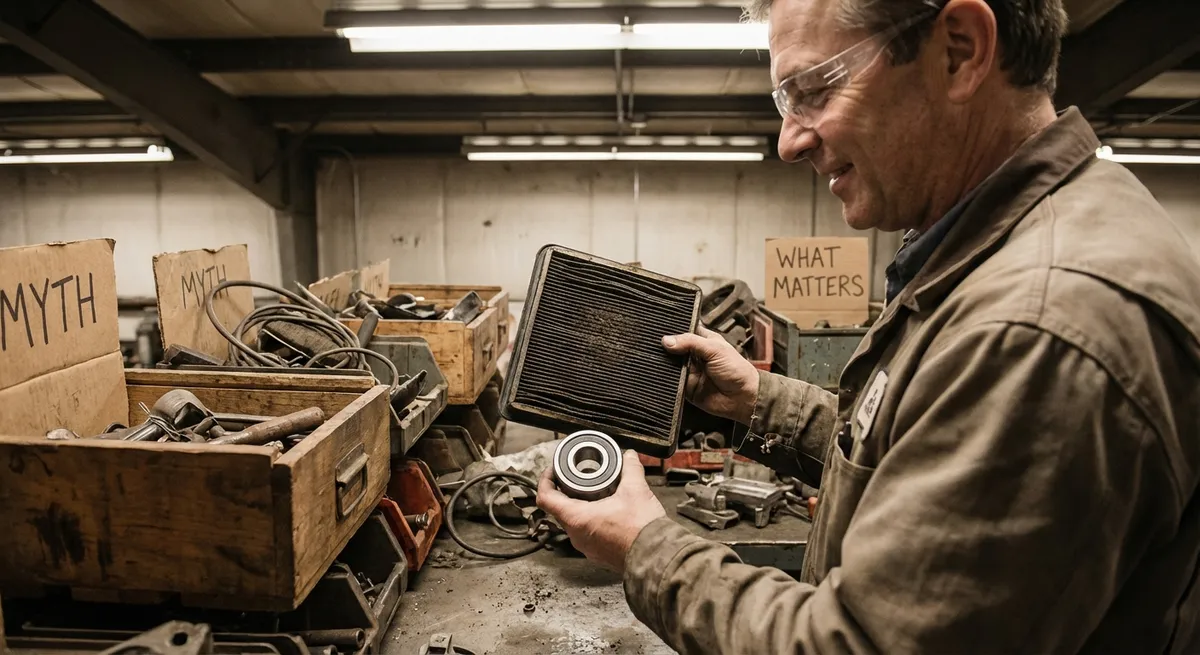
This guide cuts through the noise and gives you five practical, high-impact maintenance habits that work for daily drivers and enthusiasts alike—no fluff, no gimmicks.
Focus on Fluids That Actually Protect Expensive Components
Not all fluids are created equal. Oil changes get all the attention, but several other fluids quietly protect the most expensive systems in your car.
Transmission, brake, and coolant systems can fail in ways that are far more expensive than an engine oil issue—yet they’re often ignored because they don’t have simple dashboard reminders.
Key points to prioritize:
- Engine oil and filter: Follow your owner’s manual, not a generic mileage sticker. Modern synthetics and engines can safely go 7,500–10,000 miles in many applications, but only if that’s what the manufacturer recommends. If you tow, drive in extreme heat/cold, or do mostly short trips, use the “severe duty” interval from the manual.
- Brake fluid: Hygroscopic (absorbs moisture) fluid slowly lowers boiling point and corrodes internal components. Many manufacturers recommend brake fluid replacement every 2–3 years, regardless of mileage. This helps maintain pedal feel and protects calipers and ABS components.
- Coolant/antifreeze: Modern long-life coolants can last 5 years or more, but once corrosion inhibitors are depleted, your cooling system and head gaskets are at risk. Always match the coolant type specified by the manufacturer—mixing incompatible types can cause sludge.
- Transmission fluid: “Lifetime” fluid usually means “lifetime of the warranty,” not the lifetime of the vehicle. Check the manual for change intervals; for many automatics and DCTs, 60,000–100,000 miles is typical. For heavy towing or high-performance use, more frequent changes are cheap insurance.
- Power steering and differential fluids (where applicable): Often overlooked and rarely mentioned during quick-service visits. These are inexpensive services that protect very expensive components in the long run.
Actionable move:
Pull out your owner’s manual or manufacturer’s maintenance schedule online and make a simple fluid roadmap: what to change and at what mileage/time. Keep it in your glovebox or notes app and ignore generic one-size-fits-all recommendations.
Use Wear Patterns as a Diagnostic Tool, Not Just a Problem
Maintenance isn’t just about replacing parts on schedule—it’s about reading what the car is telling you. Wear patterns can reveal issues before they become expensive failures.
Instead of only asking, “Is this worn out?”, start asking, “Why is it wearing like this?”
Here’s how to use wear as a diagnostic clue:
- Tires
- Inner or outer edge wear: Often alignment or suspension angle issues (camber/toe).
- Center wear: Over-inflation.
- Both shoulders worn, center OK: Under-inflation.
- Cupping or scalloping: Worn shocks/struts or loose suspension components.
- Brake pads and rotors
- Uneven pad wear (one side thinner): Possible sticking caliper slide or seized piston.
- Shudder under braking: Warped rotors, improper torque on lug nuts, or worn suspension bushings.
- Grooves in rotors: Debris, worn pads down to backing plates, or cheap/incorrect friction material.
- Belts and pulleys
- Cracks or glazing on belts: Age, heat, or misaligned pulleys.
- Squealing: Incorrect belt tension, worn tensioner, or accessory bearing starting to fail.
- Spark plugs
- Oily deposits: Potential valve seal or ring issue.
- Ash or heavy carbon: Poor combustion, rich mixture, short-trip driving, or incorrect heat range.
- Uneven wear between cylinders: Possible ignition or fuel delivery imbalance.
Actionable move:
Every time you replace a wear item (tires, pads, belts, plugs), take a photo and a quick note about how it looked and why it failed. Over time, patterns emerge—like consistent outer-edge tire wear that points to an alignment you’ve been putting off.
Build a Seasonal Maintenance Rhythm Around How You Actually Drive
Most people either under-maintain their cars or overdo it in panic bursts before big trips. A better approach is to align maintenance with seasons and your real-world usage.
Think in terms of spring/fall rhythm instead of arbitrary dates:
- Before temperature extremes (spring and fall)
- Inspect tires for tread depth, cracks, and date codes; swap between winter/summer sets if you use them.
- Check battery health—cold and heat are battery killers. Many parts stores will load-test for free.
- Inspect wipers and washer system; visibility is a safety item, not a comfort feature.
- Test all exterior lights, including brake and reverse lights.
- Driving-style adjustments
- Lots of short trips? Oil may need changing sooner because it doesn’t fully warm and burn off condensation.
- Frequent mountain or towing use? Pay more attention to brakes, transmission fluid, and cooling system.
- Track days or spirited canyon drives? Brake fluid quality, pad material, and tire condition matter more than mileage.
- Climate-specific habits
- Hot, sunny climates: Protect interior and exterior—UV is a slow maintenance killer. Dash covers, sunshades, and regular washing/waxing prevent expensive trim and paint repairs.
- Cold, salted-road regions: Rinse underbody regularly and clean brake hardware to slow corrosion that leads to seized calipers and rusty lines.
Actionable move:
Set calendar reminders twice a year labeled “Pre-Heat Check” and “Pre-Cold Check”. Attach a simple checklist: tires, fluids, battery, wipers, lights. This keeps maintenance proactive without becoming overwhelming.
Tighten Up the “Human Interface” Points: What You Touch Every Drive
Enthusiasts often obsess over big mechanical systems and forget the components they actually touch daily. Maintaining these “human interface” points makes the car feel tighter, safer, and newer—often for very little money.
Areas to focus on:
- Brakes as a system, not just pads
- Periodic cleaning and lubrication of pad slides and contact points prevent noise and uneven wear.
- Fresh brake fluid maintains consistent pedal feel.
- Quality pads matched to your use (daily, towing, performance) are more important than the cheapest option.
- Steering and suspension feel
- Replace worn bushings, ball joints, and tie rod ends proactively; looseness can creep in so slowly you stop noticing it.
- Good quality struts/shocks dramatically affect control, even if the car “still passes inspection.”
- Shifter and clutch (manual) or selector (automatic)
- Worn bushings or stretched cables can make a good transmission feel awful.
- Clutch hydraulics (master and slave cylinder) and proper bleeding keep the engagement point consistent.
- Pedals and driver controls
- Sticking throttle pedal or binding pivot points are both annoying and dangerous—keep lube where appropriate and keep floor mats correctly anchored.
- Replacing worn pedal covers or grips is cheap but improves control, especially in wet conditions.
Actionable move:
Once a year, take the car on a familiar route and deliberately evaluate how it feels—brake bite, steering response, body control over bumps, shifter precision. Compare to how it felt when newer (or to a similar car in good shape if you can). Any vague or sloppy feeling is often a small, fixable maintenance item.
Use Data Instead of Guesswork: Baselines, Logs, and Simple Diagnostics
Modern cars generate huge amounts of data—but most owners never take advantage of it. A small amount of tracking and basic diagnostics can prevent breakdowns and help you avoid unnecessary repairs.
You don’t need a full shop to get value from simple tools and information:
- Maintain a basic maintenance log
- Record date, mileage, work performed, and any notes (noises, smells, changes in behavior).
- Use a notebook in the glovebox, a spreadsheet, or a dedicated car-maintenance app.
- This helps you spot patterns (e.g., needing alignment every year = something bent or worn).
- Use an OBD-II scanner
- Even a basic Bluetooth OBD-II dongle can read and clear codes and show live data like coolant temp, fuel trims, and sensor activity.
- When a check-engine light appears, you’ll know whether it’s a loose gas cap, a misfire, or an emissions component instead of guessing or panicking.
- Track fuel economy and range
- A sudden drop in mileage can indicate misfires, low tire pressure, dragging brakes, or sensor problems—often before a light comes on.
- Knowing your usual “miles per tank” is handy for spotting subtle changes.
- Get a baseline pre-purchase or pre-project
- Compression test, leakdown test, and fluid analysis (engine, transmission, differential) can tell you the true health of a vehicle, especially for performance builds or higher-mileage cars.
- Once you have a baseline, future tests clearly show whether things are improving or deteriorating.
Actionable move:
Buy a reputable Bluetooth OBD-II scanner and install a compatible app on your phone. Create a folder for your vehicle where you keep screenshots of codes, notes on symptoms, and maintenance records. This makes conversations with shops more efficient and reduces the chances of unnecessary part-swapping.
Conclusion
Car maintenance doesn’t have to be a mystery or a constant drain on your wallet. When you:
- Prioritize the fluids that protect high-value components
- Read wear patterns as early warnings
- Align work with your climate and driving style
- Tighten up the parts you interact with every day
- Use simple data and tools instead of guessing
…you move from reactive repairs to deliberate, informed ownership. Your car feels better, lasts longer, and surprises you less—and that’s exactly what being “auto ready” is about.
Sources
- [NHTSA: Vehicle Maintenance](https://www.nhtsa.gov/vehicle-safety/vehicle-maintenance) - U.S. government guidance on maintenance practices that affect safety and reliability
- [FTC: Auto Repair Basics](https://consumer.ftc.gov/articles/auto-repair-basics) - Federal Trade Commission overview of how to approach car repairs and maintenance smartly
- [Car Care Council: Service Intervals](https://www.carcare.org/car-care-service-schedules/) - Industry-backed recommendations on service schedules and why they matter
- [AAA: Vehicle Maintenance Inspection Guidelines](https://exchange.aaa.com/automotive/maintenance-advice/vehicle-maintenance-inspection-guide/) - AAA’s checklist and best practices for routine inspections and seasonal prep
- [Mobil: Engine Oil and Maintenance FAQs](https://www.mobil.com/en/lubricants/for-personal-vehicles/auto-care/oil-change) - Manufacturer information about oil change intervals, severe service, and fluid selection