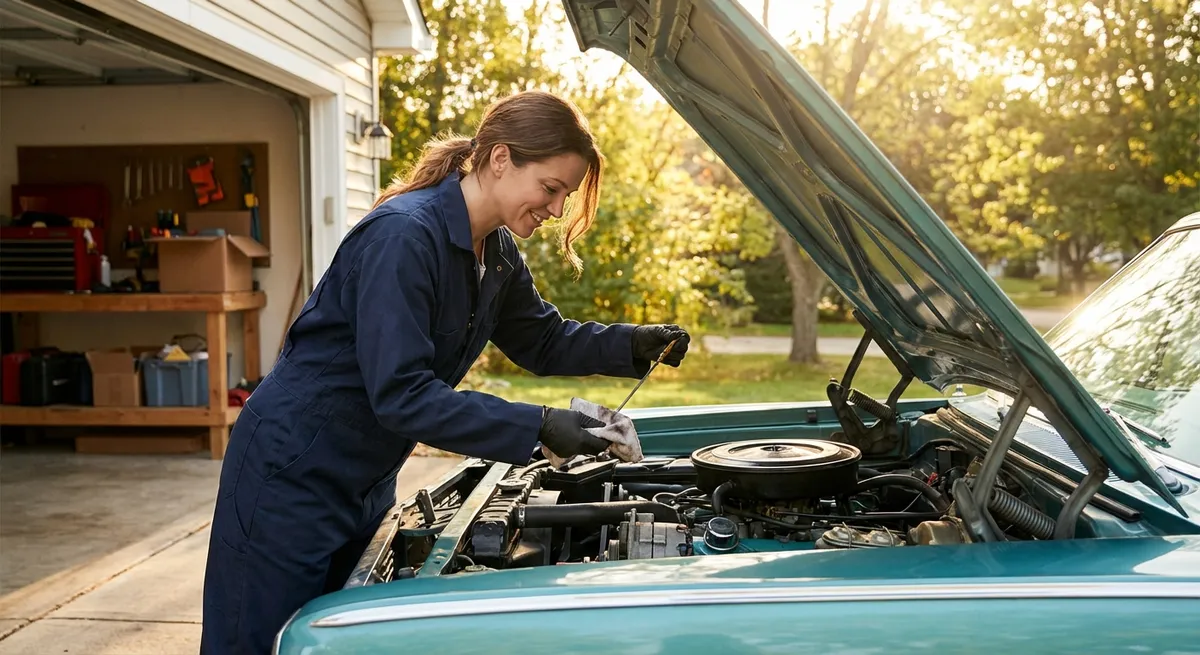
Below are five practical habits you can start using immediately. Each one is designed to be realistic for a busy owner, but detailed enough to satisfy enthusiasts who care about how their car feels on the road.
Monitoring Fluids Beyond the Oil Change Sticker
Most owners rely on the oil-change reminder and ignore the rest of the fluids, but your car is carrying an entire ecosystem of lubricants and hydraulic fluids that quietly do the heavy lifting. When one system starts to degrade, the stress often spreads to others, and repairs get expensive fast.
Engine oil is only one checkpoint. Coolant keeps the engine at a safe temperature; low or degraded coolant can lead to overheating, warped heads, or blown gaskets. Brake fluid absorbs moisture over time, which lowers its boiling point and can cause a soft pedal or reduced braking under hard use—especially noticeable if you tow, drive in mountains, or push the car on hot days. Transmission fluid and differential oil handle massive shear forces; when they’re old or contaminated, shifts get lazy or harsh and bearings wear prematurely.
Actionable steps:
- Check your owner’s manual for fluid inspection intervals; set recurring reminders on your phone or calendar.
- Visually inspect fluid levels monthly: engine oil, coolant reservoir, brake fluid, power steering (if hydraulic), and washer fluid.
- Pay attention to fluid color and smell: burnt-smelling ATF, dark coolant, or milky fluids can indicate problems.
- Replace brake fluid and coolant according to time, not just mileage—especially if you don’t drive many miles yearly.
- If you notice gradual changes in shift feel, braking, or engine temperature, check related fluids before assuming a major mechanical failure.
Tire Care That Goes Beyond Just Checking Pressure
Tires are your car’s only contact with the road, and subtle tire issues show up as vague steering, poor braking, or noisy highway driving—long before they become outright failures. Treating tire maintenance as a performance upgrade rather than a chore makes a huge difference in day-to-day driving.
Start with pressure, but go a step further. Underinflation increases rolling resistance, fuel consumption, and shoulder wear; overinflation reduces grip and makes the car skittish. Rotate on schedule to even out front/rear wear, especially on front-wheel-drive cars that both steer and pull from the front. Alignment isn’t just for track cars—misalignment causes feathered tread, off-center steering wheels, and a “wandering” highway feel. Worn or unevenly worn tires also lengthen braking distances more than many drivers realize.
Actionable steps:
- Check tire pressure at least once a month and before long trips using a reliable gauge; adjust to the values on the door jamb, not the sidewall.
- Inspect tread for uneven patterns: more wear on one edge, center wear, cupping, or feathering all signal alignment or suspension issues.
- Rotate tires at intervals recommended in your manual (often every 5,000–7,500 miles); coordinate with oil changes if that helps you remember.
- Use the treadwear indicators or a tread depth gauge to know when to replace; don’t rely on appearance alone.
- If the car pulls to one side, the steering wheel isn’t centered, or you get vibration at certain speeds, schedule alignment and balance before it worsens.
Protecting the Cooling System Before It Overheats
Modern engines run hot for efficiency, and the cooling system works harder than most owners realize. By the time the temperature gauge spikes, damage may already be in progress. Treating the cooling system as a preventive-maintenance priority is one of the most cost-effective ways to avoid catastrophic engine repairs.
Coolant isn’t just colored water; it has corrosion inhibitors and additives that break down over time. Old coolant can attack the inside of the radiator, heater core, and passages in the engine itself. Rubber hoses harden, crack, or swell from heat cycles and pressure, and plastic components like expansion tanks and radiator necks become brittle with age. Thermostats that stick and worn water pumps can cause sporadic or creeping overheating, which many drivers ignore until major damage appears.
Actionable steps:
- Check coolant level in the reservoir when the engine is cold, and scan for dried coolant streaks or crusted residue (signs of slow leaks).
- Follow the manufacturer’s coolant change interval, even if the car “seems fine”; long-life coolant still ages by time.
- During routine service, have a technician inspect radiator hoses, heater hoses, and clamps for softness, cracks, or swelling.
- Replace the thermostat and radiator cap proactively on higher-mileage vehicles or when doing deeper cooling work; both are inexpensive but critical.
- If you ever see the temp gauge rise above normal, feel loss of heater output, or smell sweet coolant odor, stop driving and investigate rather than “limping it home.”
Keeping Your Braking System Sharp, Not Just Functional
Working brakes and well-maintained brakes are not the same thing. Many owners wait until they hear grinding or feel pulsing before acting, but the braking system gives earlier, subtle signals that it needs attention. Staying ahead of these signals keeps stopping distances short and pedal feel confidence-inspiring.
Brake pads, rotors, and fluid all degrade differently. Pads wear gradually, but once they reach minimum thickness, they overheat and transfer uneven material onto the rotor surface, causing pulsation. Rotors can rust on the edges and inner faces, especially on cars that sit frequently or live in wet climates. Brake fluid absorbs moisture, which corrodes internal components and reduces effectiveness under heavy braking. Sticking caliper slide pins or seized parking brake mechanisms can cause one wheel to do more work, wearing parts unevenly and pulling the car during stops.
Actionable steps:
- Have brake pads and rotors visually inspected at every tire rotation or at least annually; ask for actual measurements, not just “looks good.”
- Replace brake fluid per the service schedule (often every 2–3 years), or sooner if you drive in mountains or tow.
- Pay attention to subtle changes: increased pedal travel, slight steering wheel shake when braking, or faint squeals.
- After driving in heavy rain or washing the car, do a few gentle stops to dry off rotors and reduce surface rust buildup.
- If you smell burning near a wheel, notice excessive brake dust on one wheel, or feel the car pulling under braking, have that corner inspected immediately.
Preserving the Cabin and Electrical Systems for Long-Term Comfort
Mechanical reliability gets most of the attention, but neglected interiors and electrical systems can make a car miserable to live with long before the engine gives up. Modern vehicles rely on dozens of sensors, modules, and connectors—all living in an environment affected by moisture, temperature swings, and driver habits.
Cabin air filters, for example, are often ignored, yet a clogged filter strains the blower motor and reduces HVAC performance. Leaks from sunroofs, door seals, or clogged cowl drains can let water into carpets and wiring harnesses, leading to strange electrical gremlins. Battery health affects everything from start reliability to the longevity of control modules; chronic low voltage can cause intermittent warning lights and hard-to-diagnose issues. Even how you use your accessories—like always running high-load devices with the engine off—can shorten the life of electrical components.
Actionable steps:
- Replace the cabin air filter on schedule (often every 12–24 months) or sooner if you drive in dusty or urban environments.
- Periodically check for damp carpets, fogged windows, or musty smells; these can signal water leaks that may damage electronics.
- Inspect and clean battery terminals once or twice a year; look for corrosion and ensure the battery is properly secured.
- Avoid long accessory use (audio, lights, chargers) with the engine off; if you do this regularly, consider a battery health test annually.
- Keep door seals and sunroof drains clean; a quick wipe of seals and occasional clearing of drain holes prevents leaks and mold that can attack wiring and connectors.
Conclusion
Well-maintained cars don’t stay that way by accident. The difference between a vehicle that feels solid at 150,000 miles and one that feels worn at 80,000 often comes down to habits like these—regular fluid checks, thoughtful tire care, proactive cooling maintenance, attentive brake inspections, and attention to the cabin and electrical systems. None of these tasks are exotic or costly on their own, but together they extend the useful life of your car, keep it safer and more enjoyable to drive, and protect your investment whether you plan to keep it or sell it later.
Adopt even two or three of these habits consistently and you’ll notice the payoff in fewer surprises, better road feel, and a car that still feels “right” long after others of the same age start to fall apart.
Sources
- [NHTSA – Tire Maintenance and Safety](https://www.nhtsa.gov/equipment/tires) – U.S. safety guidance on tire care, inflation, and inspection
- [U.S. Department of Energy – Maintaining Your Vehicle](https://www.energy.gov/energysaver/maintaining-your-vehicle) – Official tips on vehicle maintenance and efficiency
- [AAA – Essential Car Maintenance Tips](https://www.aaa.com/autorepair/articles/essential-car-maintenance-services) – Overview of key services including fluids, brakes, and tires
- [Bridgestone – Brake System Basics](https://www.bridgestonetire.com/learn/maintenance/brakes/brake-system-components-and-function/) – Explains brake components and how wear affects performance
- [University of California, Berkeley – Coolant and Antifreeze Information](https://ehs.berkeley.edu/environmental-protection/water-protection/coolant-antifreeze) – Background on coolant, corrosion, and proper handling