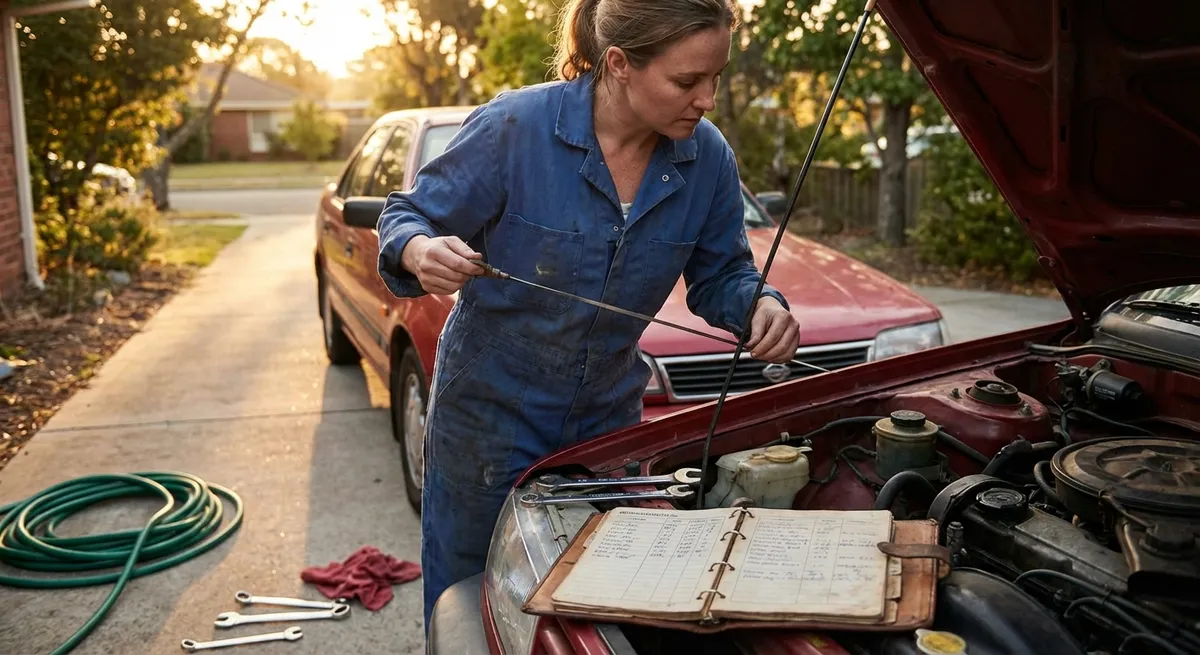
This guide focuses on practical, enthusiast-level maintenance moves you can actually do (or request) that pay off in real-world reliability, safety, and long-term value.
Build a Simple Inspection Routine Around Every Fuel Stop
You don’t need a full shop to catch problems early. Use fuel stops as your quick, repeatable inspection window. Done right, it takes two minutes and can prevent expensive failures.
While the pump is running, walk around the car and check:
- Tires: Look for bulges, cords showing, nails, or uneven wear. Uneven wear often means misalignment, bad shocks/struts, or incorrect tire pressure.
- Lights: Quickly check headlights, taillights, brake lights (use reflections in windows or ask a passenger), and turn signals. A dead brake light is a safety issue and an easy ticket.
- Glass: Scan for small chips in the windshield before they become large cracks. Many insurers cover chip repair at no cost.
- Leaks on the ground: Look where you were parked. Dark, oily spots may indicate engine oil or gear oil. Reddish or brown fluid can be transmission or power steering. Green, orange, or pink may be coolant.
Make a note in your phone when you spot something—date, mileage, and what you saw. You’ll have a mini log ready when you talk to a mechanic, which can speed up diagnostics and reduce guesswork.
Treat Tires and Alignment as a System, Not Just Rubber
Enthusiasts obsess over horsepower and mods, but tires and alignment have more impact on how your car feels day to day than almost anything else. Taking a systems approach can improve handling, reduce fuel use, and save money over the life of the car.
Actionable steps:
- Check tire pressure monthly, not just when a light comes on. Use a quality gauge and set pressures based on the driver’s door jamb label, not the sidewall max rating. Underinflation increases heat, wear, and fuel consumption; overinflation reduces grip and comfort.
- Rotate tires based on your owner’s manual. For most cars, that’s around every 5,000–7,500 miles. Cars with staggered tire sizes or directional tread may have different patterns; follow the manufacturer’s guidance.
- Do an “alignment check by feel.” If the steering wheel isn’t straight on a straight road, the car drifts left or right, or you notice edge wear on the tires, plan a professional alignment. Driving long-term with bad alignment chews through tires and can stress suspension parts.
- Listen and feel for changes. New humming, vibration at certain speeds, or a “wavy” feel may indicate uneven wear, a separated belt, or an out-of-balance wheel.
If you’re upgrading wheels or suspension, coordinate with an alignment shop that understands performance setups. A slightly more aggressive but still street-friendly alignment can sharpen handling while maintaining even wear if done correctly.
Use Fluid Condition as a Health Check, Not Just a Change Interval
Most people treat fluids as “set it and forget it” until the sticker on the windshield screams at them. A better approach is to treat fluid condition as a window into what’s happening mechanically.
Key moves:
- Oil: Check level and color monthly. Very dark oil isn’t automatically bad (modern oils disperse contaminants well), but milky appearance can signal coolant contamination, and a strong fuel smell may point to misfires or short-trip driving. Top off only with the correct grade/spec in the owner’s manual.
- Coolant: With the engine cold, check the reservoir level. A slow drop over time can be the first sign of a leak or failing component (hose, water pump, radiator). Wrong-type coolant mixing or rust-colored fluid indicates it’s time for a proper flush following manufacturer specs.
- Brake fluid: Most drivers never look at it. Dark, brown fluid often means it’s absorbed moisture, lowering boiling point and potentially corroding internal components. Many manufacturers recommend changing every 2–3 years regardless of mileage.
- Transmission fluid (if serviceable): Color and smell matter. Burnt odor or very dark fluid can indicate overheating or internal wear. Some modern transmissions are “lifetime fill,” but if towing, driving in heavy traffic, or keeping the car long-term, ask a trusted shop about appropriate service intervals.
Don’t flush or change fluids blindly based on generic shop recommendations. Always cross-check with the owner’s manual and, for older or enthusiast vehicles, reputable community or manufacturer technical notes. Over-servicing with the wrong procedures can be as harmful as neglect.
Protect Rubber and Plastic Before They Fail, Not After
Many annoying, expensive repairs start when inexpensive rubber or plastic components harden, crack, or shrink. Sun, heat, road salt, and ozone are brutal on these parts, especially in hot or coastal climates.
Preventive steps that matter:
- Under-hood rubber: Inspect belts and hoses at least twice a year. Look for cracks, glazing (shiny surfaces), swelling, or soft spots. Replace proactively if your car is older or past the recommended interval, especially before long trips.
- Weatherstripping and seals: Clean door seals and apply a rubber-safe protectant periodically. This helps prevent wind noise, water leaks, and door sticking/freezing in cold weather.
- Exterior plastic and trim: UV exposure causes fading and brittleness. Use a UV-protectant designed for automotive plastics; avoid silicone-heavy products that attract dust or leave greasy residue.
- Wiper blades: If they chatter, smear, or leave streaks even after cleaning the windshield, replace them. They’re cheap insurance against scratched glass and poor visibility.
For enthusiasts who store cars, consider:
- Parking away from direct sun when possible.
- Using a quality, breathable car cover (and only on a clean car) to prevent trapped dirt from scratching paint.
- Avoiding long-term parking on grass or dirt, which traps moisture against underbody components.
These small protections extend the life of parts that aren’t glamorous but are expensive and annoying once they fail.
Align Your Maintenance Plan With How You Actually Drive
The “normal vs. severe service” tables in owner’s manuals are widely ignored, but they’re one of the most underrated tools for realistic maintenance. Many drivers unknowingly operate in “severe” conditions while following “normal” intervals.
Take an honest look at your usage:
- Short trips and city driving: Lots of 5–10 minute journeys don’t fully warm up oil and exhaust components, allowing moisture and fuel dilution to build up. You may benefit from shorter oil change intervals than the maximum advertised.
- Stop-and-go traffic or rideshare/delivery work: Brakes, transmission, and cooling systems work much harder. Pay extra attention to brake pad thickness, rotor condition, and cooling-system health.
- Towing or roof loads: Hauling trailers, bikes, or cargo boxes adds load and aerodynamic drag. Monitor transmission fluid, coolant, and tire pressures more closely, especially on long grades.
- Track days or spirited mountain driving: If you enjoy your car aggressively, treat it like a sport device—upgraded brake fluid, more frequent pad and tire inspections, and post-event checks for heat damage or loose components.
Instead of guessing, create a simple maintenance roadmap in your notes app:
- List key items (oil, air filter, cabin filter, brake fluid, coolant, transmission fluid, differential fluid if applicable).
- Add intervals from your owner’s manual.
- Adjust based on how and where you drive.
- Log what you actually do with date, mileage, and brand/spec of parts and fluids.
This kind of discipline doesn’t just keep the car healthy—it also builds a maintenance record that impresses future buyers and can support higher resale value or faster private-party sales.
Conclusion
Maintenance that really pays off isn’t flashy—it’s consistent, thoughtful, and tailored to how you use your car. Quick inspections at fuel stops, treating tires and alignment as a handling and safety system, watching fluid condition instead of blindly chasing coupons, protecting rubber and plastics, and aligning your maintenance plan with your real driving all work together.
None of these steps require a full shop or race-team budget, but they do require attention. If you apply them over years, you’re not just avoiding breakdowns—you’re preserving a car that continues to feel tight, safe, and rewarding long after new models hit the showroom.
Sources
- [NHTSA – Vehicle Maintenance and Safety](https://www.nhtsa.gov/vehicle-safety/vehicle-maintenance) - U.S. government guidance on basic vehicle checks and why they matter for safety
- [Car Care Council – Car Care Guide](https://www.carcare.org/car-care-guide/) - Industry-supported maintenance recommendations and interval explanations
- [Consumer Reports – Tire Buying & Care Guide](https://www.consumerreports.org/cars/tires/buying-guide/) - Detailed insights on tire care, rotation, and how maintenance affects safety and performance
- [AAA – Vehicle Maintenance Checklist](https://exchange.aaa.com/automotive/automotive-maintenance/vehicle-maintenance-safety-checklist/) - Practical maintenance checklist focused on real-world driving conditions
- [EPA – Fuel Economy and Maintenance Tips](https://www.fueleconomy.gov/feg/maintain.jsp) - How proper maintenance and tire care improve fuel economy and reduce emissions