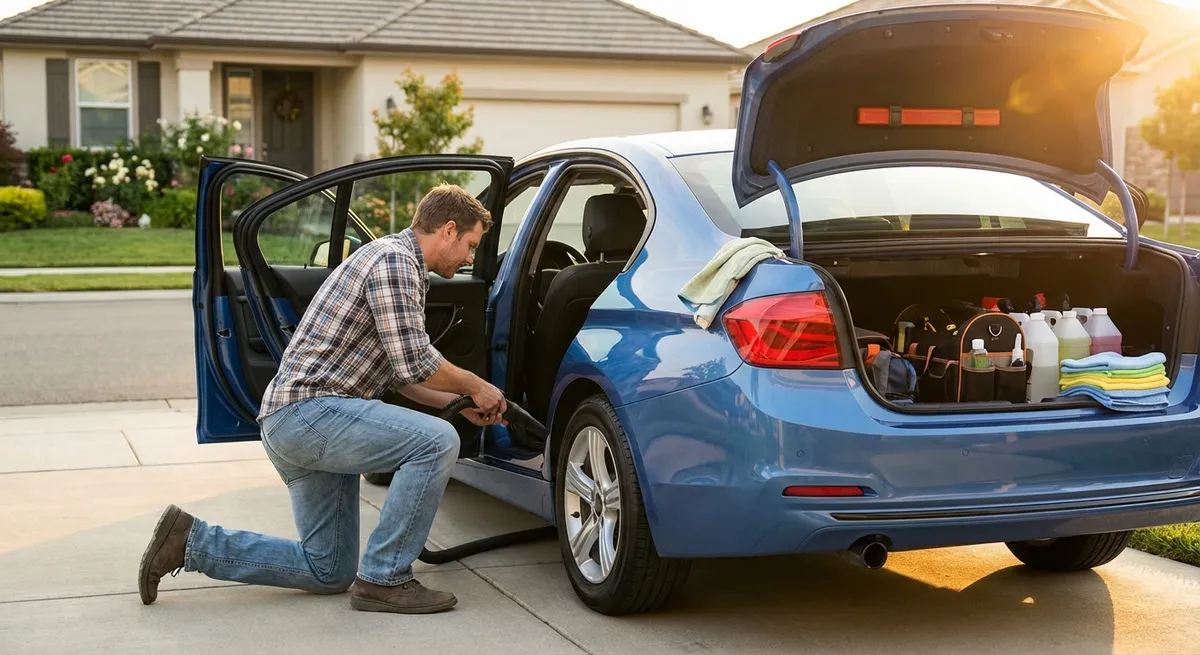
This guide focuses on practical, repeatable moves—things you can actually build into your routine to keep your car driving closer to how it felt when you first got it.
Build a Simple Seasonal Inspection Routine
Instead of waiting for something to break, treat your car like you would a home: do regular walk‑around checks a few times a year. This doesn’t require a mechanic—just a bit of attention.
Do this at the start of each new season:
- Walk around the car in daylight. Look for uneven tire wear, sidewall bubbles, new scratches or rust spots starting around wheel wells and door edges. Catching rust early makes it easy to stop.
- Open the hood. Check for cracked, swollen, or oil‑soaked rubber hoses, frayed belts, or green/white powder on battery terminals (a sign of corrosion).
- Check fluid levels. Engine oil (color and level), coolant reservoir markings, brake fluid, and windshield washer fluid. If any fluid is dropping noticeably between services, that’s a red flag.
- Operate everything electrical. Headlights, high beams, turn signals, brake lights (use a wall or reflective surface), hazard lights, wipers, and rear defroster.
- Listen for new noises. On your next drive, pay attention: new squeaks over bumps, clicks while turning, or whines under acceleration usually get louder with time—early diagnosis is cheaper.
This seasonal ritual takes 10–15 minutes, helps you notice issues before they escalate, and makes conversations with your mechanic clearer because you’ll have specific symptoms to report.
Treat Fluids as Components, Not Consumables
Many drivers think of fluids as something that just gets “topped off.” But in modern cars, fluids are engineered parts of the system—especially oil, coolant, and transmission fluid.
Here’s how to treat them like critical components:
- Engine oil: Follow your owner’s manual intervals, not just the dash reminder. Short, frequent trips (less than 10–15 minutes) are considered “severe service” and may justify shorter intervals because moisture and fuel dilution don’t fully burn off.
- Coolant: It doesn’t just prevent freezing; it contains corrosion inhibitors that break down with time. Old coolant can internally rust your engine and radiator. Stick to the time/mileage interval in the manual, even if the level looks fine.
- Brake fluid: It absorbs moisture over time, which lowers its boiling point and can cause a soft pedal or fade under hard braking. Many manufacturers recommend changing it roughly every 2–3 years, regardless of mileage.
- Transmission fluid: “Lifetime” fluid usually means “lifetime of the warranty,” not the lifetime of the car. If you plan to keep your car long‑term, ask a trusted mechanic about preventive drain-and-fill services based on your usage.
- Power steering/fluid for hydraulic systems: On older or non‑electric steering systems, neglected fluid can lead to noise, stiffness, and pump wear.
When in doubt, use the owner’s manual as your baseline, then adjust slightly conservatively if you drive in hot climates, tow, sit in heavy traffic, or mainly do short trips.
Give Tires and Alignment the Attention They Deserve
Tires quietly dictate ride comfort, noise, handling, and stopping distance—but they’re often ignored until they’re obviously worn. A few intentional habits significantly extend tire life and keep the car feeling planted and stable.
Focus on three things:
Tire Pressure (Check Monthly):
- Use a quality digital gauge and check pressure cold (before driving more than a couple of miles). - Inflate to the door jamb sticker recommendation, not the number on the tire sidewall. - Underinflated tires feel mushy, hurt fuel economy, and wear on the edges; overinflated tires ride harshly and wear in the center.
Rotation and Visual Inspection:
- Rotate tires at the interval in your manual (commonly every 5,000–7,500 miles). Rotation evens out wear between driven and non‑driven wheels. - When rotating, inspect for nails, sidewall damage, and cupping (scalloped edges), which often points to worn suspension or bad alignment.
Alignment and Suspension Health:
- If the car pulls to one side, the steering wheel isn’t centered on a straight road, or you notice rapid shoulder wear on the tires, get an alignment check. - Worn shocks/struts can make the car bounce, nose‑dive under braking, or feel floaty at highway speeds, even if the tires themselves are fine.
Well‑maintained tires and alignment don’t just improve safety; they restore that precise, confident feel that makes a car satisfying to drive.
Protect Rubber, Plastics, and Weather Seals Before They Fail
Interior and exterior materials age slowly, then fail suddenly—doors start creaking, windows whistle, dashboards fade, and trim cracks. A small amount of prevention keeps the car quieter and more comfortable over time.
Build these into your wash/clean routine:
- Weatherstripping and door seals:
- Wipe seals with a damp microfiber towel to remove dirt and grit.
- Treat them occasionally with a rubber conditioner or silicone-based protectant approved for weather seals. This keeps them supple, reduces wind noise, and helps prevent doors from sticking in winter.
- Plastic and vinyl surfaces:
- Use a UV-protectant interior cleaner (not household products) on dashboards, door panels, and trim to prevent cracking and fading.
- Avoid overly glossy “wet look” dressings that can glare in sunlight or feel greasy.
- Exterior plastics and trim:
- Apply a plastic-safe UV protectant to wiper cowl panels, mirror caps, and unpainted bumpers. Sun-exposed plastics degrade quickly without protection.
- Wiper blades:
- Swap them at the first sign of streaking or chattering rather than persevering through a rainy season with poor visibility. Often this is once a year in harsh climates.
- Door hinges and latches:
- Periodically lubricate door hinges, hood latch, and trunk latch with a suitable lubricant (silicone spray or white lithium where appropriate). This helps prevent annoying squeaks and stiff operation.
These small steps reduce squeaks, rattles, and water leaks—and help the cabin feel tight and well-kept, even as the car ages.
Use Maintenance Records as a Performance Tool, Not Just Paperwork
Most owners think of service records as something you show a buyer later. That’s true—but they’re even more powerful as a live “health log” for your car.
Turn your maintenance history into a tool:
- Keep a simple log:
- Whether it’s an app, spreadsheet, or a notebook in the glovebox, record date, mileage, work done, and parts/fluids used.
- Include observations: “Slight vibration at 70 mph,” “Brake pedal feels softer,” or “Using ½ quart of oil every 2,000 miles.”
- Spot patterns early:
- If the same warning light reappears or the same component needs attention repeatedly, that’s a signal to dig deeper instead of just clearing codes or replacing the same part again.
- Plan maintenance, don’t react to it:
- Use your log to forecast upcoming work based on prior intervals—brakes, coolant, spark plugs, or belts—so you’re ready financially and can combine services to save on labor.
- Communicate better with shops:
- Bringing a clear history and symptom notes to your mechanic reduces guesswork and misdiagnosis. It also shows you’re serious about maintenance, which often leads to better, more detailed explanations from good shops.
- Boost resale value with confidence:
- When you eventually sell, being able to hand over a clean, organized log reassures buyers and can justify a higher price, especially on enthusiast or higher‑mileage vehicles.
Think of your records as a dashboard for your car’s long-term performance—not just a folder you dust off when it’s time to sell.
Conclusion
Keeping a car feeling “new” isn’t about obsessing over every tiny detail; it’s about a small set of habits you repeat consistently. A seasonal inspection routine, smart fluid management, intentional tire and alignment care, basic protection of seals and trim, and a usable maintenance log all work together.
You won’t notice the payoff in a single weekend. But year after year, the car will start, ride, steer, and feel closer to how it did when you first got it—while surprise repairs and “how did it get this bad?” moments become a lot less common.
Sources
- [NHTSA – Tire Safety, Everything Rides on It](https://www.nhtsa.gov/equipment/tires) – U.S. government guidance on tire pressure, tread wear, and maintenance
- [U.S. Department of Energy – Vehicle Maintenance Improves Fuel Economy](https://www.fueleconomy.gov/feg/maintain.jsp) – How proper maintenance affects efficiency and performance
- [AAA – Car Care: A Guide to Regular Maintenance](https://exchange.aaa.com/automotive/maintenance-repair/car-care-guide/) – Broad overview of recommended service intervals and checks
- [EPA – Proper Vehicle Maintenance and the Environment](https://www.epa.gov/greenvehicles/proper-vehicle-maintenance-improves-mpg) – Why fluid care and tune‑ups matter for both longevity and emissions
- [University of California, Davis – Brake Fluid Basics](https://health.ucdavis.edu/news/headlines/ask-a-mechanic-do-i-really-need-to-change-my-brake-fluid/2022/06) – Explanation of why brake fluid needs periodic replacement