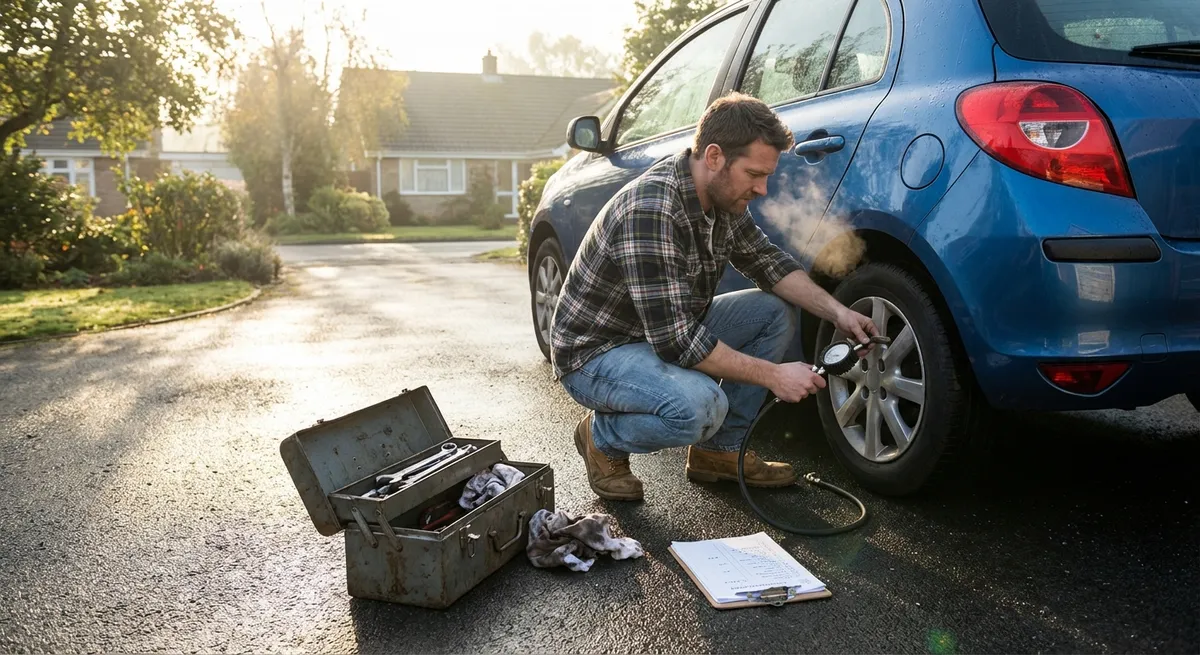
This guide breaks down a simple, practical maintenance game plan built around five actions any owner can start using immediately.
Build a Simple Maintenance Calendar (And Actually Use It)
Most owners rely on memory or dashboard lights to remind them about service, which is exactly how maintenance gets skipped. A basic schedule that you can see at a glance is far more effective.
Start by checking your owner’s manual for the factory service intervals for oil, filters, coolant, transmission fluid, brake fluid, and spark plugs. Instead of trying to remember everything, translate those into time-based reminders in your phone (for example: “Oil change – every 6 months or 5,000 miles, whichever comes first”). Create two sets of reminders: one for mileage-based items (tied to your current odometer reading) and one for time-based items (like brake fluid every 2–3 years).
Keep a simple log — a note on your phone or a dedicated page in a notebook — where you record date, mileage, and what was done. This gives you a quick snapshot of your car’s health and is valuable if you ever sell the car. Reviewing this log every couple of months helps you spot patterns, like tires wearing out quickly or oil changes stretching too far apart. Over time, this calendar becomes less of a chore and more like a playbook that keeps repairs predictable instead of surprising.
Treat Fluids Like Components, Not Afterthoughts
Fluids are often seen as “check it when there’s a problem,” but they’re critical components that protect expensive parts. Ignoring fluid condition because the car “still drives fine” is how people end up with early transmission or engine failures.
Engine oil should be changed based on your driving style, not just the manufacturer’s ideal scenario. Lots of short trips, idling in traffic, or towing? You’re in “severe duty” territory and should change oil more often than the maximum interval. Use the dipstick regularly: check oil level and color on a flat surface with the engine off. Dark oil isn’t always bad, but metallic sheen, milkiness, or burnt smell are warning signs.
Coolant, brake fluid, and transmission fluid all degrade over time and heat cycles even if the car isn’t driven heavily. Coolant prevents both overheating and internal corrosion; old coolant can attack gaskets and metal surfaces. Brake fluid absorbs moisture, which lowers its boiling point and can reduce brake performance under heavy use. Transmission fluid that’s dark or burnt can indicate overheating or internal wear. For each fluid, go by the recommended interval in your manual, then inspect condition periodically so you can act before issues show up in how the car drives.
Make Tires and Alignment Part of Your Routine, Not a Last Resort
Tires are the only contact your car has with the road, yet they’re often neglected until they’re visibly bald or noisy. A quick tire routine improves safety, handling, and even fuel economy.
Check tire pressure at least once a month and before long trips, using a quality gauge. Inflate to the pressures listed on the driver door jamb sticker, not the maximum written on the tire. Under-inflation leads to sluggish steering, heat buildup, and faster wear; over-inflation reduces grip and comfort. While checking pressure, inspect tread across the whole width of each tire. If the inside or outside edges are wearing faster than the center, you may have an alignment or suspension issue developing.
Regular rotation (usually every 5,000–7,500 miles) helps tires wear evenly. Many owners skip this and then blame the tires when they get noisy or unstable. Have alignment checked if you notice the steering wheel off-center, pulling to one side, or uneven tread wear. A good alignment not only makes the car track straight but also helps the suspension components last longer because they’re not fighting against incorrect geometry on every drive.
Listen, Smell, and Feel: Using Your Senses as early warning tools
Cars usually “tell” you something is wrong before parts fail—if you’re paying attention. Building a habit of noticing small changes can save you from major repairs and breakdowns.
Unusual sounds are often your first clue. A high-pitched squeal when you brake can mean worn pads or a wear indicator touching the rotor. A rhythmic thump that changes with speed could point to a tire or wheel issue. Metallic rattles over bumps may indicate loose heat shields or worn suspension joints. Don’t drown out new noises with louder music; instead, try to reproduce them and note conditions (speed, temperature, braking, turning). This kind of detail is extremely helpful if you take the car to a professional.
Smells are just as important. A sweet, syrupy smell might indicate a coolant leak, often before you see drips. A burning smell after highway driving could be oil on hot components or a sticking brake caliper. Inside the cabin, a musty odor when you use A/C or heat may suggest a dirty cabin air filter or moisture in the ducts. Vibrations through the steering wheel at certain speeds often point to tire balance or suspension issues, while vibrations under acceleration might indicate drivetrain or engine mount concerns. Training yourself to notice and record these clues turns you into an early-warning system for your own car.
Adopt a “Front-of-Car” Check Every Time You Fuel Up
Fuel stops are a built-in maintenance checkpoint that most people waste. Spending two extra minutes at the pump can catch problems weeks or months earlier than you otherwise would.
While the tank fills, pop the hood. Look for anything clearly out of place: loose caps, frayed belts, cracked hoses, or obvious leaks. Check the windshield washer fluid level and top up if needed — clear visibility is a safety item, not a luxury. Take a quick look at the coolant reservoir (never open the cap when hot) to confirm level is between the marks. If your engine has an accessible dipstick, this is an ideal time to check oil level and appearance.
Walk around the car once with intent. Confirm all exterior lights are working: headlights, turn signals, brake lights (you can use reflections in station windows or ask a passenger to help). Inspect the lower front of the car for fresh scrapes or damage from parking curbs, which can affect the bumper, undertray, or even alignment. Look at the inside edges of the tires — an area people rarely see — for cuts, bulges, or cords showing. This simple fuel-stop routine makes small issues visible long before they become major failures.
Conclusion
Maintenance doesn’t have to be complicated or expensive, but it does have to be consistent. A simple calendar, attention to fluids, proactive tire and alignment care, awareness of what your car is telling you, and a quick check at every fuel stop together create a strong baseline that most owners never reach. For enthusiasts, this approach keeps the car feeling sharp; for daily drivers, it keeps repairs predictable and safety high.
If you build these five actions into your normal driving life, your car stops being a mystery box and becomes something you actually understand and manage. That’s the difference between reacting to breakdowns and running a road-ready car on your terms.
Sources
- [NHTSA – Vehicle Maintenance](https://www.nhtsa.gov/sites/nhtsa.gov/files/documents/811075.pdf) - U.S. National Highway Traffic Safety Administration guide on basic vehicle maintenance and safety checks
- [Consumer Reports – Car Maintenance and Repair Guide](https://www.consumerreports.org/cars/car-repair-maintenance-guide/) - Practical overview of routine maintenance and what owners should prioritize
- [AAA – Ongoing Vehicle Maintenance](https://exchange.aaa.com/automotive/repair-maintenance/ongoing-vehicle-maintenance/) - Recommendations from AAA on service intervals and key checks for reliability
- [Bridgestone – Tire Maintenance Tips](https://www.bridgestonetire.com/maintenance/) - Detailed information on tire pressure, rotation, alignment, and wear patterns
- [EPA – Fuel Economy Guide: Keeping Your Car in Shape](https://www.fueleconomy.gov/feg/maintain.jsp) - Explains how proper maintenance affects efficiency, performance, and emissions