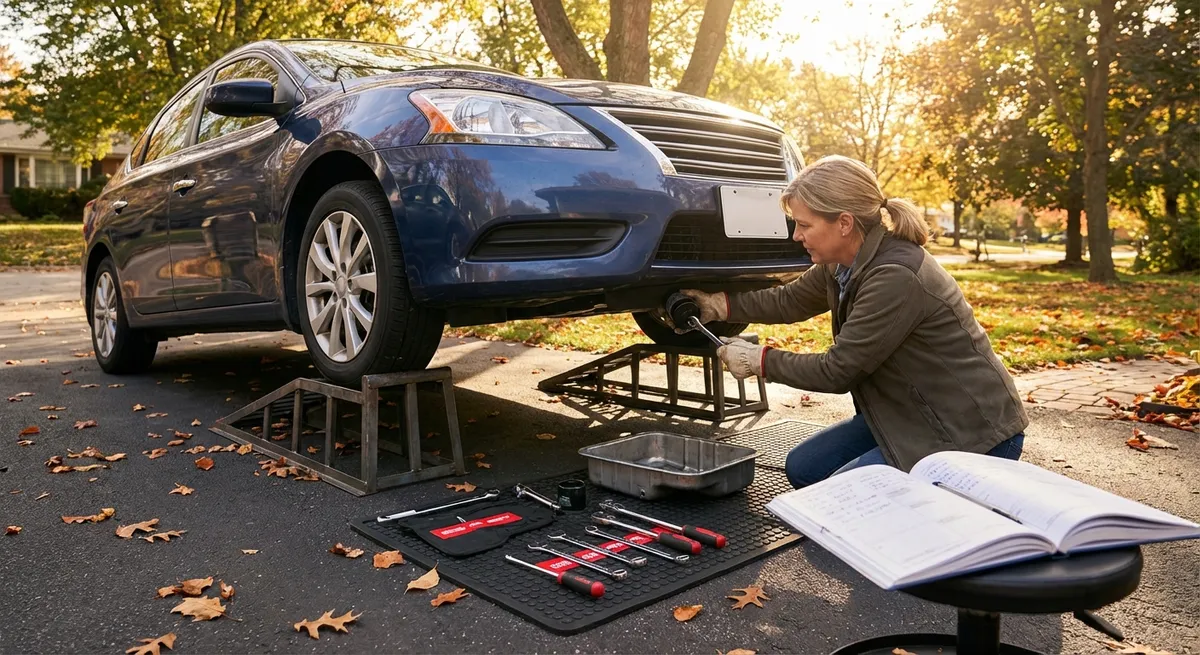
Below are five maintenance habits that matter more than most owners realize, with specific, actionable ways to put them to work on your own car.
Build a Realistic Service Timeline (Not Just “Whenever I Remember”)
Most people either over-maintain (wasting money) or under-maintain (inviting big failures). The better approach is a simple, written schedule that fits your car and your driving—not a generic rule.
Start with the maintenance section of your owner’s manual or the official schedule on the manufacturer’s website. Highlight the “severe duty” column if you do short trips, lots of stop‑and‑go, tow, or drive in very hot/cold climates; many of us unintentionally qualify as severe duty. From there, translate mileage and time intervals into calendar reminders: “oil change every 6 months or 5,000 miles,” “brake fluid every 3 years,” “coolant at 100,000 miles or 10 years.”
Don’t try to track everything in your head. Use a notes app, spreadsheet, or a dedicated car maintenance app to log dates, mileage, and what was done. Include details like “synthetic 0W‑20, brand X, filter Y” or “OEM pads, rotors resurfaced.” This record is gold later—mechanics see you’re serious, and buyers trust a well-documented car. If you own multiple vehicles, color‑code each one and review their upcoming needs once a month; 10 minutes of planning can save you a surprise $1,500 repair.
Actionable Point #1: Create a written or digital maintenance log this week, add your last three services from receipts or emails, and schedule your next oil change, brake inspection, and fluid checks with specific dates or mileages.
Treat Fluids Like Components, Not Afterthoughts
Engines, transmissions, brakes, and cooling systems don’t just “wear out”—their fluids degrade first. Many big-ticket failures start with old, contaminated, or incorrect fluid quietly doing damage in the background.
Use the exact fluid types specified by the manufacturer: oil viscosity and spec (e.g., 0W‑20 API SP, Dexos, etc.), transmission fluid type, and coolant formulation. Modern automatics and CVTs are especially picky; the wrong fluid can cause shuddering, slipping, or premature wear. “Lifetime” fluids are often more marketing than engineering—many technicians recommend transmission and differential fluid changes in the 60,000–100,000 mile range even if the manual is vague, especially if you tow or drive in heat.
Brake fluid is another overlooked one. It absorbs moisture over time, lowering its boiling point and corroding internal components. Flushing it roughly every 2–3 years keeps your pedal feel consistent and protects ABS and calipers that are far more expensive than a fluid change. Coolant intervals vary widely; some long‑life coolants run 10 years/100,000 miles, but once they age out, corrosion risk climbs fast. Stick to age or mileage—whichever comes first.
Actionable Point #2: This weekend, open your owner’s manual, list every fluid with its type and change interval, and mark the next due date/mileage for engine oil, brake fluid, transmission fluid, and coolant in your maintenance log.
Use Your Eyes, Ears, and Nose on a Monthly “Driveway Inspection”
Most issues give you early warning if you’re paying attention. A 10-minute monthly inspection can catch problems while they’re cheap and simple. You don’t need a lift or a toolbox—just a mildly curious mindset.
Start with the tires: check pressures when cold using a reliable gauge, not the dashboard alone. Compare to the door-jamb sticker, not the maximum on the sidewall. Look for uneven wear (feathering, inner-edge wear, cupping) that hints at alignment, suspension, or inflation problems. While you’re down there, glance behind the wheel spokes: brake rotors should be relatively smooth and even; deep grooves or heavy rust on the face mean it’s time for a closer look.
Pop the hood with the engine cool. Check coolant level in the reservoir, brake fluid level and color (it should be clear to light amber, not dark brown), and engine oil on the dipstick—look at both level and appearance. Scan for damp spots or crusty residue around hose connections and under the engine that might indicate slow leaks. Then, during normal driving, actually listen: new rattles, grinding, whining, or rhythmic clicks that change with speed are all clues. A sweet smell from the vents can mean a coolant leak; a strong fuel smell is never “normal.”
Actionable Point #3: Set a recurring calendar reminder once a month labeled “10‑minute car check,” and each time you do it, note tire condition, fluid levels, and any new noises or smells in your log so you can spot patterns over time.
Protect the Battery and Electrical System Before It Strands You
Modern cars are power-hungry even when parked, with alarm systems, keyless entry modules, and telematics sipping current around the clock. Weak batteries can cause strange electronic glitches long before they simply fail to start the car.
Check your battery’s age—there’s usually a date code sticker. In many climates, 4–5 years is the realistic lifespan, less in very hot regions. Have the battery load-tested annually after year three, especially before winter. Clean any white/green corrosion on the terminals with a battery brush and a baking soda solution; resistance at the terminals can mimic a dying battery and stress the alternator. Make sure the battery is properly secured—excess vibration shortens its life.
If you store the car or drive very short trips, consider a smart trickle charger (battery maintainer) wired to an accessible pigtail. This keeps the battery topped without overcharging. Avoid adding poorly wired aftermarket accessories that draw current when the car is off; if you install dash cams or audio upgrades, use proper fused circuits and, if possible, timed power feeds that shut down after a set period. Strange warning lights, random electrical failures, or slow cranking are all reasons to test the battery and charging system sooner rather than later.
Actionable Point #4: Before the next season change, check your battery’s age, clean the terminals, and plan a preventive load test at a parts store or shop if it’s over three years old.
Give Suspension and Alignment the Attention They Deserve
Enthusiasts obsess over engines and ignore the components that actually keep the car stable, predictable, and safe at speed. Suspension parts wear slowly, so you get used to the degradation; by the time it feels “bad,” you’re often far from the car’s original capability.
Watch for vague steering, the car drifting on straight, level roads, excessive body roll, or a “floaty” feel after bumps—these suggest worn shocks/struts or alignment issues. Any clunks when going over potholes, speed bumps, or turning at low speeds usually signal worn bushings, sway bar links, or ball joints. Don’t wait until there’s play you can feel by hand; worn components affect braking distances and emergency maneuver stability long before they feel obviously loose.
Alignments aren’t only for when the car pulls; they matter anytime you replace suspension parts or tires, or after a pothole or curb strike. A proper alignment plus a suspension inspection every couple of years is cheap insurance against rapid tire wear and unpredictable handling. When it’s time to replace shocks, struts, or bushings, choose quality parts (OEM or reputable brands) rather than the cheapest option—suspension is one area where bargain-bin parts are very obvious behind the wheel.
Actionable Point #5: At your next tire service or rotation, request a suspension and steering inspection plus an alignment check, and ask for a printout of the alignment specs to keep with your maintenance records.
Conclusion
Reliable cars aren’t an accident; they’re the result of consistent, informed habits. A simple written maintenance plan, attention to fluids, quick monthly inspections, proactive battery care, and periodic suspension/alignment checks turn “unexpected” breakdowns into rare events. You don’t need to be a full-time mechanic—you just need to treat your car like a machine with predictable needs, not a black box that runs until it doesn’t.
Put these five habits into play over the next few months, log what you do, and you’ll feel the difference in how your car drives, how often it needs work, and what it’s worth when you eventually move on to the next one.
Sources
- NHTSA – Vehicle Maintenance Checklist - U.S. National Highway Traffic Safety Administration guide covering basic safety-related maintenance items
- Car Owner’s Manuals – Toyota Official Site - Example of manufacturer-provided maintenance schedules and fluid specifications
- AAA – Vehicle Fluids and Filters - Explains the role and recommended service of different automotive fluids
- Consumer Reports – Car Battery Buying & Maintenance Guide - Independent overview of battery life, testing, and replacement timing
- Tire Industry Association – Tire Safety and Maintenance - Industry guidance on tire inspection, pressure, and wear patterns