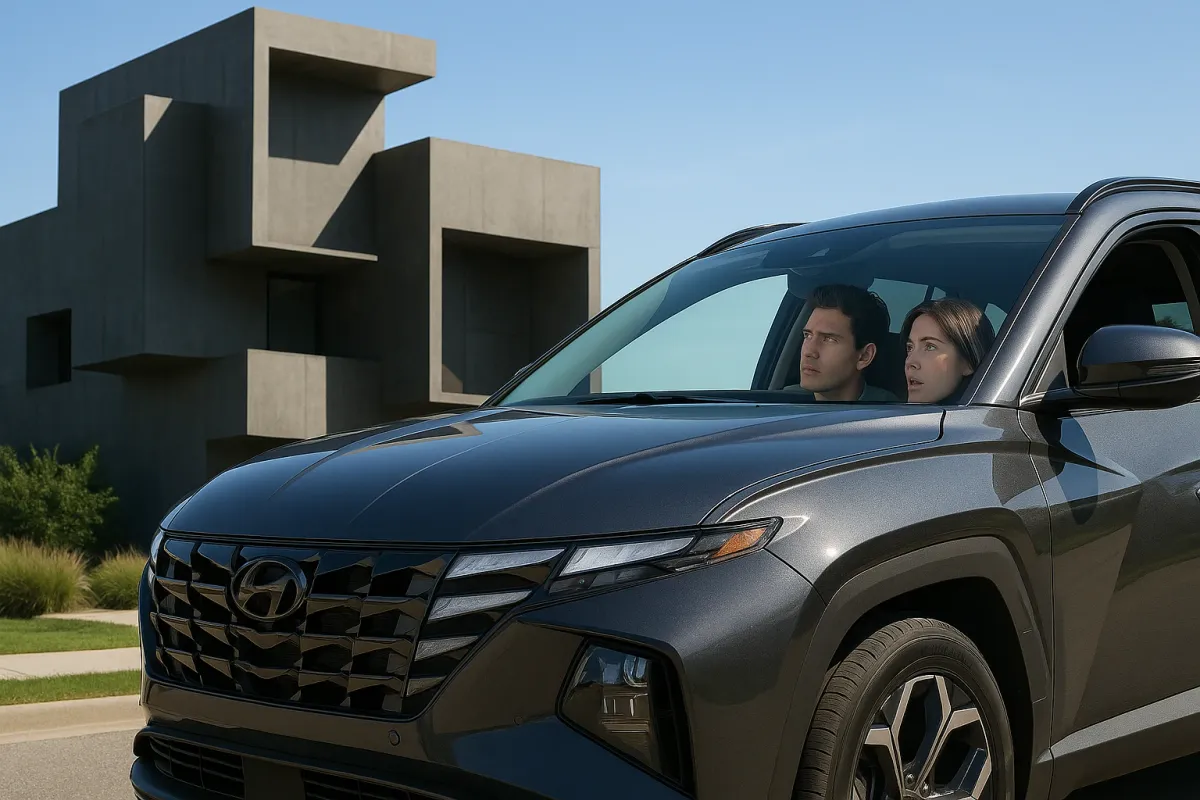
Designers will tell you those controversial lines are there for aero efficiency, pedestrian safety, or EV packaging. Reviewers argue about whether the result is bold or just bad. And shoppers are left trying to decode what any of that actually means when you’re standing in a dealer lot in 2025 wondering which car to buy.
Here’s how to use the current “ugly house” conversation as a shortcut to read modern car reviews better—and what to look for on your own test drive so you don’t end up with a car that drives as weird as it looks.
1. When Reviews Say “Bold Design,” Ask: Will This Age Like Good Architecture?
Architecture critics talking about those viral Belgian houses keep coming back to one idea: some buildings are weird but coherent, others are weird because nobody said “stop.” Car reviews do the same thing with phrases like “bold,” “distinctive,” or “love-it-or-hate-it styling.”
How to translate that into something useful for you:
- Walk around the car the way you’d circle a strange house. Does the front match the rear, or does it look like two different cars fused together? If reviewers mention “busy” or “overstyled,” focus on how many fake vents, random creases, and gloss-black bits are tacked on for no clear reason.
- Look for visibility trade-offs. Just like tiny windows on a modern house can make rooms feel like caves, high beltlines and tiny rear glass can make driving stressful. When reviews note “slim greenhouse” or “poor rear visibility,” sit in the driver’s seat and check real blind spots, not just the camera view.
- Check the details reviewers call out. Are the door handles awkward? Does the rear hatch cut awkwardly into the bumper? These “quirks” in a review can become daily annoyances, like a front door that always sticks on a badly designed house.
- Think resale, like you would with a quirky home. Reviewers sometimes hint that a design “may not appeal to everyone.” That’s code for “might age badly.” If you lease, this matters less. If you plan to keep the car 8–10 years, imagine whether this shape will still look current—or like a meme—in 2035.
Your move: when reading or watching a review, pause and ask, “Is this design weird but purposeful, or weird just to stand out in photos?” Then verify that in person.
2. Interior Layout: Is This “Open Concept” or Just Badly Planned Space?
The ugly-house trend isn’t just about facades—it’s about floor plans that don’t work for real life. Car interiors are going through their own open-concept phase: huge screens, almost no physical buttons, “floating” consoles, and minimalist dashboards like in the Tesla Model 3/Y, Volkswagen ID.4, or Hyundai Ioniq 6.
Reviewers often praise these for being “clean” or “futuristic,” but what you need to know is: will it drive you nuts after six months?
Here’s how to decode what reviews are really saying:
- “Minimalist” usually means fewer physical controls. When a reviewer loves the “clutter-free” look, pay attention to how many taps it takes to change simple things like temperature or fan speed. On your test drive, try adjusting these while driving without looking down; if you can’t, that’s a safety and usability problem.
- “Premium materials” doesn’t equal “durable.” Like trendy but cheap house finishes, some soft-touch plastics and vegan leathers look great on day one but scuff easily. Reviews often mention “easily marked piano black trims” or “scratch-prone plastics.” Bring a flashlight and look at floor-level plastics, door sills, and seat bolsters—this is where early wear shows.
- Check actual usable storage, not just listed numbers. Reviewers talk about “generous storage,” but test if your real stuff fits: water bottle in the door, phone with a case in the wireless charger, kids’ gear in the door pockets. Think of it like checking if a house kitchen looks big but has nowhere for trash and recycling.
- Don’t ignore ergonomics language. Phrases like “low seating position,” “high cowl,” or “odd driving position” matter for daily comfort. On your test, adjust the seat and wheel until it feels natural, then check if you can easily see all the instruments and the hood edges. If reviewers call it “quirky,” make sure it’s quirky for them, not painful for you.
Your move: treat the cabin like you’re walking through an open house. Sit in every seat, open every bin, adjust everything. Car reviews are your blueprint—your job is to see if the layout works for your “family traffic flow.”
3. Aero Shapes vs. Real-World Comfort: Why “Efficiency” Can Feel Awkward
The same way some modern homes end up with weird shapes because someone chased a design vision or energy efficiency at all costs, carmakers are now stretching proportions for aerodynamics and EV range. That’s why we’re getting extreme shapes like the Tesla Cybertruck, Mercedes EQS “aero bubble,” and the slipperiest-ever Toyota Prius.
Reviewers talk a lot about drag coefficients and range numbers, but here’s what to check beyond the spec sheet:
- Sloping rooflines steal headroom. When a review mentions “stylish coupe-like roof,” immediately flag rear-seat comfort. Sit in the back yourself, not just kids—check hair clearance and the angle of your neck and knees. If you need to lean forward to avoid the roof, long trips will be miserable.
- Thick aero-focused pillars hurt visibility. To hit crash and aero targets, A- and C-pillars are getting massive. When reviewers note “compromised over-the-shoulder visibility,” pay close attention at intersections on your test drive. If you have to crane your neck around a pillar, that’s a long-term safety and comfort issue.
- Low drag often means more road noise elsewhere. Some EVs and hybrid-focused designs quiet the wind so much that tire and suspension noise stand out. When a review calls the cabin “hushed at speed but vulnerable on rough surfaces,” test it on broken pavement and highways, not just smooth city streets.
- Range and MPG claims depend on how you drive. A reviewer hypermiling a Prius or Ioniq 5 on a mild day will see very different results than your winter commute. When you see great real-world numbers in a review, ask: what speeds, temperatures, and terrain did they mention?
Your move: when a review raves about aero efficiency, match that praise against everyday practicality—headroom, visibility, and noise. Design that looks “sci-fi” in photos might feel like a compromise every time you get in.
4. Screens, Software, and “Smart” Tech: Lessons from Fake Instagram Aesthetics
Those “fake Instagrammer” exposés making the rounds show just how far people will go to make something look better than it really is. Car tech can be similar: slick graphics and flashy animations in press photos can distract from laggy performance or confusing menus that reviewers only catch after longer drives.
Instead of getting wowed by the tech in a showroom, use what reviewers are already flagging:
- Pay attention when they say “laggy,” “buggy,” or “glitchy.” If multiple reviews complain about freezes or slow responses (common with some early Volkswagen ID software or older Stellantis Uconnect updates), assume you’ll experience that too. Try rapid inputs on the test: zoom the map, switch apps, adjust climate—does it keep up?
- Check the basics before obsessing over features. Is wireless CarPlay/Android Auto stable? Are physical volume and tuning knobs present? Do touch sliders work reliably with dry and damp fingers? Reviewers often bury this in a sentence—pull it forward in your decision.
- Look up update history. For popular models (like Tesla, Hyundai/Kia EVs, Ford’s BlueCruise-equipped vehicles), reviewers often mention recent over-the-air (OTA) updates. A car that’s getting frequent useful updates is more likely to improve; one with unresolved complaints in multiple reviews might not.
- Test driver-assist in realistic conditions. If a review notes “nervous lane centering” or “inconsistent adaptive cruise,” try the same features on your test drive on a multi-lane road. See how it behaves near exits, in gentle curves, and around big trucks. Do you feel relaxed, or on edge and ready to grab the wheel every few seconds?
Your move: treat the infotainment system like a social media feed—assume the marketing photos are the highlight reel. Rely on what reviewers report after living with it, then push it yourself on the test drive to see if it matches your tolerance for tech quirks.
5. How to Cross-Check Polarized Reviews—The “Ugly House” Method for Cars
Those ugly-house posts are fun because taste is subjective, but livability is not: leaky roofs, bad stairs, and poor insulation are problems no matter how “iconic” the exterior is. Car reviews work the same way. Style debates will never end, but certain complaints are universal red flags.
Here’s a practical way to use reviews without getting lost in opinions:
- Separate “taste” words from “function” words. “Love-it-or-hate-it look,” “polarizing design,” and “not to everyone’s taste” are subjective. “Cramped rear seat,” “bouncy ride,” “grabbly brakes,” “confusing interface” are functional issues. Focus on the latter.
- Look for consensus across outlets. If three different reviewers—from a YouTube channel, a major magazine, and a forum owner review—say the same negative thing (e.g., “harsh ride on 20-inch wheels,” “tiny trunk opening,” “annoying driver-assist beeps”), treat it as a likely reality.
- Match the reviewer’s lifestyle to yours. That Belgian house might be a design student’s dream but a family’s nightmare. Likewise, a reviewer who loves track days may hate soft suspensions that you’d find perfect for commuting. Find at least one review from someone who uses the car the way you will: kids, commuting, bikes, road trips, or city parking.
- Use reviews to build a test-drive checklist. Turn repeated review comments into a short list on your phone: “Check rear visibility. Test lane-keep on highway. Sit behind my own driving position. Try CarPlay multiple times. Check parking cameras at night.” Don’t leave the lot until you’ve run through it.
- *Note what reviewers don’t complain about.* If nobody’s criticizing road noise, seat comfort, or climate performance, that’s usually a good sign. Silence on a topic across many reviews often means “normal or better than average.”
Your move: treat each review like a neighbor’s opinion on a weird-looking house in your area. Listen for specifics—drafty windows vs. just “ugly color”—then go see it yourself with those points in mind.
Conclusion
The same instincts that make people obsess over those viral “ugly houses” are exactly what you should bring to modern car shopping. Design trends in cars and buildings are both pushing boundaries right now, sometimes for good reasons (efficiency, safety, packaging) and sometimes just to stand out in a feed.
Use car reviews as your building inspector report:
- Probe past “bold styling” to real-world visibility and comfort.
- Treat interior minimalism like a floor plan—does it support daily life?
- Question whether aero-driven shapes and wild tech actually make the car better for you, not just better in a press photo.
Do that, and the next time everyone’s debating whether a new EV or SUV is “cool” or “hideous,” you’ll be the one who knows whether it’s actually a good place to spend the next decade of your life—and money.