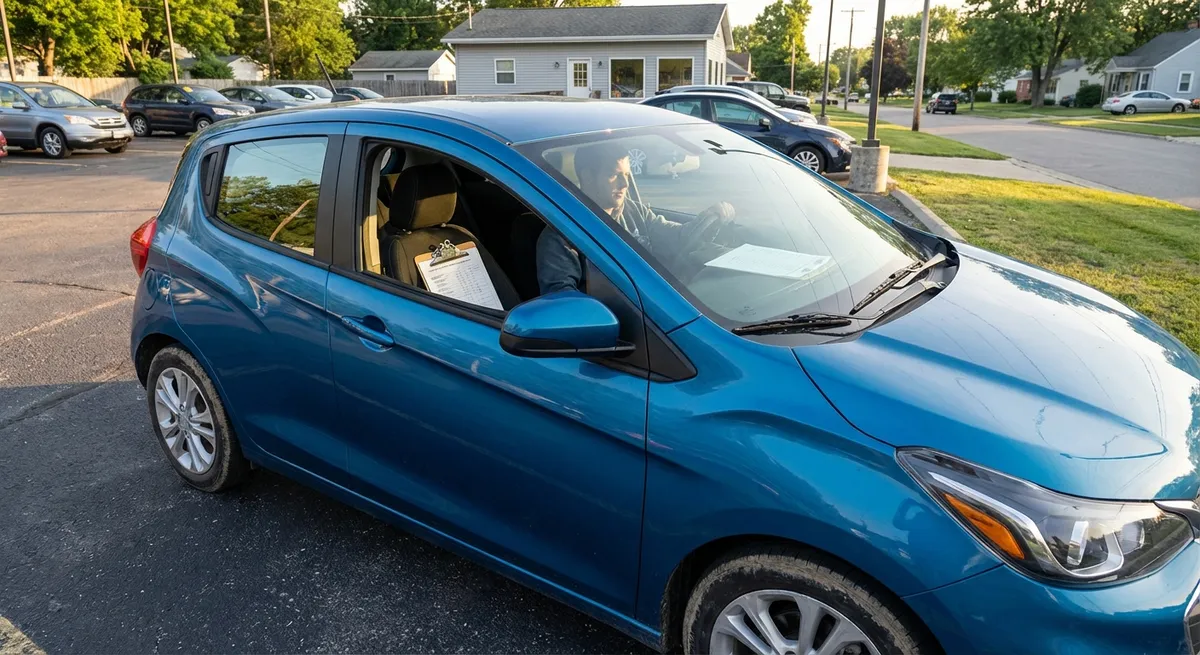
This guide walks through practical, review-style checks you can do yourself. Use these five actionable steps to compare cars more clearly, see beyond the marketing, and end up with a vehicle that actually fits how you drive.
Start with Your Real Driving, Not the Brochure
Before you step into any car, define how it will actually be used. That’s the foundation of any meaningful review—professional or personal.
Think about your typical week: highway vs. city miles, stop‑and‑go traffic, commuting distance, and how often you haul people or cargo. A crossover that looks perfect online may feel wasteful if you mostly do short urban trips; a compact hybrid might be ideal in that scenario. Consider your environment too: steep hills, rough roads, winter weather, or extreme heat all change what “good” feels like in a car.
Make a quick list of non‑negotiables before you test anything: for example, rear‑seat space for child seats, all‑wheel drive, good fuel economy, or advanced safety tech. Then note your “nice‑to‑haves” like a panoramic roof, upgraded sound system, or ventilated seats. Bring that list with you. When you read or watch reviews, check if the reviewer drives in conditions similar to yours and weighs the same priorities. A car praised for track handling isn’t necessarily the best choice if your main concern is comfort in rush-hour traffic.
This simple mindset shift—starting from your reality instead of the spec sheet—makes every review you consume (and every car you test) far more meaningful.
Use the Test Drive to Feel What Specs Can’t Show
Professional reviews often talk about “ride quality,” “noise levels,” or “refinement,” but those terms can feel abstract until you experience them yourself. A focused test drive turns vague impressions into clear yes/no decisions.
Begin with low‑speed driving around town. Pay attention to how the car reacts to bumps, potholes, and speed humps. Does it crash over imperfections or glide over them? Lightly tap the brakes at different speeds—do they feel predictable, or grabby and inconsistent? A car that constantly jiggles you can be tiring on longer trips, even if reviewers praise its “sporty” suspension.
Next, drive on a higher-speed road or highway. Listen for wind noise around the mirrors, roof, and door seals, plus road noise from the tires. A quiet car lets you hear music and conversations clearly without cranking the volume. Note how the car accelerates when you merge or pass—does it respond quickly enough, or does it feel hesitant and strained? Reviews may say “adequate power,” but only you can decide if it feels confident for your needs.
If possible, test steering feel on a curvy road or large roundabout. Does the steering respond quickly and naturally, or do you need constant corrections to stay in your lane? When you park, feel how easy the car is to maneuver and how well you can judge its corners. These impressions matter more in daily life than raw horsepower or 0–60 times.
Evaluate the Cabin Like You’ll Live in It
Interior impressions in reviews often focus on materials and design, but ownership comfort goes much deeper. Approach the cabin the way you’d review a workspace you’re going to use for hours every week.
Start with the driving position. Can you easily adjust the seat and steering wheel so you sit comfortably with a clear view of the road and instruments? People with longer legs or shorter torsos often find some cars impossible to get “just right.” If your legs are comfortable but your arms are too stretched or cramped, that’s a red flag for long‑term fatigue. Try this with and without a coat if you live in a colder climate.
Check visibility in every direction. Look for blind spots created by thick roof pillars, small rear windows, or high beltlines. Adjust the mirrors and see how confident you feel changing lanes. Backup cameras and sensors are helpful, but they shouldn’t compensate for fundamentally poor visibility that makes you feel nervous.
Spend time exploring controls and infotainment. Try adjusting climate settings, changing audio sources, entering a navigation address, and connecting your phone via Apple CarPlay or Android Auto. If simple tasks feel buried in menus or require multiple steps, that annoyance will multiply over years of ownership. Physical knobs and buttons for heavily used functions (volume, temperature, defrost) are usually more user-friendly than touch-only solutions, especially while driving.
Finally, sit in the rear seats and check cargo space. If you regularly carry passengers, see if adults fit comfortably behind a tall driver. Fold down the seats and imagine loading your usual items: strollers, sports gear, luggage, tools, or groceries. Bring a tape measure or a specific item you often carry if cargo space is crucial. The best car is the one that makes your everyday tasks easy without constant workarounds.
Pay Close Attention to Safety Tech in the Real World
Modern reviews spend significant space on safety ratings and technology, but many buyers only check if a feature is present, not how well it works. During your own evaluation, treat driver-assistance systems as critical usability features, not just checkboxes.
Start by confirming core safety ratings from reputable testing bodies such as the Insurance Institute for Highway Safety (IIHS) or the National Highway Traffic Safety Administration (NHTSA). Ratings like “Top Safety Pick+” or high crash-test scores indicate strong crash protection, but real-world safety also depends on how well active systems help you avoid crashes altogether.
On your test drive, ask the salesperson to show you adaptive cruise control, lane-keeping assist, and forward collision warning with automatic emergency braking—if equipped. Activate them on an appropriate road and see how they behave. Does adaptive cruise brake and accelerate smoothly, or does it feel jerky and too cautious? Does lane-keeping assist gently guide you or tug the wheel in a way that feels unnatural? If a system constantly gives false alarms or feels intrusive, you’ll either turn it off or drive annoyed.
Check how clear and configurable the safety systems are. Can you easily find the settings in the menu and adjust sensitivity or alert volume? Are warning icons and sounds intuitive, or cryptic? Some manufacturers allow partial customization of alerts and intervention levels, which helps tailor tech to your comfort level.
Finally, look at headlights and visibility at night if possible. Many reviews now mention headlight performance, and organizations like IIHS test them specifically. If you can schedule a short evening drive, notice how far the lights reach, how evenly they illuminate, and whether they produce glare. Poor headlights are a daily safety and comfort issue that’s hard to fix later without costly upgrades.
Compare Real-World Ownership Factors, Not Just First Impressions
The best car reviews also examine what ownership will feel like after the novelty wears off. You can mirror that approach by digging into long-term considerations before you sign anything.
First, check fuel economy and energy costs using realistic numbers. Don’t just rely on the window sticker; look at independent tests and owner reports. Consider your driving mix: highway-biased driving can dramatically change whether a turbocharged gas car, diesel (where available), hybrid, or EV makes sense. Use official calculators or tools from energy agencies to estimate your actual fuel or electricity costs based on your mileage and local prices.
Investigate reliability and maintenance using multiple sources. Look for patterns in long-term reviews and owner forums: recurring issues with transmissions, electronics, or specific engines can hint at higher costs and frustration. Also, ask the dealer for the maintenance schedule and approximate prices for major services like timing belts (if applicable), transmission flushes, or battery replacements on hybrids and EVs.
Consider warranty coverage and what’s included: bumper-to-bumper, powertrain, corrosion, and roadside assistance. Longer warranties can offset concerns about complex tech or expensive components. Pay attention to whether advanced driver-assistance sensors or battery packs are covered for extended periods.
Lastly, think about resale value. Some brands and models hold value better due to reputation, demand, and reliability. Even if you plan to keep the car for many years, a model with strong resale value generally indicates positive market perception and can save you money if your needs change sooner than expected.
Combining these ownership factors with your personal test-drive impressions gives you a review-level perspective that goes far beyond, “It felt nice on the lot.”
Conclusion
When you read car reviews or test-drive contenders yourself, you’re not just shopping for a machine—you’re choosing a daily environment, a long-term cost profile, and a safety partner. By grounding your evaluation in how you actually drive, focusing on what specs can’t show, testing the cabin like you’ll live in it, verifying safety tech in real conditions, and weighing long-term ownership factors, you turn a quick spin into a thorough, real-world review.
Use these five points as a checklist every time you compare cars, and you’ll quickly see which models fit your life and which only look good on paper.
Sources
- Insurance Institute for Highway Safety (IIHS) – Vehicle Ratings - Official crash-test, headlight, and safety ratings to compare vehicles’ safety performance
- NHTSA – 5-Star Safety Ratings - U.S. government crash-test ratings and safety information for new vehicles
- U.S. Department of Energy – Fuel Economy - Official EPA fuel economy data, cost calculators, and side-by-side comparisons
- Consumer Reports – How to Test-Drive a New Car - Practical guidance on what to look for during a test drive
- Kelley Blue Book – Car Reviews and Ratings - Professional reviews and ownership insights that complement your own evaluations