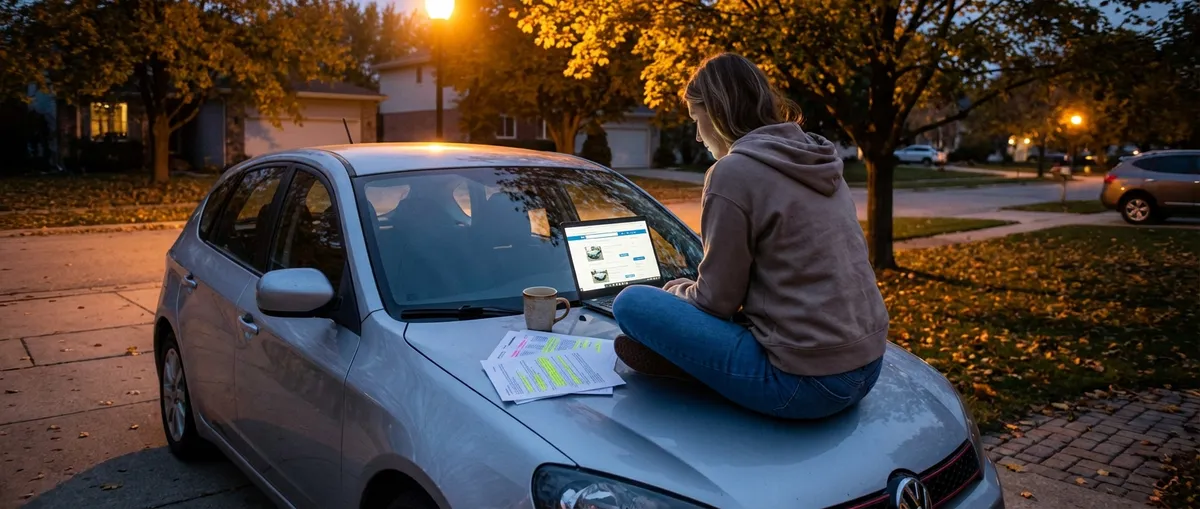
This guide breaks down how to read a car ad like an enthusiast who knows what actually matters, with five practical, immediately usable tactics.
Decode the Photos: What’s Missing Is as Important as What You See
Photos are your first filter, and smart sellers know that most buyers skim them more than the text.
Start by checking photo coverage. A solid listing shows all four corners, both sides, front and rear, full interior, close-ups of seats, steering wheel, infotainment, wheels, tires, and under-hood. If you can’t see at least 15–20 well-lit, clear photos for a modern used car, treat that as a yellow flag, not an automatic deal-breaker—but ask why.
Look for consistency in panel gaps and paint tone across panels. Slightly different shades on bumpers, doors, or hood can point to prior bodywork. Zoom in on wheel faces and sidewalls of tires; curb rash and uneven tire wear tell you how the car was driven and (possibly) how carefully it was maintained. Check pedal pads and driver’s seat bolsters: heavy wear on a “low-mileage” car should make you question the odometer story.
Interior photos should show all major touch points: steering wheel, gear selector, climate controls, and infotainment screen. Excess gloss, shine, or wet look on seats or dash may mean heavy detailing to mask wear or odors. If you’re serious about the car, ask for specific additional shots: cold engine bay (before they start it), trunk spare area, under trunk mat, and a close-up of each tire’s date code and tread.
Actionable point #1: Before contacting the seller, make a quick checklist: exterior corners, interior front and rear, wheels/tires, engine bay, and odometer. If any of these are missing, request those exact photos and judge the response time and openness of the seller.
Translate Listing Language Into Real-World Condition
The words in a listing are rarely neutral; they’re crafted to steer your expectations. Learn to “translate” the most common phrases:
- “Minor cosmetic wear” can mean anything from a few stone chips to multiple dents.
- “Runs and drives great” says nothing about maintenance history or upcoming repairs.
- “Just needs TLC” often signals deferred maintenance or significant cosmetic work.
- “As-is, no warranty” is standard on older used cars but should push you to dig hard into inspection and history.
- “Clean title” doesn’t automatically mean “no accidents”—it just means the car wasn’t declared a total loss.
Look for concrete, verifiable details: specific service intervals (“oil changed every 5,000 miles with receipts”), named parts replaced with dates and mileage, and any warranty coverage that’s transferable. Beware of “new brakes, new tires” without brand or date; budget parts can be installed cheaply just to make a sale.
If the listing is full of adjectives—“amazing,” “immaculate,” “like-new”—but light on facts, you should assume the condition is average until proven otherwise. The more specific the seller is, the more likely they’re honest (or at least prepared).
Actionable point #2: When you message or call, ask three precise questions and compare the answers to the listing:
“When was the last major service and what was done?”
“Are there any known issues, warning lights, or noises?”
“Has the car ever had any body or paint work—if so, where?”
Inconsistencies between the ad and the answers are your signal to slow down or walk away.
Use the VIN and History to Confirm the Story
A vehicle identification number (VIN) is your shortcut to separating marketing from reality. Any serious listing should show the VIN; if it doesn’t, ask for it before anything else.
Once you have the VIN, run it through at least one history service (CARFAX, AutoCheck, or a well-reviewed alternative). You’re not just looking for accidents—you’re checking for ownership patterns, mileage progression, title issues, and where the car spent its life (hot climate, rust-belt, flood-prone area, etc.). A sudden drop or jump in mileage recordings, or a long gap with no mileage updates, should trigger questions.
Don’t stop there. Use the VIN on the manufacturer’s official site if they offer an “owner” or “service” portal; some brands show completed recall work or in-network service visits. Also check the National Highway Traffic Safety Administration (NHTSA) recall lookup to see if there are open recalls—and whether they’ve been completed.
For enthusiasts, the build sheet is gold. Some brands let you decode the VIN or use a build lookup to see original options. That helps you verify that “performance package,” “premium audio,” or “sport suspension” claims are actually real and not just trim-level confusion.
Actionable point #3: Don’t move forward with a car until you’ve:
- Run the VIN through a major history service
- Checked the VIN on the manufacturer site (if available)
- Searched the VIN in NHTSA’s recall database for open safety recalls
If the seller resists sharing the VIN or gets defensive when you mention a history check, eliminate the car from your list.
Compare Asking Price to the Market, Not Just “Book Value”
Price guides (Kelley Blue Book, Edmunds, NADA) are helpful, but the market moves faster than their averages. What matters is what similar cars are actually selling for in your region right now.
Start by collecting a sample of comparable listings within your area: same model year, similar mileage, same drivetrain (engine, transmission, drive type), and as close as possible on trim level and key options. Ignore obvious outliers—very rough cars and unusually modified builds. Then note the range: low, mid, and high asking prices.
Now adjust mentally for specifics:
- Mileage significantly above or below the group
- Verified maintenance history vs. vague or missing records
- Accident history, repaint, or branded title
- Desirable enthusiast options (manual transmissions, performance packages, rare colors)
An asking price that’s slightly above average can still be fair for a clean, well-documented car. A “cheap” car can be expensive if it needs tires, brakes, fluid services, suspension work, or electronics diagnosis—which can easily wipe out any apparent savings.
Also, don’t ignore taxes, fees, and estimated insurance. Some dealer ads exclude reconditioning fees or doc fees that only appear in the finance office. Ask for an out-the-door price breakdown in writing before you visit, so you’re comparing full costs, not just the sticker.
Actionable point #4: Build a quick “market snapshot” in a spreadsheet or notes app: 8–12 similar cars, each with price, mileage, year, trim, and notable options. Use that snapshot—not just one guide number—to decide whether the asking price is realistic and how much negotiation room you realistically have.
Plan Your Next Steps Before You Click “Contact Seller”
The goal of reading a listing well isn’t just to weed out bad cars—it’s to show up prepared when you find a good candidate. Before you message or call, define what “good enough” looks like for you.
List your non-negotiables (for example: clean title, no major accidents, documented basic maintenance, no active warning lights, no significant rust). Then list your “nice-to-haves” (trim level, tech package, color, wheels, driver-assistance features). That separation keeps you from getting distracted by pretty wheels and a cool color when the fundamentals are wrong.
Next, have your first-conversation script ready: introduce yourself, mention the car, and hit your prepared questions about maintenance, bodywork, issues, and reason for selling. Ask if they’re comfortable with a pre-purchase inspection (PPI) by a third-party mechanic you choose; a hesitant answer should concern you.
If the listing and conversation align, only then schedule a visit and test drive. Have your financing (or at least your budget and bank options) pre-planned so you’re not relying on dealer-arranged terms by default. That way, when you find the right car, you can move decisively without rushing your judgment.
Actionable point #5: Before you reach out on any listing, write down:
- Your non-negotiables and nice-to-haves
- Three inspection items you’ll verify in person (for example: cold start behavior, all electronics, signs of rust or leaks)
- Your maximum all-in budget (including tax, title, fees, and an initial maintenance “catch-up” fund)
Having this in writing reduces emotional decision-making and keeps you focused when you finally see the car.
Conclusion
Almost every “I wish I hadn’t bought this” story could have been avoided at the listing stage. Photos reveal how a car was treated, language hints at what’s being downplayed, the VIN confirms—or contradicts—the story, and real-world market data shows whether the price is aligned with reality.
If you approach every listing with a clear checklist, a skeptical but open mindset, and a plan for verification, you’ll filter out most of the bad options before you burn time, fuel, or mental energy. That leaves you free to focus on what matters to enthusiasts and everyday drivers alike: finding the right car, not just any car, at a price that still feels smart a year from now.
Sources
- National Highway Traffic Safety Administration (NHTSA) – Recalls Lookup - Official U.S. government tool for checking open safety recalls by VIN
- CARFAX – Vehicle History Reports - Widely used service for checking accident history, title issues, and mileage records
- Kelley Blue Book – Car Values - Provides estimated market values for used vehicles, useful as a baseline when assessing pricing
- Edmunds – Used Car Buying Guide - Practical overview of used car shopping, inspections, and pricing strategy
- Consumer Reports – How to Spot a Flood-Damaged Car - Example of visual and practical checks that complement what you see in online listings