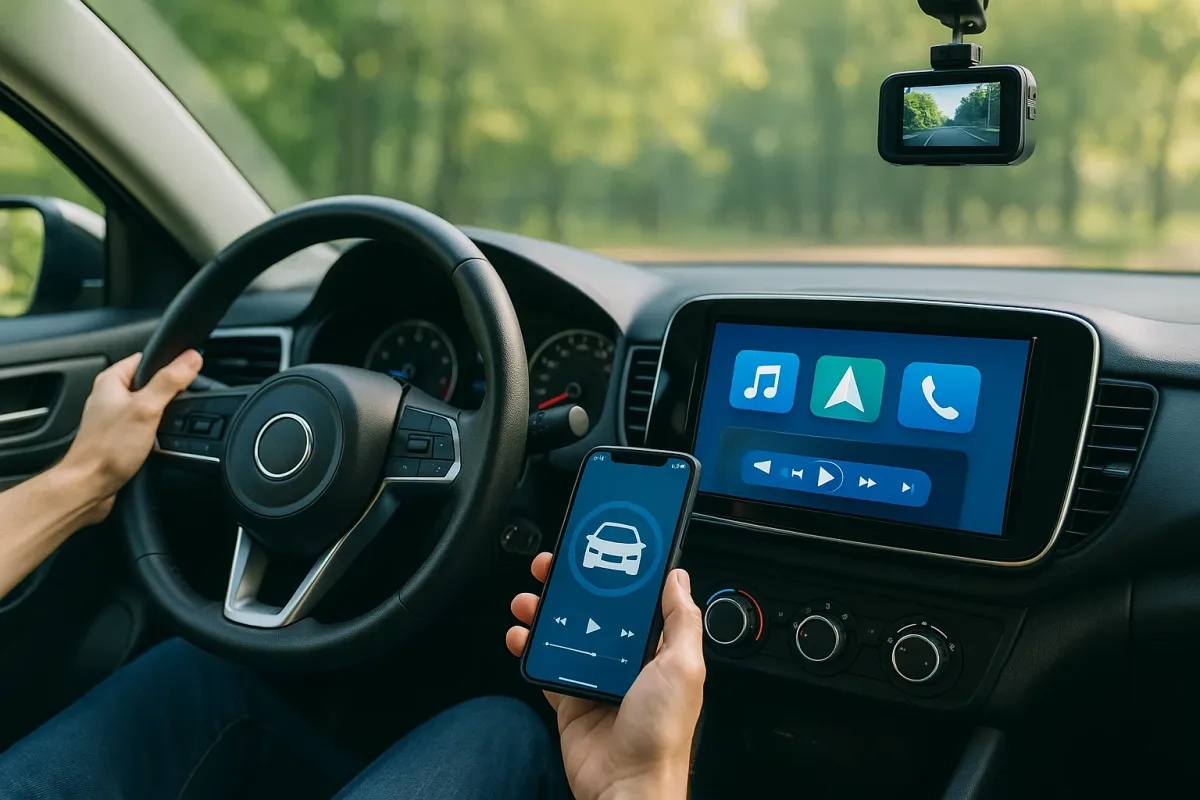
With Cyber Week and year‑end sales rolling out new gadgets and accessories, this is the perfect time to dial in the tech your car already has, then add a few smart upgrades where they’ll actually make a difference. Here are five practical, immediately actionable ways to make your daily drive feel smoother, safer, and more up‑to‑date.
Turn Your Phone Into a Command Center (Without Getting Distracted)
Your smartphone is already the smartest thing in your car—if you integrate it correctly. Start by fully setting up Apple CarPlay or Android Auto if your vehicle supports it. Don’t just plug in and go: customize it. Remove rarely used apps so your screen only shows navigation, music, and communication tools you actually use. This cuts down on distraction and makes every tap faster and safer.
Next, configure “Do Not Disturb While Driving” (or your phone’s equivalent). Allow calls only from favorites and auto‑reply to texts so people know you’re on the road. Pair your main navigation app (Google Maps, Waze, or Apple Maps) and go into its settings to enable speed limit display, traffic alerts, and preferred routes (toll‑free, EV‑charger‑friendly, etc.). Finally, mount your phone properly with a sturdy, eye‑level holder—cheap, shaky mounts are not worth the risk. Your goal: one quick glance, one quick tap, hands back on the wheel.
Use Driver-Assistance Tech Like a Pro Instead of Letting It Annoy You
Modern “driver-assistance” systems can either feel like a co‑pilot or a nag, depending on how you set them up. Open your owner’s manual or app and look for features like lane‑keeping assist, adaptive cruise control, blind‑spot monitoring, and rear cross‑traffic alert. Don’t just leave everything at factory defaults—tune them to your driving style.
For lane‑keeping assist, adjust the steering support strength and warning sensitivity if your car allows it. If the wheel tugs too aggressively, most people just shut it off completely; a milder setting can be genuinely helpful without feeling intrusive. For adaptive cruise control, set a following distance that matches your local traffic—too close can be stressful, too far and you’ll get constantly cut off. Also, check if you can change the alert types: some cars let you swap annoying beeps for more subtle steering‑wheel vibrations or visual indicators. The key is to treat these systems as support, not autopilot—you’re still the driver, but now you have an extra layer of protection.
Stop Ignoring Software Updates (They’re Not Just for Your Phone)
Over‑the‑air (OTA) updates are turning cars into rolling smartphones—silently adding features, fixing bugs, and sometimes even improving range or performance. If your vehicle supports OTA updates, open the companion app or infotainment menu and check for pending updates at least once a month. Many owners never do this and miss out on features they essentially already paid for.
Before you install, read the release notes if they’re available. Look for changes to charging behavior (for EVs), driver‑assistance tweaks, or navigation improvements. Schedule installs for overnight or during a time you know the car will be parked. If your car is older and doesn’t support OTA, check the automaker’s website for TSBs (Technical Service Bulletins) or firmware updates that a dealer can apply—these are often free and can fix things like glitchy Bluetooth, laggy screens, or transmission shift logic. Keeping your car’s “software layer” current can make it feel noticeably smoother and more refined without a single mechanical change.
Build a Smarter Cabin: Cameras, OBD Devices, And Dash Tech That’s Actually Worth It
With holiday tech deals everywhere, it’s easy to waste money on gimmicky gadgets. Focus instead on a few upgrades that deliver real, daily value. First, a quality 1080p or 4K dash cam with parking mode is one of the most cost‑effective protections you can buy. Look for models that auto‑save impact events and back up clips to the cloud via Wi‑Fi or LTE. Hardwire it with a proper kit so it doesn’t drain your battery or dangle cords.
Second, consider a reputable OBD‑II Bluetooth scanner. Paired with a good app, it can read and clear basic trouble codes, show real‑time data (like coolant temps, fuel trims, and battery voltage), and help you spot issues before they become expensive. It’s especially handy for older cars or high‑mileage commuters. Finally, upgrade small but high‑impact cabin tech: a dual‑USB‑C fast charger, a quality magnetic mount, and maybe a compact tire inflator that runs off 12V or a power bank. These are boring purchases—but they’re the ones you’ll be grateful for at 11 p.m. in a cold parking lot.
Use Simple Tech To Extend Your Car’s Life (And Keep Fuel Costs Down)
Not all “auto tech” is flashy. Some of the most valuable tools quietly save you money every month. Start with a digital tire pressure gauge and, if possible, a smart TPMS add‑on if your car doesn’t show live pressures. Under‑inflated tires wreck fuel economy and wear out faster; check monthly and before long trips. A basic OBD app can also show you long‑term fuel trims and engine temps, which helps you catch things like a failing thermostat or dirty MAF sensor early.
If you drive an EV or plug‑in hybrid, dive into your charging and energy‑use stats. Many automaker apps now show consumption by trip, letting you see how much driving style, HVAC use, and speed affect your range. Use scheduled charging to take advantage of off‑peak rates if your utility offers them, and pre‑condition the cabin while plugged in on cold or hot days—this preserves range and battery health. For gas vehicles, set maintenance reminders in your phone or car system tied to mileage, not just time. Oil changes, transmission services, and even simple air filter replacements done on time can be the difference between a car that feels “tired” at 100k miles and one that still feels tight at 200k.
Conclusion
You don’t need a brand‑new car—or a trunk full of expensive gadgets—to experience a big upgrade in how your vehicle feels day to day. By configuring the tech you already own, adding a few targeted tools, and actually using your car’s software and data, you turn it from “just transportation” into a smarter, safer, and cheaper‑to‑run machine.
The next time you’re tempted by a flashy accessory in a Cyber Week ad, start with this list instead. Dial in your phone integration, tame your driver‑assist systems, stay on top of updates, add one or two high‑value gadgets, and use simple data to protect your wallet. Your car might not be new—but with the right tech setup, it can absolutely feel that way.