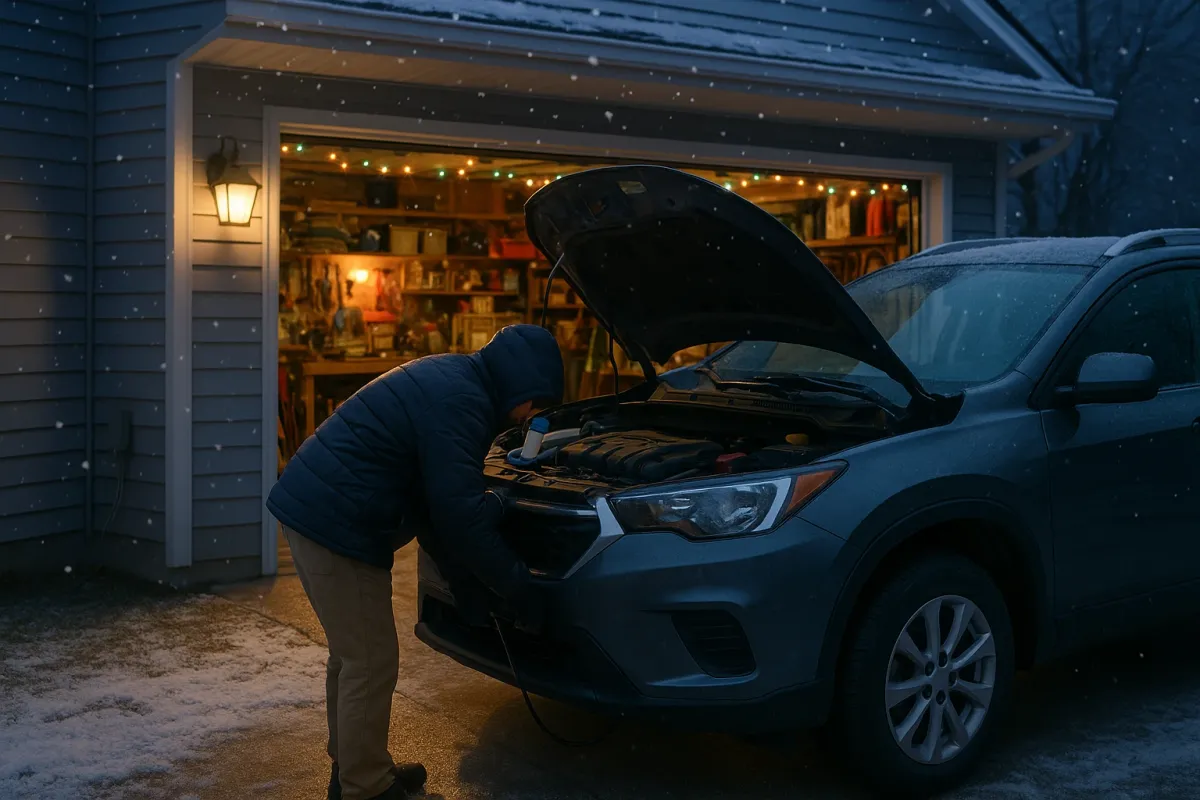
Between last‑minute shopping runs, airport drop‑offs, and cold‑weather road trips, your vehicle is about to work harder than it has all year. Instead of waiting for a Christmas‑week breakdown and an overbooked shop, treat your car like your house: get it in order now, so it can survive the chaos later.
Below are five practical, maintenance‑focused moves you can make this week to keep your car safe, reliable, and ready for whatever the season throws at it.
Deep‑Clean the “Holiday Hotspots”: Windows, Lights, and Cameras
Just like clearing counters and floors at home, start with the “surfaces” that affect safety first—anything that helps you see or be seen.
- Clean all glass inside and out. Use a dedicated glass cleaner and a microfiber cloth. Focus on the inside of the windshield, which often has a foggy film from plastics off‑gassing. That haze makes night glare from holiday lights and wet roads much worse.
- Polish headlight lenses. If they’re yellowed or cloudy, visibility can drop dramatically. Use a headlight restoration kit, or at least a plastic polish designed for lenses. This is especially critical now that nights are longer and weather is worse.
- Scrub taillights and side markers. Road film and salt build up quickly in winter, making your lights appear dimmer. A clean light is a safer light.
- Wipe down cameras and sensors. If your car has a backup camera, parking sensors, or 360° cameras, keep their lenses clean. In slushy conditions, you may need to wipe them every few days.
- De‑fog strategy. Make sure your defrosters work and your cabin filter isn’t clogged. A dirty cabin filter traps moisture and makes fogging worse right when you need quick visibility.
Do this once, thoroughly, then set a mental reminder: a quick weekly wipe of lights and cameras through winter is the driving equivalent of a daily kitchen reset.
Winter‑Proof Your Tires and Inflation Before Temperatures Plunge
As temperatures drop, so does tire pressure—roughly 1 psi for every 10°F. That’s why TPMS warnings spike at the first real cold snap each year.
- Check pressure when tires are cold. Use a quality gauge; don’t rely solely on TPMS. Inflate to the pressure on the door jamb sticker, not the sidewall max.
- Expect repeated drops. If the forecast shows another major cold front, plan a recheck. A reading that was fine at 50°F can be underinflated at 25°F.
- Assess tread depth honestly. Use the penny or quarter test, or better, a tread depth gauge. Under ~4/32" front tires can struggle to clear slush and water.
- Consider dedicated winter tires if you see real winter. All‑seasons harden in very cold temps, even with good tread. Winter compounds stay pliable and bite better on cold, wet, and snowy roads.
- Don’t forget the spare. A flat spare is useless during a holiday road trip. Check its pressure and the condition of the jack and tools now, not on the side of the highway.
Good tires and correct pressure are the difference between a calm winter drive and a white‑knuckle slide when roads turn slick.
Give Your Battery and Fluids a Pre‑Holiday Health Check
Household checklists before Christmas focus on things that will absolutely ruin the mood if they fail—like a dead oven or broken water heater. For your car, that’s your battery and essential fluids.
- Battery test: Most auto parts stores will load‑test your battery for free. If it’s over 3–4 years old, have it checked. Cold weather cuts cranking power right when thickened oil makes engines harder to turn.
- Inspect battery terminals. Look for corrosion (white or blue crust). Clean gently with a battery brush and, if needed, a baking soda/water solution, then dry and reinstall.
- Coolant/antifreeze. Verify the coolant level is in range and, if possible, have its freeze protection checked. Old or diluted coolant can slush or freeze, risking overheating or engine damage.
- Oil condition. If you’re close to your oil change interval, do it before major winter driving. Fresh oil flows better in cold starts and helps protect the engine.
- Washer fluid, not water. Top up with a winter‑rated washer fluid to prevent the reservoir from freezing. You’ll use a lot more fluid with salted, dirty roads.
- Brake fluid and power steering. If pedal feel is soft, or you see dark/burnt‑smelling fluid, schedule a brake inspection. For electric power steering, you might not have fluid to check, but any steering noise or heaviness deserves a look.
Think of this as your car’s version of checking the furnace and plumbing before a deep freeze: if it fails, everything else grinds to a halt.
Declutter and Organize the Cabin Like a Road‑Trip Command Center
That trending “get your house in order” post is right about one thing: clutter multiplies under stress. It’s the same in your car, especially when you’re juggling gifts, kids, pets, and luggage.
- Remove non‑essentials. Sports gear, old water bottles, and random boxes add weight and eat cargo space. Extra weight also hurts fuel economy on long drives.
- Create a dedicated “winter kit.” Include: ice scraper, small shovel (if you see serious snow), gloves, basic first‑aid kit, flashlight, jumper cables or a lithium jump pack, and a blanket.
- Add a “clean‑up kit.” Paper towels or shop towels, wet wipes, small trash bags, and a spare plastic grocery bag for muddy shoes or wet umbrellas.
- Secure loose items. In a sudden stop, a laptop bag or hard toy can become a projectile. Use trunk organizers, seatback pockets, or floor bins to keep things contained.
- Prepare for kid chaos. If you drive kids, pre‑stock quiet activities, travel mugs, and approved snacks so you’re not constantly reaching or searching while driving.
A tidy, prepared cabin doesn’t just feel better; it reduces distraction and keeps everyone safer when roads are busy and tempers are short.
Schedule Preventive Service Before Shops Hit Peak Rush
Just like home repair pros get slammed right before the holidays, so do mechanics. Waiting until something breaks during peak travel can leave you stuck for days.
- Book service as soon as you can. If you’re due for a scheduled service (brakes, belts, major inspection), get on the calendar now. Independent shops and dealers both fill fast in December and early January.
- Listen and look for early warning signs:
- Squealing or grinding when braking
- Steering vibration at highway speeds
- Clicking on tight turns (CV joints)
- New fluid spots where you park
- Burning smells or persistent warning lights
- Align and inspect after pothole season starts. Early winter potholes can knock alignment out, causing uneven tire wear and poor winter handling.
- Update your roadside assistance info. Whether through your insurer, automaker, or a third party, confirm you’re covered and know the contact number before you leave town.
Treat this like booking travel and housecleaning ahead of guests: the earlier you move, the more choice and less stress you’ll have if something needs attention.
Conclusion
The same pre‑holiday “get your house in order” mindset applies directly to your car. A few hours now—cleaning your visibility surfaces, checking your tires, testing the battery and fluids, decluttering the cabin, and scheduling preventive service—can save days of frustration and unexpected expense at the worst possible time.
Before the roads fill with shoppers, visitors, and late‑night drivers in bad weather, get your vehicle Auto Ready: safe, organized, and mechanically sound. Then when the chaos hits, your car will be the one part of the season you don’t have to worry about.