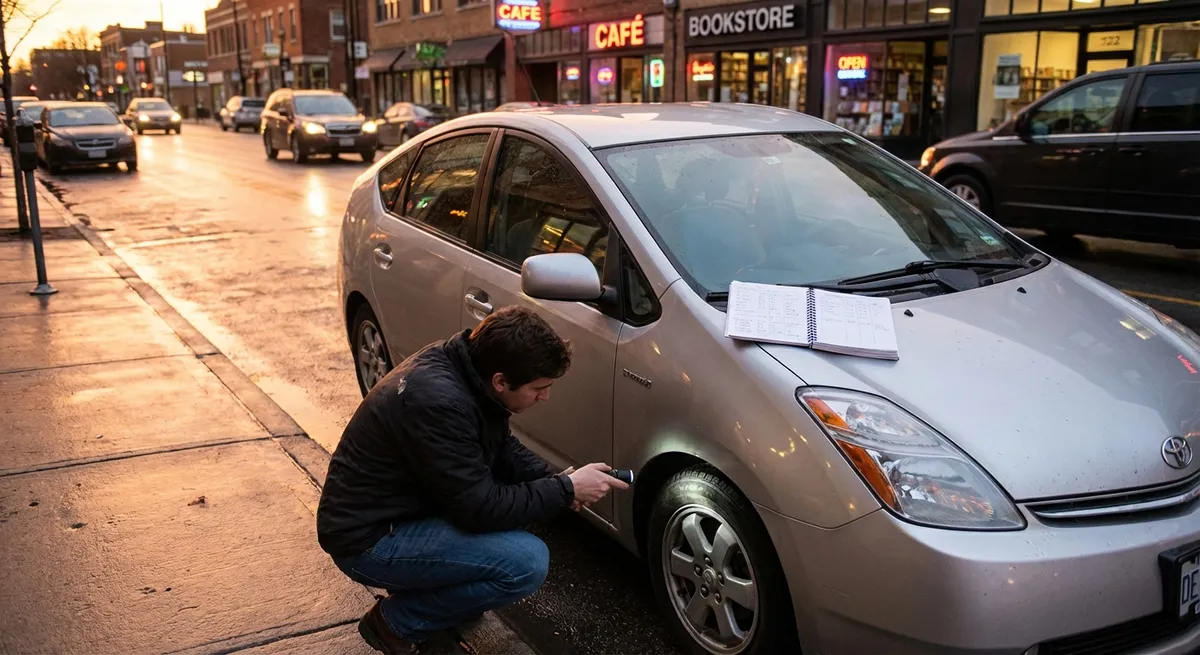
This guide walks through five practical angles you can use to judge any car, new or used. Use them during test drives, when reading professional reviews, or when deciding whether to keep or replace your current vehicle.
1. Evaluate Ride Comfort the Way You Actually Drive
Magazine reviews often focus on “sporty handling” or “planted feel,” but what you feel every day is ride comfort: how the car deals with potholes, expansion joints, and long commutes.
Actionable ways to review ride comfort:
- Find bad pavement on purpose. During a test drive, ask to take a route with patched roads or rough surfaces. Pay attention to whether the car thumps harshly or dulls the impact.
- Listen for secondary noise. After a bump, does the cabin rattle, or do you hear plastic creaks? Solid, well-damped interiors feel “tight” instead of tinny.
- Check seat support over at least 20 minutes. Short drives can hide poor seat ergonomics. Adjust lumbar support (if available) and notice if your lower back or shoulders tense up.
- Play with the seat and wheel range. If you struggle to find a relaxed position with good visibility, that will only get more annoying over time. Good cars offer flexible seat height, tilt/telescope steering, and clear sightlines.
- Assess headrest and cushioning. Headrests that push your head forward or cushions that feel too soft initially can cause fatigue on road trips.
If you often carry passengers, repeat the process in the back seat. A car that feels fine in the front but punishes rear passengers on every bump may not suit family use.
2. Judge Power and Braking in Real Traffic, Not Just on Paper
Horsepower and 0–60 times dominate marketing, but day-to-day drivability depends more on how the car responds in normal and slightly stressful situations—merging, passing, and stopping in time.
Actionable ways to review performance safely:
- Test low-end response, not full-throttle drama. From a rolling start (15–25 mph), gently press the accelerator as you would merging into city traffic. Does the car hesitate, hunt for gears, or respond smoothly and predictably?
- Simulate a highway merge. On a safe stretch of road, accelerate from about 30 to 60 mph. You’re looking for linear power delivery and a transmission that doesn’t flare the revs wildly or lag before kicking down.
- Feel the braking system, not just the pedal. Perform a few firm but controlled stops from 40–50 mph where it’s safe. Brakes should feel consistent, with clear bite and no vibration or pull to one side.
- Check transmission behavior at low speeds. CVTs and dual-clutch transmissions can feel jerky at parking-lot speeds. If the car surges or lurches, that can get old quickly in stop-and-go traffic.
- Note noise under load. Some engines sound refined when cruising but coarse under acceleration. Decide whether the sound is something you can live with every day.
Your goal isn’t to drive like a racer—it’s to confirm that the car feels confident, predictable, and calm in the exact scenarios you face during your commute.
3. Test Real-World Efficiency, Not Just EPA Labels
Official fuel-economy numbers are helpful, but your own driving style, climate, and terrain can make a noticeable difference. Whether you’re evaluating a hybrid, EV, or conventional car, try to get a realistic sense of what to expect.
Actionable ways to review efficiency:
- Reset the trip computer at the start of a mixed drive. Include city streets, highway speeds, and some light traffic if possible. At the end, compare the indicated fuel economy (or EV consumption) to the window-sticker numbers.
- Drive the way you normally drive. Don’t “hyper-mile” just for the test. If you’re typically brisk with acceleration, do that. You want your number, not a best-case scenario.
- Watch how quickly the range estimate changes. In EVs and plug-in hybrids, short trips or high-speed highway runs can shrink range faster than expected. Try a brief highway stretch to see how stable the estimate is.
- Ask about tank or battery size and usable capacity. Larger tanks and usable battery capacity can mean fewer stops even if mpg/miles per kWh aren’t class-leading.
- Check real-owner reports. Cross-reference your impressions with owner data from forums and review aggregators; if many people report lower-than-rated efficiency, factor that into your decision.
This kind of review helps you understand not just what the car can do in a lab, but what it will cost you in fuel or charging over years of ownership.
4. Review the Cabin as a Daily Workspace, Not a Showroom
Cabins can look great in photos, but usability and durability show up only when you start pushing buttons, loading cargo, and living with the car every day.
Actionable ways to review the interior:
- Work the controls without looking. While parked, try adjusting climate, audio, and drive modes while keeping your eyes on the road ahead. Knobs and physical buttons are generally easier to use by feel than screen-only controls.
- Stress-test common touchpoints. Open and close doors, glovebox, center console, and cup holders a few times. They should feel solid, not flimsy. Notice if glossy piano-black trim immediately shows fingerprints or scratches.
- Check cabin noise at highway speed. On a brief highway run, downgrade your audio and listen for wind howl around mirrors, tire roar, or whistling at the windshield. A quiet cabin reduces fatigue and lets you enjoy music or conversations.
- Evaluate storage realistically. Bring what you actually carry: stroller, sports gear, laptop bag, or groceries. Make sure cargo openings are wide enough and that the load floor isn’t awkwardly high.
- Look at long-term wear candidates. Light-colored seats, soft-touch door tops, and leather-wrapped wheels can show wear quickly. If the car at the dealer already shows scuffs or stretch marks, expect more over time.
Treat the interior like a tool you’ll use every day, not a display you admire once. A cabin that’s intuitive and robust will feel good long after the new-car smell fades.
5. Put Safety and Tech to a Practical, On-Road Test
Modern cars pack in driver-assistance and infotainment tech, but not all systems are equally helpful. The best ones reduce stress; the worst add distraction or false confidence.
Actionable ways to review safety and tech:
- Start with crash-test and safety ratings. Before your drive, look up results from organizations like IIHS and NHTSA. High ratings are a baseline; you’re about to evaluate how the assistance systems feel in practice.
- Try adaptive cruise control in mild traffic. On a clear road, set it a bit below the speed limit. Notice how smoothly it accelerates and brakes, and whether it maintains a comfortable gap instead of tailgating or leaving huge, frustrating spaces.
- Test lane-keeping gently. On a well-marked road, center the car in the lane and let the system assist while you keep hands on the wheel. You want subtle corrections, not ping-ponging between lane lines or constant alarms.
- Assess the infotainment system for distraction. Time how long it takes to perform common tasks—changing audio sources, setting a destination, or switching drive modes. Simple menus and responsive screens are safer long-term.
- Confirm over-the-air (OTA) update capability. Vehicles that support software updates can gain improved safety functions, bug fixes, and new features without a dealership visit—important for tech-heavy cars and EVs.
As you review, ask yourself one question: “Does this tech make driving calmer, or does it demand more of my attention?” Choose vehicles where safety features work with you, not against you.
Conclusion
A useful car review doesn’t just worship stats or repeat marketing lines—it focuses on how the vehicle behaves in the same conditions you face every week. By systematically evaluating ride comfort, real-world performance, efficiency, cabin usability, and safety tech, you can build your own clear, practical picture of any car.
Use these five angles on your next test drive or when reading others’ reviews. When you look past polished photos and spec sheets and test how a car fits your life, you’re far more likely to end up in a vehicle that feels right not just on day one, but years down the road.
Sources
- Insurance Institute for Highway Safety (IIHS) – Vehicle Ratings - Independent crash-test results and safety ratings to help evaluate structural safety and driver-assistance systems
- National Highway Traffic Safety Administration (NHTSA) – 5-Star Safety Ratings - U.S. government safety ratings and recall information for passenger vehicles
- U.S. Department of Energy – Fuel Economy Guide - Official EPA fuel-economy data and real-world user reports for comparing vehicle efficiency
- Consumer Reports – How We Test Cars - Detailed explanation of professional testing methods for ride, handling, comfort, and reliability
- Edmunds – Car Testing & Ratings - Overview of on-road evaluation criteria used in modern car reviews, including performance and real-world usability