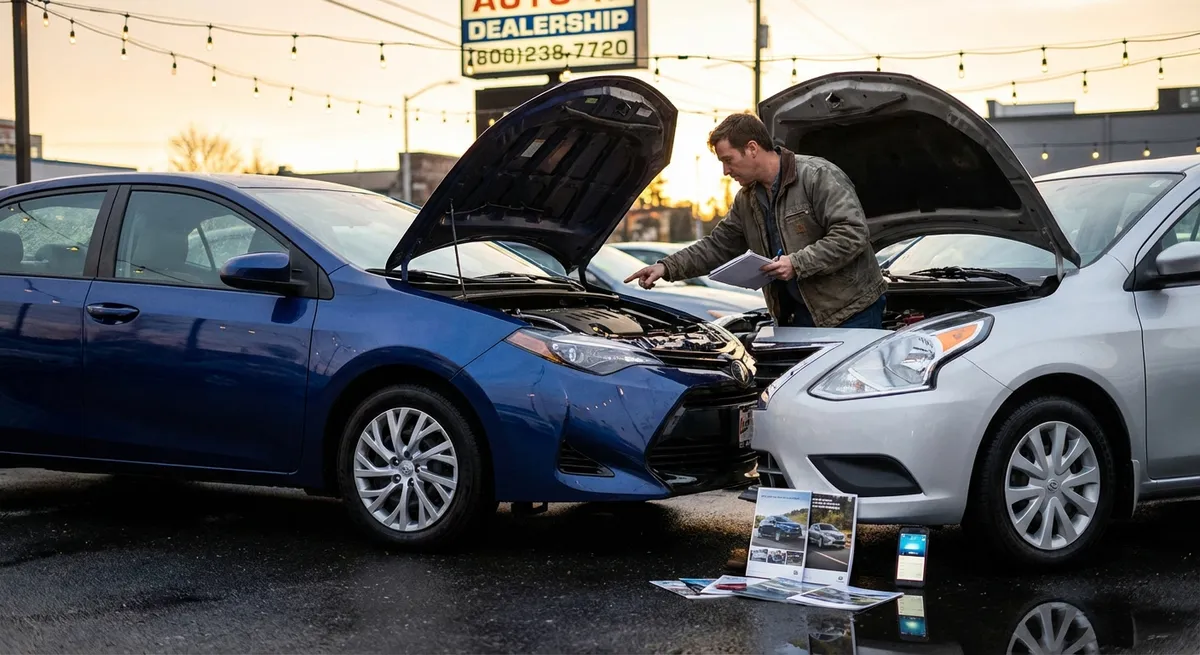
Start With “Total Cost to Own,” Not Just the Sticker
Too many shoppers fixate on the purchase price and monthly payment, ignoring long‑term costs that quietly make one “cheap” car more expensive than another.
Look at total cost to own over 3–7 years, including:
- Depreciation: Some brands and body styles hold value better than others. A slightly more expensive car up front can cost less overall if it keeps its resale value.
- Insurance: Two similarly priced vehicles can differ by hundreds of dollars per year in insurance costs. Performance trims, advanced driver-assist packages, and repair complexity all influence premiums.
- Fuel or electricity: Consider your real commute and driving style. Highway-heavy driving favors efficient gas or diesel; city driving may favor hybrids or EVs if charging is practical.
- Maintenance and repairs: Check average repair costs and part availability. Euro performance cars, for example, may have higher parts and labor costs than mainstream Japanese or Korean models.
- Taxes and fees: Sales tax, registration, and local levies can make a big difference, especially on higher‑priced vehicles.
Use reputable cost-of-ownership calculators and compare at least three vehicles side by side. The one with the lowest payment today isn’t always the one that treats your wallet best over the life of the car.
Separate the Car Deal From the Money Deal
Dealers often blend multiple levers—price, trade-in value, interest rate, and add-ons—into one conversation. That’s how you end up feeling “confused but somehow convinced” in the finance office.
To stay in control, break the process into separate, clean steps:
Lock in your financing options first
Before you set foot in a showroom, get preapproved from a bank, credit union, or reputable online lender. This gives you a benchmark interest rate and maximum budget, and it signals to the dealer that you’re a prepared buyer.
Negotiate the vehicle price alone
When discussing numbers, keep trade-in and financing off the table at first. Focus on the out-the-door price (vehicle, taxes, and mandatory fees). This makes it harder for extras to creep in unnoticed.
Only then talk trade-in value
Research your car’s estimated trade-in value using multiple tools. Take photos and notes on condition and maintenance history. If the offer is too low, be ready to sell privately or get quotes from instant-buy services.
Evaluate dealer financing as a second option
Once the sale price is settled, let the dealer try to beat your preapproved rate. Sometimes they can, especially with manufacturer incentives—but you’re comparing from a strong position.
Handled this way, you can see clearly which part of the deal is actually good and which is just shifting numbers from one line to another.
Use Market Data Like a Pro (Not Just the Sticker on the Window)
Asking “Is that your best price?” is weak if you don’t know what the market is doing. Real leverage comes from knowing the going transaction ranges in your area and nearby markets.
Here’s how to use data tools effectively:
- Check market value on multiple platforms
Look at transaction-price data and listings for the exact trim, engine, mileage range, and options you want. Pay attention to what sells quickly vs. what sits on the lot.
- Watch inventory levels
When a model is overstocked locally, dealers have more reason to negotiate or stack incentives. Low inventory and hot demand mean less room for aggressive offers, so adjust your expectations.
- Expand your radius when it makes sense
Pricing can shift significantly across regions due to incentives, demand, and shipping costs. Sometimes a one-way flights-and-drive-back strategy for a car in another state still nets big savings—even after travel and possible shipping.
- Track price movements over a few weeks if you can
If you’re not under time pressure, monitor prices for your target model. A consistent downward trend, new incentives, or aging inventory (cars sitting 60–90 days) can signal the right moment to move.
Walk into negotiations with printouts or screenshots of comparable listings. You’re not threatening the dealer—you’re just clearly framing what the market says is fair, which often nudges the conversation toward realistic numbers.
Treat the Contract and Add-Ons Like a Second Negotiation
The deal isn’t done when you agree on the price. The finance office is where many buyers lose ground through rushed signatures and impulse add-ons.
Slow this part down and treat it as a second, separate negotiation:
- Scrutinize the line items
Look for doc fees, dealer-installed accessories, “protection packages,” and charges that weren’t discussed earlier. Some are legitimate; others are pure margin. Question everything you don’t recognize.
- Extended warranties and service contracts
- Check what the factory warranty already covers and for how long.
- Ask for the full contract to read: coverage, exclusions, deductibles, and claim process.
- The price is often negotiable, and you usually don’t have to decide that day; some can be added later.
- GAP coverage and insurance products
For some owners—especially high-mileage drivers planning to keep the car past its factory warranty—these can be sensible. But:
GAP (Guaranteed Asset Protection) can be valuable if you have a small down payment or a long-term loan; it fills the gap between what your insurer pays in a total loss and what you still owe. Compare dealer GAP pricing to your auto insurer’s offering—insurers often charge less.
- Resist emotional pressure
If you hear language like “this protects your investment” or “you wouldn’t want to risk such an expensive car,” reset the conversation. Ask: “What’s the total cost, and what specific scenarios does this cover?” If the explanation is vague, you probably don’t need it.
Think of this stage as a defensive game: your goal is to preserve the good deal you already built, not to let it be diluted by expensive extras that don’t match your actual needs.
Use Time to Your Advantage, Not Theirs
Timing doesn’t just mean “end of the month,” though that can help. It’s about understanding when your priorities lock you in—and how to avoid that.
Practical ways to use time in your favor:
- Don’t shop under pressure
If your current car just died and you need wheels tomorrow, you’ve already surrendered most of your leverage. If possible, start shopping months before you absolutely must have a replacement.
- Be willing to walk
Let the salesperson know early: “I’m not in a rush; I want the right car on the right terms.” Then live by that. If the numbers or the car aren’t right, leave. Dealers know many buyers won’t come back; walking out signals you’re serious.
- Let the follow-up work for you
After an in-person or phone quote, don’t be afraid to pause. Over the next few days, you may see price adjustments, new incentives, or better terms in your inbox—especially near sales targets.
- Consider ordering vs. buying from inventory
If you want a specific configuration, ordering from the factory may reduce the pressure to accept dealer-installed add-ons or unwanted packages. In some cases, you can secure better pricing by committing to an order during a slow period.
Your strongest negotiating asset is the ability to say “not yet” or “not this one.” When you pair that with solid numbers and a clear plan, the process shifts from stressful to controlled and predictable.
Conclusion
Smart car buying isn’t about memorizing a script or delivering the perfect one-liner at the dealership. It’s about structure: knowing the full cost picture, splitting the deal into manageable parts, bringing real market data to the table, defending your contract from unnecessary extras, and using time on your terms. When you handle each of these pieces deliberately, you don’t just get a better price—you get a car that actually fits your life, your budget, and your long-term plans. That’s the kind of purchase you don’t regret three, five, or ten years from now.
Sources
- [Consumer Reports – True Cost of Car Ownership](https://www.consumerreports.org/cars-driving/car-maintenance/the-true-cost-of-car-ownership-a4874777711/) – Explains how fuel, maintenance, depreciation, and insurance affect long-term costs
- [Edmunds – How to Buy a New Car](https://www.edmunds.com/car-buying/how-to-buy-a-new-car.html) – Step-by-step guidance on pricing, negotiating, and understanding fees
- [Kelley Blue Book – 5 Steps to Negotiating a Car Price](https://www.kbb.com/car-advice/articles/5-steps-to-negotiating-the-best-price-on-a-car/) – Practical negotiation strategies and market-pricing tips
- [National Highway Traffic Safety Administration (NHTSA) – 5-Star Safety Ratings](https://www.nhtsa.gov/ratings) – Official crash test and safety ratings to factor into your purchase decision
- [Federal Trade Commission – Buying a New Car](https://consumer.ftc.gov/articles/buying-new-car) – Government guidance on contracts, add-ons, and your rights as a buyer