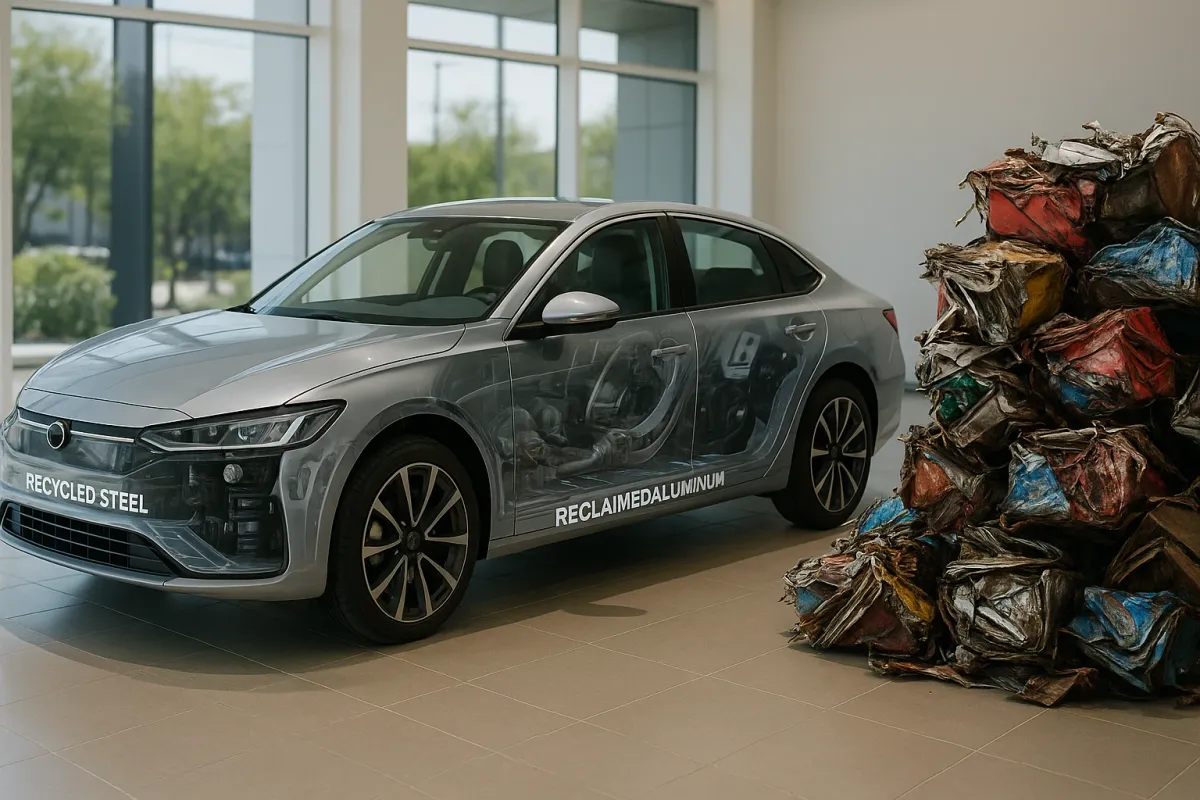
Behind the art and the headlines is a practical question for drivers right now: how does the shift to recycled and advanced metals actually affect the car in your driveway—or the one you’re about to buy?
Below are five concrete ways recycled and high‑tech metals are changing cars today, and what you can do as an owner to benefit from the trend instead of getting burned by it.
1. Understand Where Recycled Metal Shows Up In Modern Cars
Recycled metal is no longer just a “nice to have” line in an automaker’s sustainability report—it’s baked into the structure of many new models. Steelmakers like ArcelorMittal and SSAB, and automakers from Ford and GM to Mercedes‑Benz, are pushing high‑recycled‑content steels and aluminum into critical areas: body panels, subframes, and suspension components. Meanwhile, battery‑electric vehicles increasingly rely on recycled aluminum and, in some cases, recycled nickel and cobalt in battery packs.
For you as an owner or shopper, it matters where that material is used. Recycled steel in non‑crash‑critical panels (hoods, doors, trunk lids) is low risk and usually invisible to you. High‑strength steels and advanced alloys in crash structures and frames must meet strict standards regardless of whether the feedstock was recycled or virgin. When shopping, look for automakers who publish details about recycled content and sourcing for key components, not just vague “green” marketing.
Ask the dealer or check the manufacturer’s tech documentation or press materials: does this model use high‑recycled‑content steel or aluminum? In what parts of the car? Transparency is a good signal that the brand is treating recycled materials as engineering choices—not just PR.
2. Don’t Assume “Recycled” Means “Weak” (But Watch Paint & Corrosion)
The viral appeal of sculptures made from discarded car parts feeds an old idea: scrap is second‑rate. In metallurgy, that’s outdated. Properly processed recycled steel or aluminum can meet or exceed the performance of virgin material. The key is how it’s sorted, decontaminated, alloyed, and finished. Automakers are partnering with specialized recyclers and using advanced smelting and filtering processes to control impurities.
Where this touches you is long‑term durability—especially corrosion. Even high‑grade metal can fail prematurely if surface prep, galvanizing, or paint application isn’t up to par. Recycled content doesn’t automatically cause rust, but rapid scale‑up of new supply chains sometimes reveals coating or quality‑control issues a few years down the line.
Actionable steps:
- If you live in a road‑salt region, schedule an annual underbody wash and inspection. Pay special attention to weld seams, subframes, and suspension mounting points.
- For new models or first‑year redesigns, consider rust‑proofing from a reputable shop if you plan to keep the car long‑term.
- Watch owner forums for your model year. If premature rust or paint bubbling shows up on many vehicles in similar spots, document it early—while your corrosion or perforation warranty is still alive.
3. Leverage The Metal Shift To Save Weight, Fuel, And Brakes
One of the biggest reasons automakers chase new alloys and recycled aluminum is weight. Less weight means lower fuel consumption, better EV range, and less stress on brakes and tires. Tesla, Ford’s F‑150, Rivian, and many new crossovers use extensive aluminum and advanced high‑strength steel to hit efficiency targets without making vehicles feel flimsy.
As an owner, lighter construction changes how you should think about wheels, cargo, and accessories. Heavy steel wheels, oversized roof racks, and massive aftermarket bumpers can undo the efficiency gains you paid for. Even small changes can add up when they’re far from the vehicle’s center (roof, tailgate, large off‑road tires).
Practical moves:
- When replacing wheels, choose high‑quality alloy wheels, not cheap, heavy replicas. Ask for the wheel weight—reputable brands publish it.
- If you rarely use that cargo box or roof basket, remove it between trips. Extra weight and drag hit fuel economy and EV range noticeably.
- When towing with lighter, aluminum‑intensive vehicles, respect tongue‑weight and payload limits. These structures are strong, but they’re engineered with tight safety margins. Overloading can shorten the life of hitches, subframes, and suspension arms.
4. Treat “Recyclable” EV And Battery Materials As A Long‑Term Warranty Issue
As EVs go mainstream, the metals story shifts to batteries and electric motors. Carmakers like Tesla, BYD, and Hyundai, and suppliers like CATL and Panasonic, are pushing higher levels of recycled nickel, cobalt, and copper into new battery cells. Governments in the EU, U.S., and China are backing this with regulations that will soon require minimum recycled content.
For you, the immediate concern is not whether the nickel in your pack is recycled; it’s whether the pack will last, and what happens at end‑of‑life. Real‑world durability so far suggests that well‑managed packs regularly exceed 150,000–200,000 miles. But chemistry tweaks to enable more recycling or cheaper production may have trade‑offs in cycle life or cold‑weather performance.
Smart owner strategies:
- When shopping for an EV, read the battery warranty in detail: coverage years, mileage, and capacity retention (e.g., “70% after 8 years/100,000 miles”).
- Ask directly whether your model’s cells use a new chemistry this year. First‑generation chemistries sometimes have teething issues that only show up in certain climates.
- Clarify what happens to your pack at the end of its life. Some brands have clear take‑back and recycling programs, which can improve residual values—and make it easier to sell or trade in later.
5. Make Your Own Car Part Of The Recycled‑Metal Loop
Brian Mock’s sculptures are a flashy example of what’s possible with reclaimed material, but the most important actor in the loop is still you: the owner deciding what happens when your car is damaged, modified, or scrapped. The global auto industry is racing toward “circularity”—keeping metals in use instead of in landfills—but it only works if end‑of‑life vehicles and parts go to the right places.
Whenever you part out or dispose of components—wheels, exhausts, body panels—choose licensed recyclers or dismantlers instead of the cheapest unregulated option. Many modern parts are more valuable as feedstock than as waste, especially aluminum body panels, catalytic converters, and high‑strength steel sections. Insurance companies are increasingly steering repairs toward certified shops that participate in verified recycling streams; when you have a say, opt into those programs.
Practical ways to close the loop:
- If your car is totaled, ask the insurer where it’s going and whether the yard is a certified automotive recycler.
- When replacing panels or wheels, consider high‑quality used or reconditioned OEM parts. You often get better fit and finish than budget aftermarket pieces, and you support the reuse ecosystem.
- If you’re a DIY enthusiast, keep clean scrap (aluminum wheels, non‑contaminated steel) separated and sell directly to reputable metal recyclers instead of tossing it in mixed junk.
Conclusion
This week’s spotlight on reclaimed‑metal art syncs with a much bigger shift in how cars are built: from traditional, linearly sourced metal to a high‑tech, recycled, and carefully engineered material mix. For drivers, the takeaway isn’t just that your next car is “greener”—it’s that metal choices now impact your maintenance, efficiency, safety, and resale value in very real ways.
By understanding where recycled and advanced metals show up, watching for corrosion and coating issues, protecting your vehicle’s weight advantage, reading EV battery warranties carefully, and feeding your old parts back into proper recycling streams, you turn a vague sustainability trend into practical benefits every time you drive.