Start With Your Use-Case, Not the Model Name
Before you fixate on a specific make and model, get clear on how the car will actually be used. Your real-world needs are a better starting point than brand loyalty or favorite YouTube reviewer opinions.
Think about your daily driving: commute distance, typical speeds, and parking situation. City driving with tight parallel parking may call for a compact hatchback with good visibility and tight turning radius, while long highway commutes benefit from comfortable seats, adaptive cruise control, and good fuel economy. Consider what you haul: kids, pets, tools, sports gear, or nothing more than a backpack. Cargo space, rear seat access, and roof rack options become more or less important depending on that.
Also factor in your local climate. In snow-prone regions, all-wheel drive and heated seats may be worth prioritizing, while hot climates make a strong air-conditioning system and heat-resistant interior materials more critical. Once you’ve defined how the car will actually live its life, build a short list of target models that match that profile, rather than chasing a single “dream car” and trying to force it to fit your situation.
Actionable point #1:
Write down three non‑negotiables (for example: “fits two car seats,” “30+ mpg highway,” “back-up camera”) and three “nice-to-haves.” Use this simple list to filter every listing before you get emotionally attached.
Decode the Listing Before You Waste a Trip
A lot of frustration in used car buying comes from driving out to see cars that were never good candidates in the first place. A careful “desk check” of the listing can save you hours and help you spot red flags early.
Start with the basics: verify year, mileage, trim level, and transmission type, then cross-check the asking price against pricing guides like Kelley Blue Book or Edmunds. If a price is far below market, don’t assume you’ve found a miracle; it often means there’s a hidden problem, an accident history, or salvage/branded title. Read the description carefully: vague phrases such as “runs good,” “just needs a little TLC,” or “priced to sell, don’t lowball” without maintenance details should trigger more questions.
Photos can tell a story too. Look for consistent panel gaps, matching paint shades, even tire wear, and shots of the odometer and VIN (if visible). Interior photos should show airbag covers intact, no peeling steering wheel controls, and minimal moisture staining on carpets. Sellers who provide detailed maintenance records in photos or list specific work (“timing belt and water pump done at 95k miles”) are usually more serious and transparent.
Actionable point #2:
Before contacting a seller, run the VIN through a reputable vehicle history service, and compare the history (title status, mileage records, accident reports) with what’s in the listing. If details don’t match, move on.
Make Your Test Drive a Structured Inspection, Not a Joyride
The test drive is your best chance to catch problems that aren’t obvious on paper. Treat it like a light inspection, not just a quick spin around the block. A good seller or dealer should allow you to spend at least 20–30 minutes with the car and drive it on both city streets and a faster road.
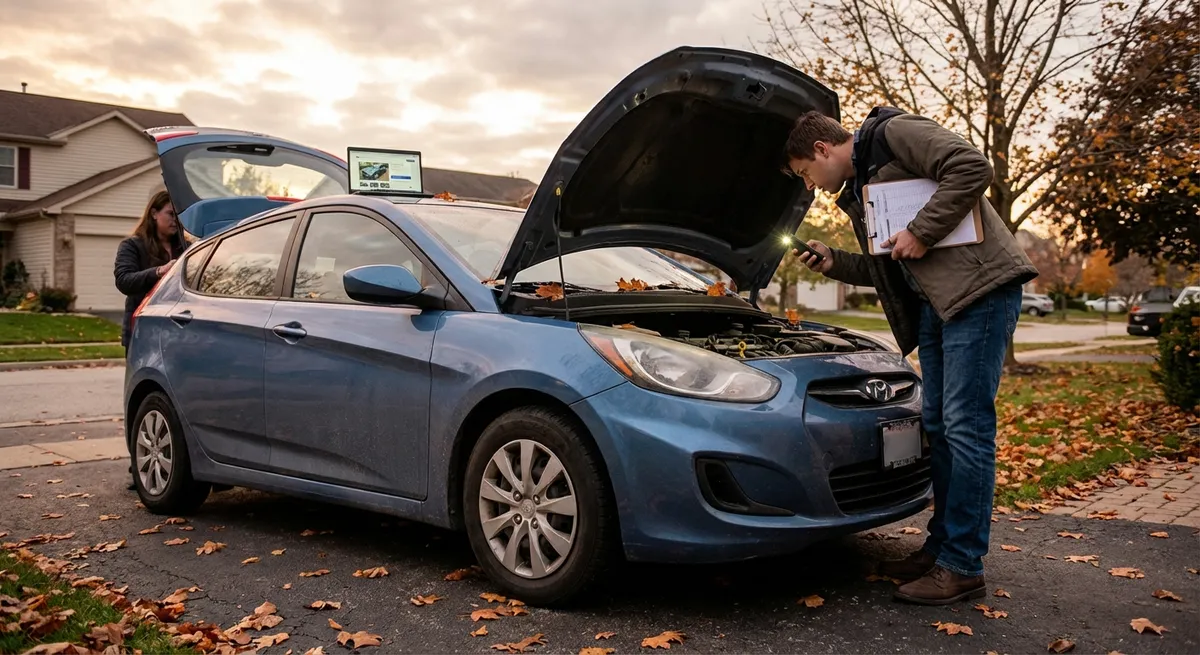
Begin with a walk-around in daylight. Check for mismatched paint, overspray around door seals, uneven panel gaps, or misaligned headlights and bumpers—these can hint at past collision repairs. Inspect the tires: they should have even tread wear across all four corners; heavy wear on one side can signal alignment or suspension issues. Open and close all doors, the hood, trunk, and fuel door. Inside, test every switch you can: windows, locks, infotainment system, HVAC modes and fan speeds, seat adjustments, mirror controls, and any driver-assist features.
On the drive, notice how the engine starts (rough, smooth, delayed), whether there are vibrations in the steering wheel or seat at different speeds, and how the transmission shifts (smooth vs. delayed or jerky). Listen with the radio off: clunks over bumps, whining when accelerating, or grinding when turning the wheel can all indicate suspension, bearing, or steering problems. Finally, test the brakes with a controlled, firmer stop from moderate speed—pulling to one side or pulsing pedals are signs worth a closer look.
Actionable point #3:
Bring a simple printed checklist for your test drive (exterior, interior, electronics, and driving impressions) and jot quick notes right after. It keeps you objective and makes it easier to compare multiple cars later.
Use a Pre-Purchase Inspection as Cheap Insurance
Even if you’re mechanically inclined, an independent pre-purchase inspection (PPI) by a trusted shop is one of the smartest moves you can make on any used vehicle. Technicians can access lift equipment, scan tools, and service data that you don’t have in a driveway or parking lot. A good inspection catches hidden rust, oil leaks, worn bushings, coolant issues, and electronic fault codes before they become your problem.
Ask the seller in advance whether they’re willing to allow an independent inspection; serious sellers expect this. Choose a shop that regularly works on the brand you’re considering. For example, if you’re buying a German car, a specialist shop may be more familiar with common failure points and service campaigns than a general repair garage. Provide the shop with the VIN and any concerns you noted during your test drive, and ask them to prioritize safety-critical systems (brakes, steering, suspension) and known model-specific issues.
Use the PPI report as both a decision tool and a negotiation tool. A clean report may justify paying closer to asking price, especially in a tight market. If the inspection reveals issues, you can either walk away or estimate repair costs and see if the seller will adjust the price realistically. What you want to avoid is inheriting thousands of dollars in deferred maintenance because you skipped a few hundred dollars on inspection.
Actionable point #4:
Budget for a PPI from the start—treat it as part of the “price of the car,” not an optional extra. If a seller refuses an independent inspection outright, treat that as a major warning sign and look elsewhere.
Structure the Deal to Protect Yourself at Signing
By the time you’re ready to buy, the emotional momentum is strong, and that’s where rushed decisions can cost you. Slow down at the paperwork stage and treat every signature as a final commitment. Whether you’re buying from a dealer or a private party, clarity on the numbers and the legal status of the car is essential.
For dealer purchases, get an itemized buyer’s order and scrutinize every line. Look for add-ons you didn’t request, such as paint protection, nitrogen-filled tires, VIN etching, or “market adjustment” fees. These can often be negotiated or removed. If you’re financing, focus on the total cost of the loan, not just the monthly payment. Confirm the interest rate, term length, and whether there are any prepayment penalties. If something doesn’t match what you discussed, ask for it to be corrected in writing before you sign.
With private sellers, verify the name on the title matches the ID of the person you’re dealing with, and that there are no liens listed, or that any existing lien will be paid off as part of the transaction through the bank. Use a secure, traceable payment method and meet in a safe, public location—many police departments offer designated spots for this. Complete the bill of sale and title transfer according to your state’s DMV requirements and keep copies of everything. Don’t drive off without valid temporary tags or insurance in place; in many states, you’re required to have proof of insurance before taking the car on public roads.
Actionable point #5:
Before the day you buy, visit your state DMV website and read the exact steps and documents needed for a private sale or dealer purchase. Have a simple checklist ready so you don’t miss title signatures, odometer disclosures, or tax/registration requirements when emotions are running high.
Conclusion
Buying a used car doesn’t have to feel like a gamble if you treat it as a structured process instead of a one-time leap of faith. Start by matching the car to your real use-case, then filter listings objectively, test drive with a checklist, invest in a professional inspection, and slow down at the paperwork stage. These steps won’t guarantee perfection, but they dramatically tilt the odds in your favor—and turn “hope this works out” into a confident drive home.
Sources
- National Highway Traffic Safety Administration (NHTSA) – Vehicle Safety & Recalls - Official U.S. government database to check for open recalls on a car using the VIN
- Federal Trade Commission (FTC) – Buying a Used Car - Detailed federal consumer guidance on used car shopping, inspections, and contracts
- Kelley Blue Book – Used Car Values & Pricing - Widely used reference for fair market pricing and value comparisons
- Edmunds – How to Test-Drive a Car - Practical advice on structuring a test drive and what to look and listen for
- USA.gov – State Motor Vehicle Services - Portal to official state DMV sites for title transfer, registration, and legal requirements