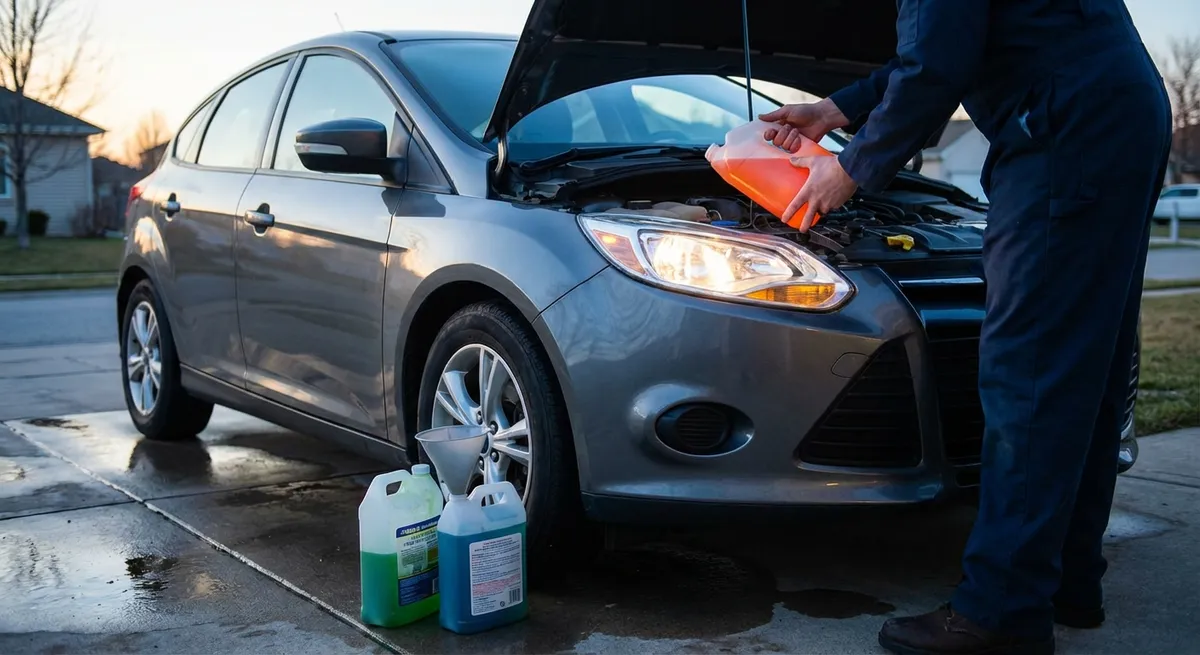
Make Fluid Checks a Routine, Not a Mystery
Engine oil, coolant, brake fluid, transmission fluid, and power steering fluid each have one job: protect expensive parts from heat, friction, and corrosion. When levels are low or fluid is contaminated, those parts wear out faster—and repairs get very expensive, very quickly. Set a recurring reminder on your phone (monthly is a good baseline) to pop the hood and visually inspect levels using the markings on each reservoir or dipstick; your owner’s manual has diagrams and specs.
If you notice you’re topping off the same fluid more than once between service intervals (especially coolant or oil), treat it as an early warning, not just “one of those things”—small leaks are always cheaper to fix than failures. Pay attention to fluid color and smell: milky coolant can signal internal engine issues, dark or burnt-smelling transmission fluid can point to overheating, and black, sludgy brake fluid often means moisture and corrosion in the system. When in doubt, take clear, well-lit photos and show them to a trusted shop; they can give you a quick sanity check before you commit to any big work.
Treat Tires Like a Wear Item You Actually Control
Tires are the only contact patch between your car and the road, and they quietly handle acceleration, braking, cornering, and load—all day, every day. Running tires underinflated not only kills fuel economy, it overheats the tire structure and can lead to blowouts, especially on long highway drives. Get a simple digital tire gauge and keep it in the glove box; check pressures when the tires are cold (before driving or after the car has been parked a few hours) and compare to the placard on the driver’s door jamb rather than the number on the tire sidewall.
Rotate your tires on a schedule that matches your driving pattern—typically every 5,000–7,500 miles, or at every oil change for simplicity—so they wear evenly and maintain predictable handling. While you’re inspecting, look for uneven wear: more wear in the center often means overinflation, both edges can indicate underinflation, and diagonal or cupped patterns usually point to suspension or alignment issues. Also pay attention to age; even if tread looks decent, most manufacturers recommend replacement around six years from the DOT date code due to rubber hardening. This approach makes your car feel more stable, reduces stopping distances, and often gets you an extra season or more out of each set of tires.
Use the “Under-Car” Glance to Catch Problems Before They Spread
You don’t need a lift to spot early trouble under your vehicle—just a habit of looking at the ground where you park and giving the underbody a quick visual scan when you have safe space to do it. Fresh spots on the driveway or garage floor can tell you a lot: clear or slightly yellow fluid might be coolant, dark brown or black is often engine oil or gear oil, reddish or pink is commonly transmission or power steering fluid, and water usually comes from the A/C system draining normally after use. Snap photos of any new spots with something for scale (like your keys) so you can track whether the problem is getting worse.
When it’s safe, kneel down and look along the sides and rear of the car: check for dangling plastic shields, loose exhaust hangers, or wet, oily surfaces on suspension or steering components. Rust forming around brake lines, fuel lines, or structural points like subframe mounts is another red flag worth addressing early, especially in regions that use road salt. Mentioning specific observations—“wet area on the rear right shock,” “fresh oil on lower engine pan,” or “flaking rust near brake lines”—to your mechanic gives them a head start and can cut diagnostic time, which sometimes saves you labor cost and prevents you from driving until something fails completely.
Align Your Maintenance Schedule With How You Actually Drive
The factory maintenance schedule in your owner’s manual (or on the manufacturer’s website) is written for broad averages, but your real-world use might be much harsher. Lots of short trips, frequent towing, stop-and-go traffic, extreme temperatures, dusty environments, and repeated high-speed driving all push you into what most brands call “severe service.” That typically means shorter intervals for oil changes, transmission fluid, differential fluid, and filters because the car rarely gets to operate in its most efficient and least stressful range.
Instead of blindly following mileage alone, combine time and usage. If you mostly drive short trips across town, you might hit the “time” limit (like 12 months) before the mileage for oil or brake fluid changes is reached, and you should still service on time. Keep a simple log—digital or on paper—with dates, mileage, and the type/brand/grade of fluids and parts used; this helps you avoid over-servicing (wasting money) and under-servicing (increasing risk). When planning services, group related items: for example, combine a coolant change with a visual inspection of hoses and the radiator, or a brake fluid flush with a pad and rotor inspection. This targeted approach respects both your budget and the car’s design, instead of just saying yes to every “recommended service” on the shop’s upsell list.
Protect Airflow: Engine and Cabin Filters as Performance Multipliers
Air filters are often treated as afterthoughts, yet they strongly influence both how your car runs and how it feels to be inside it. The engine air filter cleans the air your engine breathes; when clogged, it restricts airflow and can reduce performance and fuel economy, especially on older or naturally aspirated engines. Check it at least annually or according to the mileage interval in your manual; in dusty or pollen-heavy environments, you may need to replace it more often. Replacement is frequently a straightforward DIY task—no special tools, just open the airbox, swap the filter, and ensure a proper seal when closing it back up.
The cabin air filter, which cleans the air coming through your HVAC system, directly affects defogging performance, airflow, and the amount of dust and allergens circulating inside. Over time it can become packed with leaves, dust, and even mold, leading to weak airflow and funky smells when you use the A/C or heat. Locating and replacing it (usually behind the glove box or under the cowl at the base of the windshield) is one of the most accessible maintenance jobs a car owner can do. Upgrading to a filter with activated carbon or enhanced filtration media can also reduce odors and pollutants, which is particularly noticeable in heavy traffic or urban driving. Keeping both filters fresh supports your engine’s efficiency and keeps the interior environment healthier and more comfortable.
Conclusion
Most major breakdowns start out as small, quiet problems: a slow fluid leak, uneven tire wear, a neglected filter, or a service interval stretched “just one more time.” By building a simple routine around fluid checks, tire care, under-car inspections, schedule awareness, and basic filtration, you turn maintenance from random emergencies into predictable, manageable tasks. You’ll feel issues sooner, keep your car driving “like it should” for more years, and avoid handing your budget over to surprise repairs. A few focused habits now let you use the car as intended—confidently, reliably, and with fewer unwelcome stops at the shop.
Sources
- [U.S. Department of Energy – Fuel Economy: Keeping Your Car in Shape](https://www.fueleconomy.gov/feg/maintain.jsp) - Explains how proper maintenance (including tires and filters) affects efficiency and performance
- [National Highway Traffic Safety Administration – Tire Safety](https://www.nhtsa.gov/equipment/tires) - Covers correct tire pressure, tread, and maintenance for safety and longevity
- [AAA – Vehicle Fluids and What They Do](https://exchange.aaa.com/automotive/vehicle-maintenance/vehicle-fluids-and-what-they-do/) - Overview of key automotive fluids, their roles, and why checking them matters
- [Edmunds – Car Maintenance Guide](https://www.edmunds.com/car-maintenance/guide-page.html) - Manufacturer-specific maintenance schedules and guidance based on vehicle and usage
- [Bridgestone – How to Check and Change Your Car’s Air Filter](https://www.firestonecompleteautocare.com/blog/maintenance/how-to-check-change-car-air-filter/) - Step-by-step explanation of engine air filter inspection and replacement