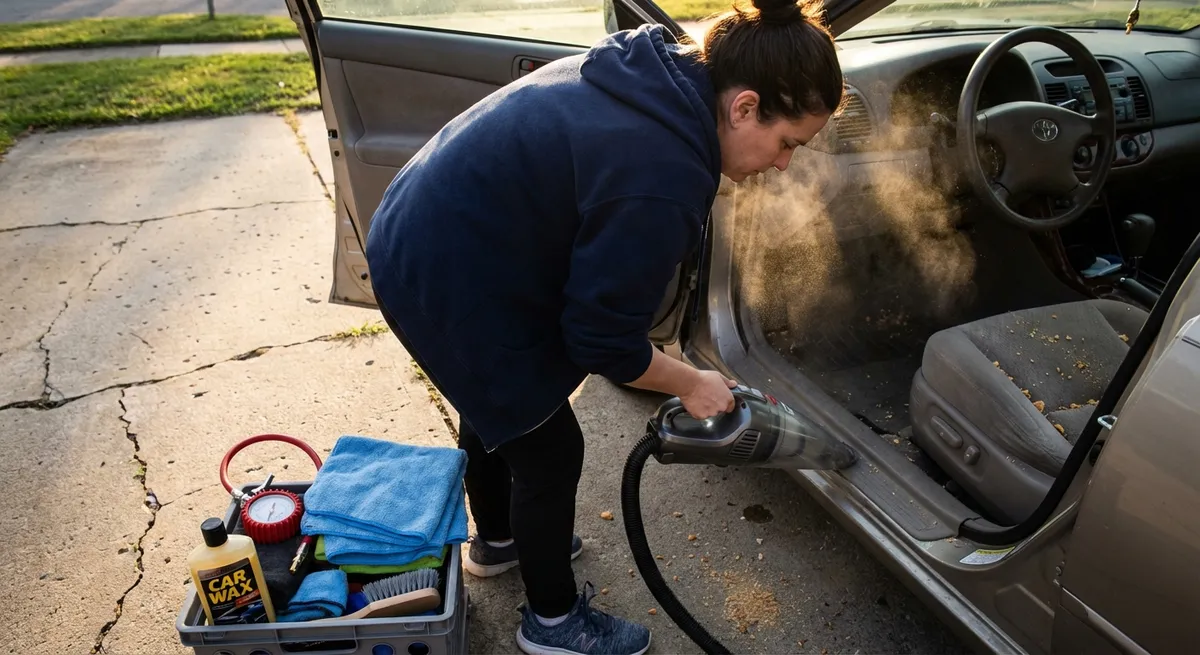
You don’t need a full toolbox or a lift to keep your car in good shape. What you do need is a simple routine and a basic understanding of what to watch. These five habits are designed for real-world drivers who want a car that just works, without turning maintenance into a second job.
Build a 60-Second Under‑Hood Check Into Your Week
Pop the hood once a week and give everything a quick visual scan. Start with fluids: look at the engine oil dipstick (color and level), coolant reservoir (between MIN and MAX marks), brake fluid level, and windshield washer fluid. You’re not trying to diagnose deep issues here—just spotting anything obviously low, dirty, or out of place. This simple ritual catches slow leaks and small issues before they strand you or turn into major repairs.
While the hood is up, look at belts and hoses. Belts shouldn’t be frayed, cracked, or heavily glazed (shiny and smooth instead of textured). Hoses should be free of bulges, wet spots, or crusty buildup at the clamps. Take 10 extra seconds to sniff—burning, sweet, or fuel-like smells that linger can be early warning signs. Do this weekly, and you’ll start to recognize what “normal” looks and smells like for your car, which makes it much easier to spot “not normal” early.
Use Your Ears and Hands: Feel Problems Before They Fail
Your senses are some of the best diagnostic tools you have. Turn off the radio for part of your commute and listen to how the car sounds over bumps, during turns, and while braking and accelerating. Clunks over bumps can hint at worn suspension components, whining that changes with speed may point to wheel bearings, and rhythmic thumping could be a tire issue. If a sound appears suddenly and sticks around, it deserves attention.
Your hands can also tell you a lot. Notice how the steering wheel feels at highway speed—if it starts to vibrate, you might have a wheel balance, tire, or alignment issue. Pay attention to the brake pedal: does it feel soft, spongy, or pulsing under your foot? That can mean warped rotors, air in the lines, or uneven pad wear. The key is consistency: when something in the car’s feel or sound changes and stays changed, don’t wait for it to “fix itself.” Document it with a quick note or voice memo and mention it specifically to your mechanic; clear, early descriptions save diagnostic time and money.
Treat Tires as a System, Not Just Rubber on the Corners
Tires are the only part of your car that actually touch the road, and they influence everything: safety, comfort, handling, and fuel economy. Start with pressure—check it at least once a month and before long trips using a decent gauge, not just the gas station pump display. Set the pressure to the value on the driver’s door jamb sticker, not the number on the tire sidewall. Underinflated tires wear faster on the edges, run hotter, and cost you fuel; overinflated tires can reduce grip and wear the center faster.
Next, pay attention to tread wear patterns. Uneven wear (inner edge, outer edge, cupping, feathering) is a message from your suspension and alignment. If your steering wheel is off-center when you’re going straight or the car gently drifts to one side, you’re due for an alignment. Don’t skip rotations—following your owner’s manual interval (often around 5,000–7,500 miles) helps all four tires wear more evenly, so you replace them as a set instead of chasing single-tire problems. If you drive a performance car or live where roads are rough, consider getting a proper alignment after any major impact like a pothole hit or curb strike; it’s cheaper than burning through a set of tires prematurely.
Keep Fluids Fresh Instead of Waiting for Failures
Engine oil gets all the attention, but your car relies on a whole ecosystem of fluids. Engine oil, coolant, brake fluid, power steering fluid (if not electric), and transmission fluid each have a job—and each breaks down over time. Follow your owner’s manual, but don’t treat the factory intervals as sacred if your driving is harder than “ideal”: lots of short trips, extreme heat or cold, heavy traffic, or frequent towing all justify shorter change intervals, especially for oil and transmission fluid.
Pay special attention to brake fluid and coolant, which many owners and shops ignore until there’s a problem. Brake fluid absorbs moisture over time, which can corrode internal components and reduce braking performance under hard use. A periodic flush (often every 2–3 years) keeps the system healthy. Coolant does more than prevent freezing; it contains corrosion inhibitors that protect your engine and radiator. Old coolant can turn acidic and start attacking internal passages, leading to expensive overheating issues. Treat fluid changes as preventive maintenance, not as responses to failures—replacing $50–$200 worth of fluid on schedule is far cheaper than a $2,000 transmission or engine repair later.
Protect the Parts You Touch Every Day: Seals, Latches, and Weatherstripping
Many annoying “old car problems” come from neglected rubber and moving contact points, not from big mechanical failures. A few times a year, wipe down your door seals and weatherstripping with a rubber-safe protectant to keep them supple and prevent sticking, wind noise, and water leaks. In cold climates, a light treatment before winter helps keep doors from freezing shut and tearing the seals when you pull.
Do the same for latches and hinges: use a suitable lubricant on door hinges, hood and trunk latches, and the fuel door hinge. This keeps everything moving smoothly, reduces squeaks and creaks, and prevents the kind of binds that lead to broken door checks or stuck latches. Don’t forget window tracks and sunroof seals—keeping them clean and lightly treated reduces motor strain and can help prevent costly regulator or sunroof track failures. These are small, low-effort jobs, but they directly affect how “tight” and well-cared-for your car feels every time you use it.
Conclusion
Maintenance doesn’t have to mean living at the shop or memorizing service manuals. By building a few simple habits—regular under-hood checks, paying attention to sounds and feel, treating tires as a system, keeping fluids fresh, and protecting everyday touchpoints—you dramatically raise the odds that your car stays solid, safe, and enjoyable far past the point when most people give up on theirs.
Pick one or two of these habits and start them this week. Once they’re part of your routine, add another. Over time, you’ll spend less energy worrying about what might go wrong and more time just driving a car that feels ready for anything.