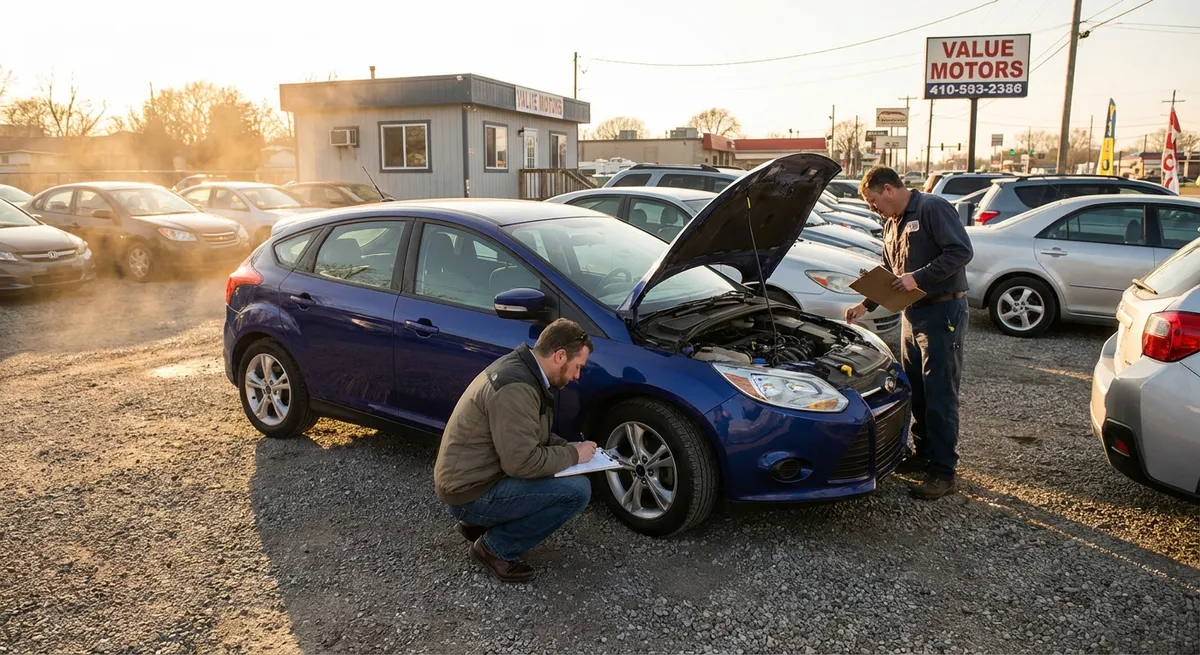
Below are five actionable moves that help you buy with confidence, not fear of hidden problems or surprise costs.
1. Define the Job Your Car Must Do (Before You Fall in Love)
Before visiting a dealer or browsing classified ads, get very clear on what your car actually needs to do for you. Most buying mistakes start here—people shop by emotion (“that looks cool”) instead of function.
Ask yourself:
- How many people do I routinely carry?
- How many highway miles vs. city miles do I drive?
- Do I tow, haul large items, or drive on rough roads?
- How long do I plan to keep this car (3 years vs. 10 years)?
- What’s more important to me: performance, comfort, tech, or fuel economy?
Turn the answers into a short “non‑negotiables” list. For example:
- Must seat 5 adults comfortably
- Must fit in a small city parking space
- Must average at least 30 mpg combined
- Must have advanced safety features (automatic emergency braking, blind-spot monitoring, etc.)
Then create a separate “nice-to-have” list: premium audio, sunroof, leather seats, wireless Apple CarPlay/Android Auto, etc. When you’re on a test drive or negotiating a deal, this keeps you grounded: if a car fails your non‑negotiables, you walk—even if it has every cool extra you can imagine.
2. Calculate Total Ownership Cost, Not Just the Monthly Payment
A low monthly payment can hide an expensive car. To avoid budget shock down the road, look at the full cost of owning the car for the time you expect to keep it.
Key factors to calculate:
- Purchase price + fees: Include destination charges, doc fees, taxes, and registration.
- Financing cost: Use the APR, loan term, and down payment to estimate total interest paid. A slightly higher payment on a shorter loan can save thousands.
- Insurance: Request quotes for the exact year, make, model, and trim you’re considering. Sporty trims, performance engines, and luxury badges can drive premiums up fast.
- Fuel or energy cost: Compare city and highway mpg (or kWh/100 mi for EVs). If you drive 15,000 miles a year, even a 5 mpg difference can add hundreds of dollars annually.
- Maintenance and repairs: Check typical service costs, timing belt vs. chain, and known problem areas for the model you’re considering.
- Depreciation: Some cars hold value much better than others, which matters if you plan to sell or trade in within a few years.
Create a simple spreadsheet comparing 2–3 cars you’re seriously considering. You might find that the cheaper-to-buy car actually costs more to own over five years, once you add fuel and maintenance.
3. Treat Vehicle History and Inspection as Non-Negotiable on Used Cars
For used cars, a clean detail job can hide serious mechanical or structural issues. Never skip two essential steps: a vehicle history check and an independent inspection.
Vehicle history report essentials:
- Title status: Avoid salvage, rebuilt, or flood titles unless you know exactly what you’re getting into.
- Accident history: One minor fender-bender with proper repairs may be fine; repeated collisions or structural damage are red flags.
- Odometer verification: Ensure mileage is consistent and realistic.
- Ownership pattern: Former rental or fleet cars can be fine but may have higher wear.
- Service records: Look for regular oil changes and major services performed on time.
Independent inspection basics:
- Choose a trusted mechanic, not one recommended by the seller.
- Ask for a pre‑purchase inspection that includes:
- Scan of the onboard diagnostics system (to catch hidden or pending codes)
- Undercarriage and frame check for rust or damage
- Brake condition (pads, rotors, fluid)
- Suspension and steering wear
- Fluid leaks (oil, transmission, coolant, power steering)
- Tire wear patterns (can reveal alignment or suspension issues)
- Use the inspection report as leverage:
- If the issues are minor, negotiate repairs or a price reduction.
- If the issues are major (transmission, structural rust, flood damage), walk away.
Spending a couple hundred dollars on an inspection can save you thousands in surprise repairs—or help you negotiate a significantly better price.
4. Use Test Drives to Expose Real-Life Flaws, Not Just Enjoy the Ride
Many test drives are too short and too polite. You don’t just want to know if the car “feels nice”—you want to know how it behaves in your real driving environment and whether anything bothers you enough to be a problem long-term.
When you test drive:
- Drive on mixed roads: city streets, highway, and if possible, rough pavement or hills.
- Check seat comfort: After 20–30 minutes, do you feel any back, leg, or neck discomfort?
- Evaluate visibility: Any blind spots, thick pillars, or annoying reflections?
- Test low-speed behavior: Is the transmission smooth from a stop? Any hesitation, surging, or clunks?
- Listen for unusual noises: Wind noise at highway speed, rattles over bumps, squeaky brakes, or humming that increases with speed.
- Try parking maneuvers: Parallel parking, tight turns, reversing into a spot—does it feel natural and manageable in spaces similar to your daily life?
- Experiment with infotainment and controls: Can you adjust climate, navigation, and audio without taking your eyes off the road for long?
If possible, bring a regular passenger (partner, friend, or family member) to sit in the back seat. Their feedback on comfort, space, and noise can catch issues you might miss. A test drive that reveals deal-breakers is not a failure—it’s money and time saved.
5. Lock In Your Financing Options Before Negotiating Price
Walking into a dealership without a clear financing plan hands the seller a powerful tool: they can play with loan terms and monthly payments to distract from the real price of the car. Securing financing options beforehand puts you back in control.
Steps to prepare:
- Check your credit: Review your credit score and report for errors and current debts. A better score typically qualifies you for a lower APR.
- Get pre‑approval: Talk to your bank, credit union, or reputable online lenders. Ask for:
- The maximum loan amount
- The APR
- The term (in months)
- Use pre‑approval as a benchmark: When the dealer offers financing, compare:
- Interest rate
- Loan term
- Any add‑ons (extended warranties, gap insurance, extras rolled into the loan)
When you negotiate at the dealership, focus on out-the-door price—the total cost including taxes and fees—rather than monthly payment. Once the price is set, then evaluate whether dealer financing can beat or match your pre‑approval without extending the loan excessively.
Avoid stretching to very long terms (72–84 months) just to get the payment down. It might feel affordable month-to-month but often costs far more in interest and increases your risk of being “upside down” (owing more than the car is worth) if you need to sell or trade in early.
Conclusion
A confident car purchase isn’t about winning a negotiation; it’s about making a decision you still feel good about years later. When you clearly define what you need, calculate total ownership costs, insist on history and inspections for used cars, test drive like a skeptic, and walk in with your own financing options, you eliminate most of the common pitfalls.
The car market will always be full of flashy ads and “limited-time” deals. Taking a calm, methodical approach—using the five moves above—turns that noise into background and keeps your focus exactly where it belongs: on a car that truly fits your life, your budget, and your long-term plans.
Sources
- Consumer Reports – Car Buying & Pricing - Overview of smart car buying strategies, including pricing and negotiation.
- U.S. Federal Trade Commission – Buying a Used Car - Government guidance on inspections, history reports, and used-car protections.
- Edmunds – True Cost to Own - Tool and explanations for estimating total ownership costs over time.
- Insurance Information Institute – What Determines the Cost of My Auto Insurance? - Explains how car choice and other factors affect insurance premiums.
- NHTSA – 5-Star Safety Ratings - Official U.S. government crash test ratings to compare vehicle safety.