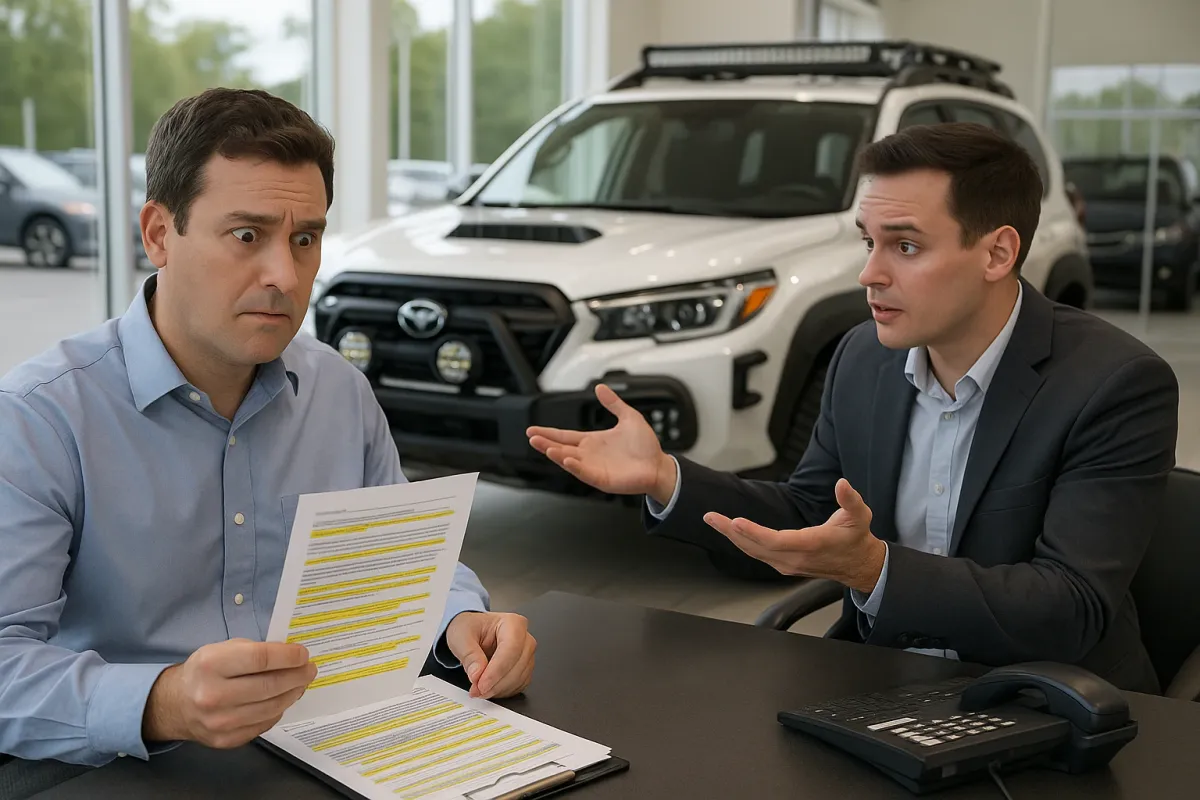
Right now, with new‑car inventories stabilizing and dealers looking for profit in finance and add‑ons, the pressure to accept extras is higher than ever. Think of it like a red‑carpet makeover gone wrong: flashy, dramatic, and expensive, but not actually helping you in real life. Here’s how to stay in control of your car’s “look” and your budget when the finance manager starts playing stylist.
Know Your “Base Outfit” Before You Walk In
Just like a celebrity doesn’t show up to an awards show without knowing what dress they’re actually there to wear, you shouldn’t walk into a dealership without knowing the real, no‑extras price of the car you want.
Before you set foot in the showroom, build your exact trim and options on:
- The manufacturer’s official website (for MSRP and packages)
- At least two pricing sites (Edmunds, Kelley Blue Book, TrueCar, Cars.com) for real‑world transaction ranges in your area
Print or save screenshots of:
- MSRP and destination fee
- Any factory packages you actually want
- Current factory incentives or lease programs
This becomes your “base outfit.” When the salesperson or finance manager starts layering on extras, you can clearly see what’s factory and what’s dealer‑added. If the buyer’s order or window sticker shows things that weren’t on your printout—nitrogen tires, “appearance package,” VIN etching—you’ll spot them instantly.
Key move: Tell the salesperson up front, “I’m only interested in factory options, not dealer add‑ons. Please give me the price on the car exactly as it appears on the manufacturer’s build sheet.” This sets the tone before the styling session even starts.
Separate “Runway Extras” From Real‑World Value
At the Fashion Awards, big hair and dramatic outfits get attention, not practicality. Dealer add‑ons work the same way: they’re designed to sound impressive, not necessarily to give you value.
Common “runway” extras and what they really mean:
- Paint sealant / ceramic‑like coatings: Often just a glorified wax sold for hundreds. A reputable detail shop can apply a real ceramic coating for similar or slightly more money, with better results and documentation.
- Fabric protection / interior sealants: Usually a spray‑on product that’s cheap in bulk. You can buy a top‑shelf fabric protector yourself for a fraction of the cost.
- Nitrogen in tires: Offers minimal real‑world benefit for normal drivers. Air is already 78% nitrogen. Not worth $100–300.
- VIN etching: Theft deterrent that’s often cheap or free through your local police department or insurance events. Dealer markups here are massive.
- “Security packages” with door edge guards, wheel locks, mudflaps: Sometimes useful, but almost always overpriced compared to OEM or aftermarket parts.
Before you sign, ask for each extra:
- “What is the actual cost of this item?”
- “Is this factory equipment or dealer‑installed?”
- “Can this be declined and removed from the contract?”
If they can’t explain the real‑world benefit in under 30 seconds without buzzwords, it’s probably more fashion than function.
Treat the Finance Office Like a Contract, Not a Makeover
Most shoppers think the finance office is just where you sign papers. In reality, it’s where the “styling” happens: extended warranties, GAP coverage, maintenance plans, and more. This is where deals quietly get padded.
To stay in control:
- Ask for a blank buyer’s order first. Before discussing payments, request a full breakdown of:
- Vehicle price
- Taxes and fees
- Any dealer add‑ons
- Any aftermarket products (warranty, GAP, maintenance, alarms)
- Refuse to negotiate based on monthly payment alone. A classic move is: “For only $28 more a month, we can add….” Over a 72‑month loan, $28/month is more than $2,000.
- Get the rate up front. If you’re financing, ask:
- “What APR are you offering me?”
- “What term length?”
- “Is this rate contingent on any products, like an extended warranty?”
Say this exact line:
“Please give me the total out‑the‑door price with nothing added except tax, title, and legitimate government fees. Then we can discuss any optional products separately.”
Some dealers quietly tie the best rate to buying extras. If they say yes, you have leverage to walk or finance through your bank or credit union instead.
Pre‑Shop Protection Plans So You’re Not “Ambush Styled”
Imagine showing up to a red‑carpet event with no plan and letting a random stylist choose your outfit. That’s what most buyers do with extended warranties and GAP coverage—they see them for the first time under pressure, while a stack of paperwork is in front of them.
Do this before your dealership visit:
- Check what your factory warranty already covers.
- 3–5 years bumper‑to‑bumper
- 5–10 years powertrain
- Roadside assistance for several years
- Get quotes from third‑party providers and your own lender.
- Extended service contracts
- GAP insurance
Many brands now include:
Credit unions often sell:
at lower prices than dealers.
- Decide in advance if you even need them.
- You keep cars 7–10+ years
- You drive higher‑than‑average miles
- You’re buying a complex EV or luxury model with pricey electronics
You’re a better candidate for extended coverage if:
When the finance manager pitches you a $3,000+ plan, you can respond calmly with:
“I’ve already shopped coverage options, so unless you can beat the price and terms I have in writing, I’ll pass.”
That shifts the conversation from emotional fear (“What if the engine blows?”) to rational comparison shopping.
Put Everything In Writing and Be Ready to Walk
The reason viral fashion moments blow up—like Gwendoline Christie’s towering hair—is because they’re visual and undeniable. Your car deal should be the same: crystal‑clear, documented, and not open to “Oh, I thought we agreed on…”
Before you sign anything:
- Compare the final buyer’s order to your notes.
- Add‑ons you declined
- “Doc fees” or “dealer fees” that seem inflated
- Changes to agreed‑upon price or trade‑in value
- Circle any mystery charges and ask:
Check line‑by‑line for:
“What exactly is this? Is it required by law, required by the lender, or is it optional?”
If it’s optional and you don’t want it, ask for it to be removed.
- Don’t be afraid to step outside.
Take photos of the contract and text them to a trusted friend, relative, or even your bank’s loan officer. A five‑minute pause can save you thousands.
- Be prepared to walk away.
The strongest negotiating tool you have is the ability to stand up and leave. You can politely say:
“This doesn’t reflect what we discussed. I’m going to think it over and look at other options.”
In today’s market, with online listings everywhere and more transparency than ever, most dealers know that losing a sale over a paint sealant or nitrogen package is bad business. If you show you’re serious about walking, the “styling” tends to come off very quickly.
Conclusion
What’s happening on red carpets and runways right now is a perfect reminder: dramatic styling gets attention, but it’s not always what works best in real life. Today’s dealerships are doing the same thing with your car purchase—turning simple deals into heavily “styled” packages loaded with extras you may not need.
If you walk in knowing your base price, separate flash from real value, treat the finance office like a contract (not a makeover), pre‑shop protection plans, and insist everything match in writing, you’ll leave with a car that fits your life—not the dealer’s idea of a profitable “look.” Your next new ride should feel like a well‑chosen outfit: comfortable, confident, and exactly what you meant to buy.