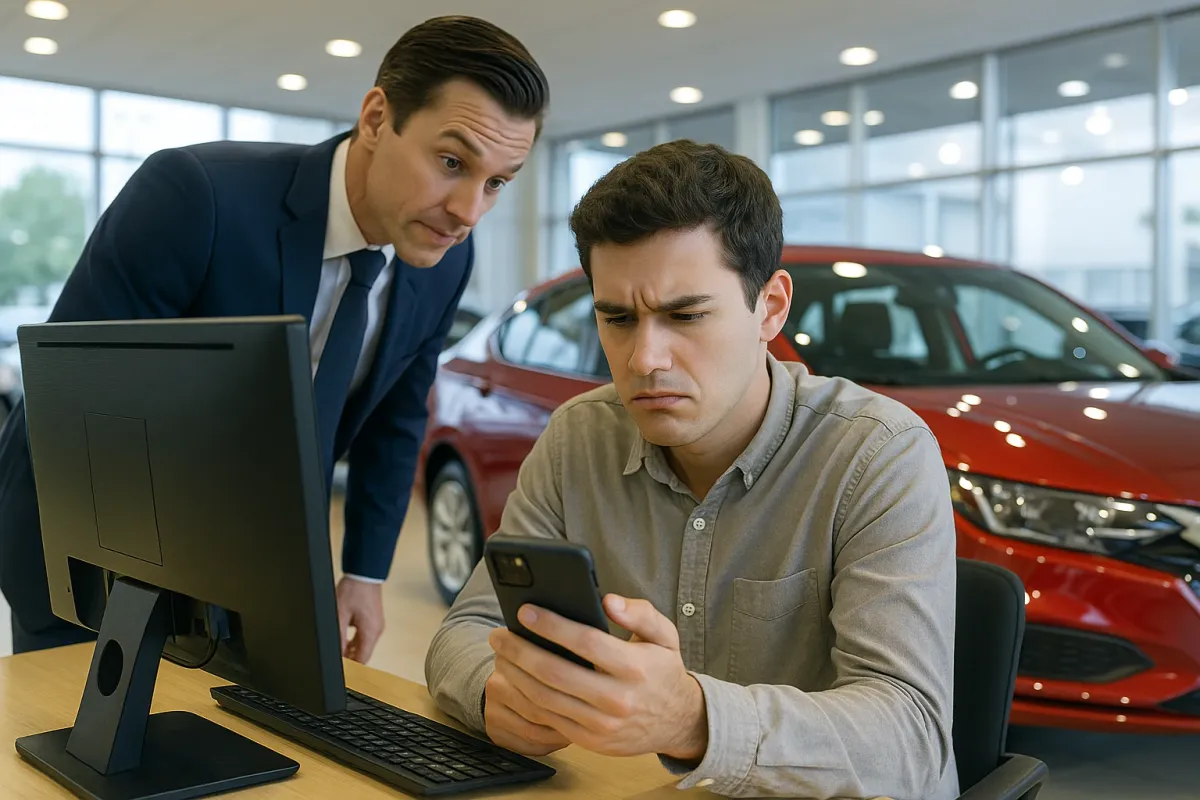
If you’re browsing Facebook Marketplace, Craigslist, or third‑party sites for your next ride, you’re in the same danger zone as people wiring money to fake landlords or clicking on too‑good‑to‑be‑true “deals.” The playbook is almost identical: urgency, emotion, and just enough realism to feel legit.
Here’s how to apply those scam‑busting lessons directly to car buying—so you don’t learn the hard way.
Treat Every “Too Good To Be True” Listing Like A Potential Scam
One of the biggest themes from the Reddit scam stories is simple: unbelievable deals are usually fake. That “lightly used” crossover that’s $4,000 under market value is no different than the $300 latest‑gen iPhone from a stranger—it’s bait. Before you message a seller, look up the model on sites like Kelley Blue Book, Edmunds, or AutoTempest to see real market pricing in your area. If it’s dramatically below the going rate, assume there’s a hidden problem or a scam until proven otherwise. Don’t ignore vague descriptions, missing VINs, or oddly clean stock photos. Real private sellers usually write human‑sounding descriptions, mention quirks or flaws, and post photos that clearly show their driveway, garage, or street—not brochure‑perfect press pictures. When the story and the price don’t line up with reality, walk away.
Never Send Money Before You See The Car In Person
The Reddit thread is full of people sending deposits for rentals, pets, or products that never existed. Car scammers use the same script: “I’m out of town,” “I’m in the military overseas,” “I’m sick and can’t meet,” followed by “Just send a refundable deposit and I’ll hold the car for you.” Don’t do it. Legitimate private sellers expect buyers to show up, inspect, and pay at the same time. If a seller insists on a deposit before you’ve seen the car, insist just as strongly on an in‑person meeting or a reputable third‑party escrow service that you choose—not one they link you to. Refuse to pay via Zelle, Cash App, gift cards, or wire transfer; these are favorites in pretty much every scam discussed on Reddit because they’re hard to reverse. If you’re buying from a distance and can’t inspect yourself, hire a known inspection service (many mobile mechanics and companies like LemonSquad operate nationwide) and pay only after you get a report and confirm the vehicle exists at a real address.
Verify The Seller’s Identity, Ownership, And The Vehicle’s History
A recurring pattern in the scam stories is “I trusted the profile, not the paperwork.” In the car world, that’s a recipe for buying a stolen, salvaged, or flood‑damaged vehicle. Before you get emotionally attached to a listing, ask for: a clear photo of the title (with sensitive data partially covered), a photo of the VIN plate on the dash and door jamb, and at least one photo of the seller standing with the car in the same location as the listing photos. Run the VIN through multiple databases—Carfax or AutoCheck if possible, plus your state’s title lookup if it’s available online. Look for inconsistent mileage, frequent ownership changes in short periods, or branded titles (salvage, rebuilt, flood). Compare the seller’s name on their ID (which you should check during the meet‑up) to the name on the title. If anything doesn’t match or the seller gets defensive about sharing basic proof of ownership, treat it like those “Nigerian prince” emails Redditors warned about—polite decline and move on.
Slow Down When A Seller Pushes Urgency Or Emotion
Many scams highlighted on Reddit use pressure and emotional hooks: “I need this gone today,” “My loss is your gain,” “I’m selling this for my late father and just want it to go to a good home.” Car scammers know FOMO is their best friend. They’ll tell you there are “three buyers lined up,” or they’ll create a tragedy‑tinged backstory to disarm you. Your best defense is a simple rule: no on‑the‑spot decisions without at least a basic inspection and a night to sleep on it. When you go see the car, bring a simple printed checklist: fluid leak checks, cold start behavior, tire wear, panel gap consistency, warning lights, and a full test drive including highway speeds. If the seller objects to a mechanic inspection or tries to rush you through a “quick look,” treat that urgency the same way Redditors treated those “reply in 10 minutes or your account will be locked” emails—pure manipulation. A real seller will be patient with a serious buyer who asks grounded questions and wants to verify things properly.
Use Safe Locations, Safe Payments, And Safe Documentation
Another pattern from the scam thread: deals moved away from safe, traceable channels into dark corners where you have no recourse. For car buying, that means avoiding secluded meet‑ups, parking lot title transfers at night, and handshakes without paperwork. Whenever possible, meet at a bank branch during business hours. You can withdraw a cashier’s check there, verify funds with the teller, and often complete the title notarization on the spot. Some police departments also offer “safe exchange zones” under video surveillance—ideal for private‑party sales. Before you hand over money, confirm the VIN on the title matches the VIN on the car in at least two places. Fill out a bill of sale that includes: buyer and seller full names, addresses, phone numbers, VIN, sale price, date and time, and “sold as‑is” language. Take a clear photo of the seller’s ID with their consent and keep a copy of everything. Then, head directly to your DMV or your state’s online portal as soon as possible to transfer ownership; dragging your feet leaves the door open to tickets, tolls, or legal issues in the previous owner’s name.
Conclusion
The scams people are sharing online right now aren’t just horror stories—they’re a live training manual for what not to do when big money’s on the line, especially with cars. The tactics hitting Redditors—fake profiles, urgency, emotional stories, deposits, and untraceable payments—are exactly what’s playing out in shady listings across marketplaces and classified sites every day.
Approach every used‑car deal with the same skepticism you’d use on a suspicious email: verify, slow down, cross‑check, and never pay before you’re sure. If a seller or situation makes you feel rushed, confused, or uneasy, trust that feeling. There will always be another car; there won’t always be another chance to get your money back.