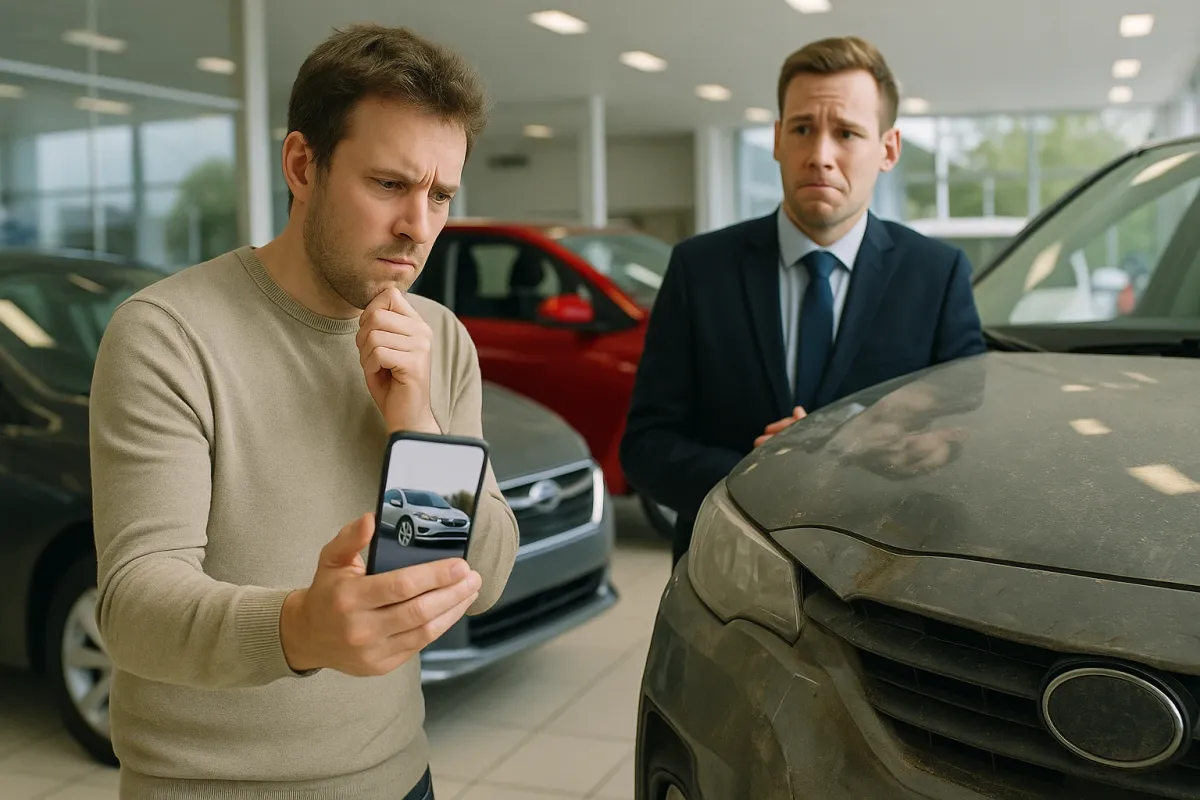
Dealers and private sellers are getting better at photo‑driven ads, and buyers are making faster decisions based on what looks good in a feed. That’s a dangerous combo. If you’re about to buy a car—new or used—use these five practical checks so you don’t become the automotive version of someone who bought a house with a toilet in the kitchen.
Look Past “Instagram-Ready” Photos And Read The Background
Those viral real estate photos prove one thing: what’s around the subject can be more revealing than the subject itself. Apply that mindset to car listings. Don’t just stare at the paint and wheels—study the entire frame. Is the car always photographed wet or in deep shade? That might be hiding paint defects or mismatched panels. Are there no close‑ups of the driver’s seat, steering wheel, or pedals? That often means excessive wear that doesn’t match the claimed mileage. Check if every shot is taken at the same flattering angle; if you never see the passenger side, assume there’s a reason.
Equally important is where the car is shot. A clean, consistent location is a good sign of a professional operation; a different driveway in every photo can hint at old pictures recycled from previous owners or even a copied ad. If you spot another car with the same background and weirdly similar description when you search the plate or VIN, you might be dealing with a curbstoner (unlicensed flipper). Before you message the seller, ask yourself: “If this were a house photo, would I be zooming in to see what they’re trying to hide?”
Treat Missing Photos Like Closed Doors In A House Tour
In those “listings from hell,” the worst surprises are usually behind the one door you never see. On vehicle ads, missing photos play the same role. If you don’t see: a straight-on shot of each side, a close-up of all four wheels, a clear odometer photo, and detailed interior shots (front seats, back seats, trunk, infotainment, and driver controls), treat the listing as incomplete—even if the price looks great.
For newer cars, check that you can visually confirm key options that affect value: for example, if the ad claims a premium audio system, you should see branded speaker grilles; if it lists advanced driver assistance like adaptive cruise or lane-keep, look for the radar unit in the grille or camera pods near the mirror. When something matters to you but isn’t pictured, don’t guess—message the seller and request specific photos or a short walk‑around video. A serious, honest seller will respond quickly and thoroughly; hesitation or “I’ll get to it later” responses are modern red flags, just like a real estate agent who refuses to show you the basement.
Compare The “Staging” To The Story The Seller Is Telling
Those viral houses with dramatic mood lighting and random neon signs are trying to distract buyers from deeper issues. Car listings do this too, just with different props. If the ad leans heavily on flashy add‑ons—LED strips, huge wheels, tint, aftermarket exhaust—but gives almost no detail on maintenance, service history, or tire age, you’re looking at automotive staging, not substance.
Cross-check the description against what you see. If the seller says the car is “meticulously maintained,” you should not see greasy engine bays, worn floormats, or curb‑rashed wheels. A “garage-kept” car rarely has a baked headlight on one side and not the other. If they claim “all highway miles,” look at the driver’s seat bolster and steering wheel: deeply crushed side bolsters and shiny, worn steering wheels usually suggest a lot of in‑and‑out city driving. Just like you’d side-eye a “fully renovated” listing that still has 1970s tile, don’t be afraid to mentally downgrade exaggerated car ad language.
Use Simple Angles To Spot “Weird Layout” Problems Before A Test Drive
The funniest real estate photos are the ones where the layout makes zero sense—a shower over a staircase, a toilet in the dining room. Cars can have their own “what were they thinking?” issues, especially if they’ve been in accidents or modified badly. You can catch some of these just from photos if you know what to look for.
Always check front and rear shots straight on: do the headlights look symmetrical in height and gap to the hood? Does the grille line up evenly? Any panel that seems slightly off or sits proud of the one next to it might indicate crash repair. Side‑profile photos should show consistent gaps along the doors and fenders; wavy reflections in the paint can hint at filler or respray work. Inside, look for mismatched trim, airbag covers that don’t sit flush, or steering wheels and seat belts that look newer than the rest of the cabin—those can be signs of airbag deployment. Before you even visit, make a quick “does this layout make sense?” pass the same way you’d evaluate a home floor plan.
Pressure-Test The Price Like You Would A Suspiciously Cheap House
Those “too cheap to be real” houses in bad listings are usually exactly that—cheap for a reason. The car market is similar. If a vehicle is priced well below comparable listings in your area, don’t rush to be the first one there; slow down and figure out why. Start with a quick scan on major sites (Autotrader, Cars.com, local dealer inventories, Facebook Marketplace) for the same year, trim, and similar mileage. If everyone else is clustered higher and one listing is thousands lower, there’s almost always a catch.
Use that suspicion productively. Ask for the VIN and run your own history report; look specifically for accident titles, flood damage, or repeated auction appearances. In photos, zoom in on lower door seams, trunk wells, and carpet edges for any sign of water staining or rust—that’s the automotive version of spotting water marks on a basement wall. If the seller pushes you to skip inspections or says “price is firm, lots of interest,” but can’t produce service records or a clean explanation, walk away. In both houses and cars, it’s cheaper to pass on a sketchy bargain than to own someone else’s hidden disaster.
Conclusion
Those outrageous “real estate listings from hell” are entertaining, but they’re also a reminder: photos are marketing, not proof. When you shop for a car—especially online—assume the camera is trying to sell you a story. Your job is to read past it. Study the background, demand missing photos, compare staging to the seller’s claims, scan for “weird layouts,” and test every deal against the broader market. Do that, and you’ll scroll right past the automotive money pits and land on a car that’s ready for real‑world driving, not just pretty pictures.