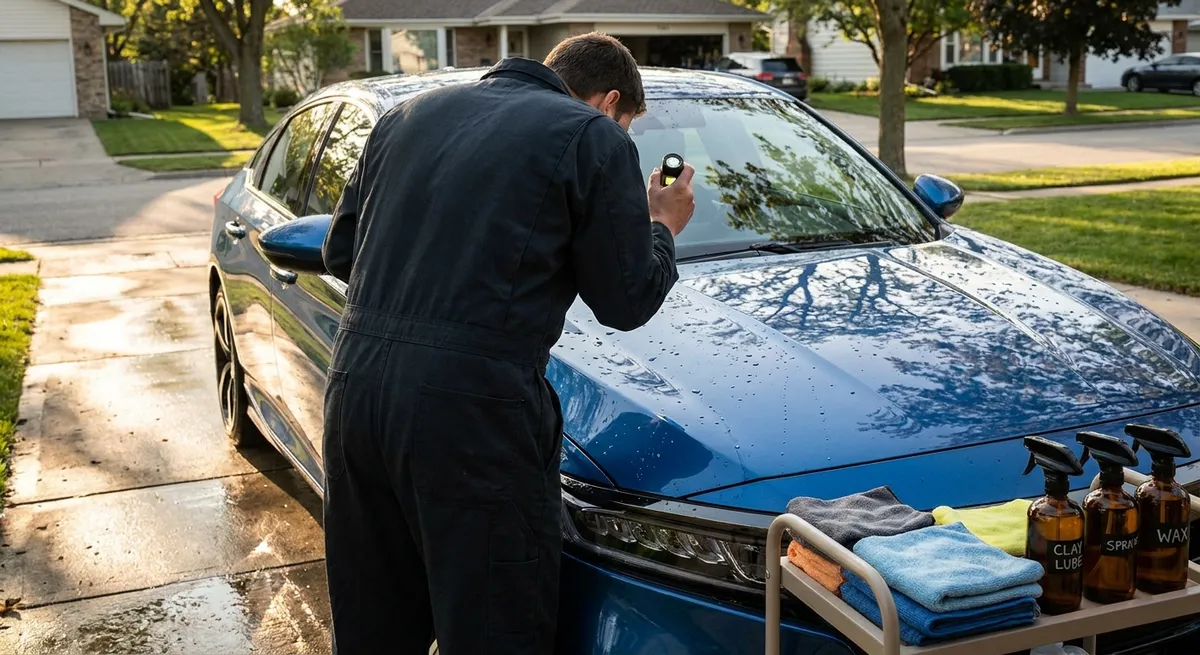
This isn’t about show-car gloss. It’s about using cleaning and inspection together to keep your car tighter, safer, and more valuable for years.
1. Wash With a Plan, Not Just With Soap
A rushed driveway wash can do more harm than good: grinding dirt into paint, stripping protective coatings, or forcing water into places it shouldn’t go. A methodical wash behaves like preventative maintenance.
Use a structured approach:
- Pre-rinse thoroughly. Knock off loose grit before touching the paint. This reduces scratching, which thins clearcoat over time and makes corrosion more likely.
- Use the two-bucket method. One bucket for soapy water, one for rinsing your mitt. This keeps abrasive dirt out of your wash media and extends the life of your paint.
- Choose pH-balanced car shampoo. Strong household detergents can strip wax or sealant and dry out rubber trim, shortening its life and making water ingress more likely.
- Work top-down, panel by panel. Roof, glass, hood, upper panels, then lower rockers and bumpers last. The dirtiest, most abrasive areas get cleaned after the cleaner ones.
- Dry, don’t air-dry. Water spots can etch into clearcoat and glass. Use a clean microfiber drying towel or a blower to move water out of seams, mirrors, and emblems where it can sit and encourage corrosion.
Done right, a proper wash preserves paint, trim, and weather seals—the same components that protect wiring, sensors, and structure underneath.
2. Treat the Engine Bay Like a Machine Room, Not a Mystery Box
Many owners never open the hood unless a light comes on. Detailing the engine bay—carefully—forces you to look directly at belts, hoses, and leaks that are easy to miss otherwise.
Focus on controlled cleaning, not soaking:
- Start with a visual inspection. Before touching anything, look for seepage around valve covers, coolant residue, frayed belts, cracked hoses, or loose connectors.
- Cover sensitive components. Use plastic bags and tape to shield the alternator, exposed air filters, ECUs, and open fuse boxes before you introduce any moisture.
- Use low-pressure, not a pressure washer. Mist with a spray bottle or gentle hose setting. High pressure can push water into connectors, coil packs, or sensors.
- Degrease smartly. A quality engine-safe degreaser and soft brushes will lift grime off plastics and metal. Avoid harsh solvents that can damage rubber or paint.
- Finish with protectant where appropriate. A light, non-greasy dressing on rubber hoses and plastic covers can reduce drying and cracking, and make leaks easier to spot on the next inspection.
By making the engine bay clean and orderly, you make new leaks obvious, belt wear visible, and fluid seepage hard to ignore. That turns “surprise breakdowns” into “scheduled repairs.”
3. Use Interior Detailing to Monitor Wear, Not Just Appearance
Interior maintenance is often dismissed as purely cosmetic. But that’s where many early warning signs of mechanical issues appear—if you’re paying attention while you clean.
Turn your interior detail into a diagnostic pass:
- Vacuum methodically. Move seats fore and aft to expose tracks and carpet edges. Rust flakes, damp padding, or unusual debris can hint at leaks or failing door seals.
- Inspect pedal pads and floor area. Excessive wear on clutch or brake pedals can reflect driving style and potential mechanical strain. Damp carpet around the driver’s footwell can indicate a heater core or windshield sealing issue.
- Listen and feel while you clean. Slide the seats and tilt them while vacuuming. Binding, clunking, or excessive play in seat tracks can be safety issues in a collision.
- Clean steering wheel and controls carefully. Sticky or inconsistent button feel can imply spills that may affect electrical contacts over time. Early cleaning helps prevent intermittent switch problems.
- Condition surfaces that matter. Leather seats and steering wheels benefit from periodic cleaning and conditioning to prevent cracking and tearing—damage that can affect side airbag deployment areas or seat-mounted wiring.
A well-maintained interior isn’t just pleasant—it preserves safety components, wiring runs, and structural pieces hidden beneath trims and carpets.
4. Decontaminate and Protect Surfaces to Fight Long-Term Damage
Normal washing doesn’t remove embedded contaminants that slowly chew through finishes. A “detail-level” decontamination schedule protects your car from the kind of damage that only shows up years later as rust, clearcoat failure, or trim degradation.
Build a simple decontamination routine:
- Use a clay bar or synthetic clay mitt periodically. This removes embedded industrial fallout, brake dust, and overspray from the paint. A smoother surface makes your protective layer (wax, sealant, or coating) more effective.
- Address tar and iron deposits. Dedicated tar removers and iron fallout removers (used as directed) target specific contaminants that standard soap misses, especially on lower panels and wheels.
- Seal the paint. A quality wax, sealant, or ceramic coating acts like a sacrificial layer against UV, road salt, sap, and bird droppings. This slows clearcoat oxidation and prevents corrosion from getting a foothold.
- Protect plastic and rubber. UV-blocking trim dressings on exterior plastics and weatherstripping reduce fading, chalking, and drying that lead to wind noise, water leaks, and door seal failure.
- Maintain wheels and brakes. Brake dust is corrosive. A non-acid wheel cleaner and dedicated brushes keep wheel finishes and calipers from pitting over time, and make it easier to spot cracked rims or damaged lugs.
This level of surface care is essentially corrosion control. It buys you years of healthier paintwork, fewer rust concerns, and a higher resale value.
5. Turn Every Detail Session Into a Structured Inspection
The real power of a “detailer’s eye” is habit. If you always clean in the same order, with the same level of attention, you’ll notice what doesn’t look, sound, or feel normal. That’s maintenance gold.
Build inspection into your routine:
- Walk-around before you start. Check tire tread and sidewalls, look for uneven wear, bulges, or cords showing. Examine all lights and lenses for cracks, condensation, or hazing.
- Check panel gaps and alignment. While washing and drying, pay attention to how doors, hood, and trunk close and line up. New misalignment can indicate worn hinges, latch issues, or past impact damage.
- Watch for fluid trails and stains. When cleaning lower body panels, wheels, and under-bumper areas, look for dried fluid streaks—oil, coolant, brake fluid, or grease.
- Monitor glass and wipers. Detailing the windshield and side windows is a chance to assess wiper performance, windshield chips, and crack growth before they compromise safety.
- Log your findings. Keep a simple note in your phone each time you detail: date, mileage, and anything that looked “off.” This creates a practical history you can show a mechanic or use to plan future work.
By pairing cleaning with systematic observation, your detailing time stops being purely cosmetic and becomes a regular, low-cost inspection interval—one where you’re close enough to the car to see what quick service visits often miss.
Conclusion
Adopting a detailer’s mindset doesn’t mean chasing mirror finishes or show trophies. It means using cleaning as an excuse to see your car closely and methodically, from the top of the roof to the floor of the engine bay.
When you wash with intention, keep the engine bay orderly, use interior care as a diagnostic check, decontaminate and protect critical surfaces, and treat every session as a structured inspection, you convert “cosmetic” work into real maintenance. The payoff shows up in fewer surprises, slower wear, and a car that feels tight and trustworthy years longer than it otherwise would.
Sources
- Consumer Reports – Car Washing and Detailing Tips - Covers best practices for safe washing and interior/exterior care
- AAA – Basic Vehicle Maintenance Tips - Explains why regular inspections and cleaning matter for long-term reliability
- U.S. General Services Administration – Corrosion Prevention for Vehicles - Discusses how contaminants and environment contribute to corrosion and how to reduce damage
- Edmunds – Under the Hood: What to Look For - Practical guide to visual engine-bay inspections and early warning signs
- Penn State Extension – Automotive Detailing and Appearance Care - Educational overview of detailing practices and their role in preserving vehicles