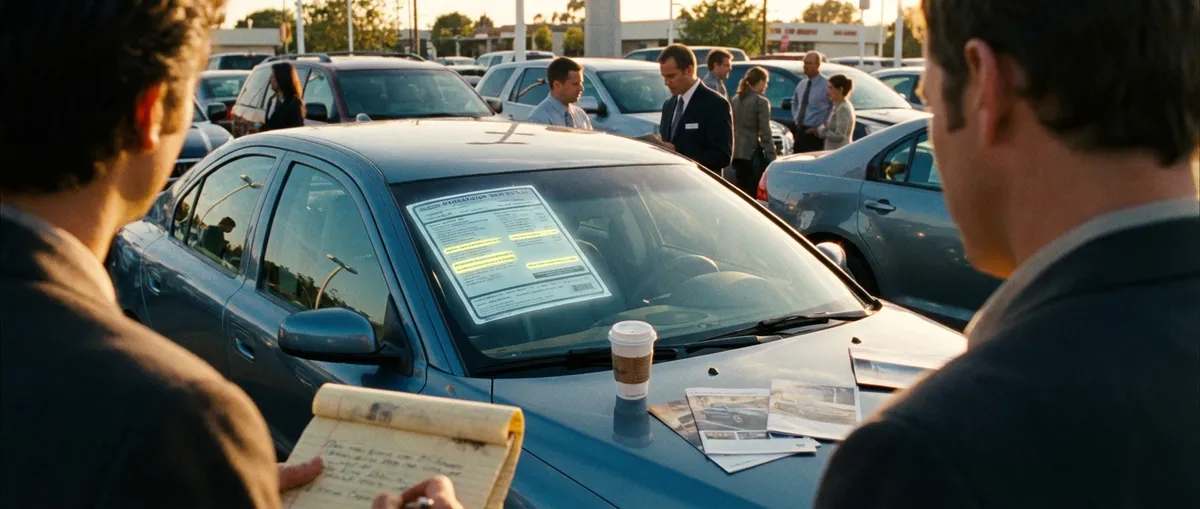
Know the Difference Between MSRP, Invoice, and Out-the-Door Price
Before you negotiate, you need to be clear about which numbers actually matter. The MSRP (Manufacturer’s Suggested Retail Price) is the sticker price, not a rule—it’s the starting point, not the finish line. The invoice price is closer to what the dealer paid the manufacturer, but it doesn’t include factory incentives, holdbacks, or bonuses the dealer may receive, so it’s not their true bottom line either.
The number that matters most to your wallet is the out-the-door (OTD) price, which includes the vehicle price, destination fee, taxes, title, registration, and any dealer fees. When comparing offers from multiple dealers—even in different cities—always ask for an itemized OTD quote in writing so you’re comparing complete totals, not just base prices. This keeps “add-on surprises” from appearing late in the process and gives you a clean basis for negotiation. For online listings, mentally add 8–12% for taxes and fees (depending on your state) as a rough estimate to avoid falling in love with a price that isn’t real.
Read Equipment Lists Like a Mechanic, Not a Marketer
Car listings and window stickers are full of trim names and packages that sound premium but may not add value for how you drive. Instead of focusing on buzzwords like “Sport,” “Premium,” or “Tech,” identify the equipment that directly affects safety, reliability, and long-term usability. Prioritize features like advanced driver-assistance systems (automatic emergency braking, blind-spot monitoring, adaptive cruise), high-quality headlights, and a spare tire (many new cars delete it).
Look at the powertrain details first: engine size and type (turbocharged vs. naturally aspirated), transmission (traditional automatic, dual-clutch, CVT), and drivetrain (FWD, RWD, AWD). These determine how the car will feel to drive, how durable it may be, and what maintenance might cost years later. Then separate “must-haves” (safety features, seat adjustment that fits your body, smartphone integration you’ll actually use) from “nice-to-haves” (panoramic sunroof, bigger wheels, ambient lighting). When comparing two models, create a short list of equipment you truly need and ignore marketing fluff—this keeps you from overpaying for features that will impress you for a week and then fade into the background.
Use Total Cost of Ownership to Filter Out “Fake Bargains”
A low purchase price can be a trap if the car is expensive to own over time. Before you get serious about any model, look up total cost of ownership (TCO) factors: expected depreciation, fuel or energy costs, insurance, maintenance, and repairs. A car with a slightly higher monthly payment but slower depreciation and lower maintenance can easily be cheaper over 5–7 years than the “cheaper” alternative.
Start with fuel economy or EV efficiency: for gas vehicles, compare mpg in real-world tests, not just EPA figures—look at owner-reported numbers on forums and review sites. For EVs, check estimated range and availability of fast charging along your usual routes. Then dig into reliability ratings and known issues over multiple model years; a model with chronic transmission or electronics problems can wipe out any upfront savings. Finally, get a rough idea of insurance costs by using online estimators or asking your insurer for sample quotes—sports trims, turbo engines, or advanced sensors in bumpers and windshields can raise premiums and repair bills. Use this TCO view as a filter: drop any model that looks cheap today but punishes you for years.
Turn Online Listings Into Leverage Before You Visit Any Seller
Walking in “cold” to a dealership or private seller leaves you reacting instead of leading. Instead, use online listings to create a shortlist of specific, real cars that match your needs, then use those listings as leverage. Search within a radius you’re actually willing to travel, filter by trim, mileage (for used), and must-have features, then save 3–6 concrete options. Note their VINs, asking prices, mileage, and any included CPO warranties or dealer add-ons.
Reach out via email or text and ask each seller the same targeted questions: confirm OTD price ranges, ask for the vehicle history report (for used cars), request the original window sticker if available, and ask for additional photos of high-wear areas (driver’s seat bolster, steering wheel, pedals, cargo area) and underbody rust where relevant. When you have multiple similar vehicles lined up, you can honestly say, “I’m choosing between your car and a similar one at $X OTD; if you can match or beat that, I’ll come in today.” This keeps the conversation anchored around value, not monthly payment, and lets you walk away confidently if a seller won’t move and you have better options lined up.
Inspect and Test With a Focused, Repeatable Checklist
Whether you’re buying new or used, a structured inspection and test drive helps you see what others miss. For used cars, start with basics: panel gaps (inconsistent gaps may indicate body repairs), overspray or mismatched paint, uneven tire wear, and any fluid leaks under the car. Sit in every seat, check visibility, operate all windows, mirrors, lights, wipers, and climate controls. Listen for wind noise around doors and sunroofs during the test drive. If the car is from a rust-prone region, look under the wheel arches, door sills, and, if possible, underbody components.
During the test drive, keep a mental script: low-speed driving (parking lot, tight turns) to check steering feel and suspension clunks; city speeds for transmission smoothness and brake feel; highway speeds for stability, tracking, and noise. Test common situations you’ll use daily—stop-and-go traffic behavior, lane changes, merging, uphill acceleration. After the drive, check for any warning lights, burning smells, or coolant/oil leaks that may have appeared fresh. For any used car you’re serious about, schedule a pre-purchase inspection (PPI) with an independent mechanic; the cost is minor compared to what it can save you. For new cars, do a delivery inspection—look for paint defects, interior blemishes, wheel damage, and verify that all promised accessories and software features are present and functioning before you sign.
Conclusion
Smart car buying isn’t about finding a magic discount phrase; it’s about controlling what you can: understanding the numbers, reading equipment lists with a critical eye, calculating long-term ownership costs, using online listings strategically, and inspecting every candidate with a clear checklist. When you combine those five habits, you stop playing defense in the showroom and start making deliberate, data-backed decisions that fit how you actually drive and live. The result isn’t just a better deal—it’s a car that feels right for years, not just on the day you bring it home.
Sources
- [Consumer Reports – Car Buying & Pricing](https://www.consumerreports.org/cars/car-buying-pricing/) - Independent guidance on pricing, reliability, and ownership costs
- [Edmunds – What Is Out-the-Door Price?](https://www.edmunds.com/car-buying/what-is-out-the-door-price.html) - Explains OTD pricing and how to compare dealer offers
- [Kelley Blue Book – 5-Year Cost to Own](https://www.kbb.com/cost-to-own/) - Tool for estimating total cost of ownership across models
- [NHTSA – Vehicle Safety Ratings](https://www.nhtsa.gov/ratings) - Official U.S. government crash test and safety ratings
- [IIHS – Vehicle Ratings](https://www.iihs.org/ratings) - Independent crashworthiness and crash avoidance ratings for new vehicles