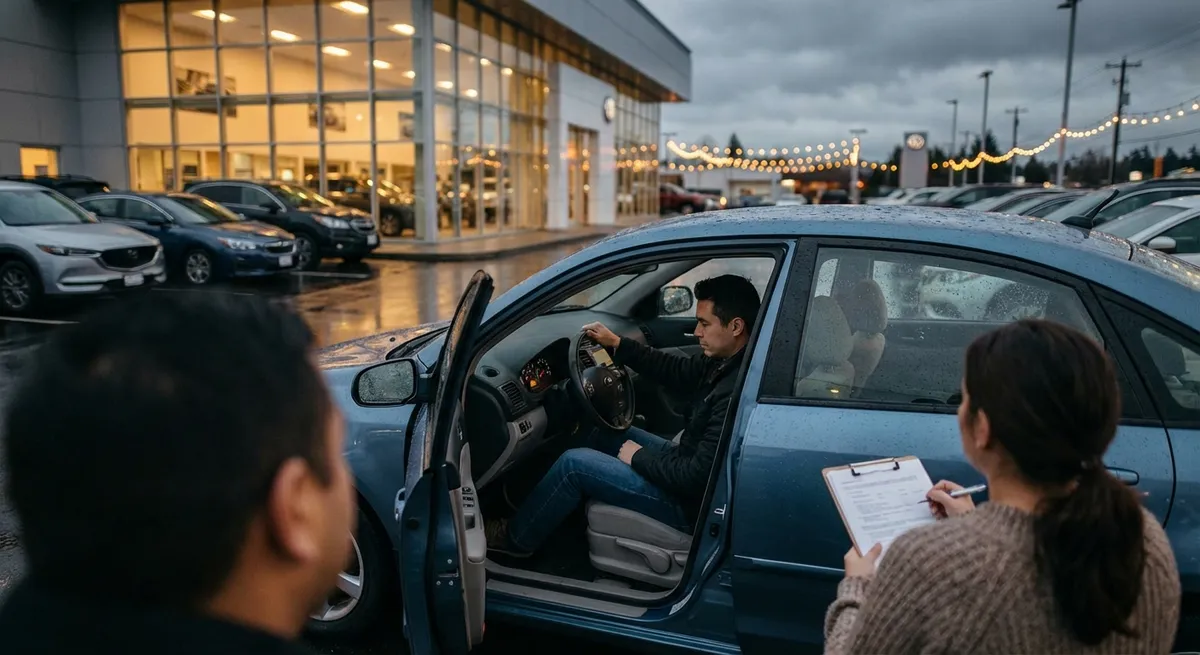
Start Before You Sit: Pre-Drive Reconnaissance
Before you even turn the key, slow down and inspect the car like you’re doing a preflight check. Walk around the vehicle and look for panel gaps that don’t match, mismatched paint shades, uneven tire wear, or hazy headlights—these can signal past damage or poor maintenance, even on relatively new cars.
Open and shut every door, the hood, and the trunk. They should close confidently without slamming, and seals should be intact and not dry or cracked. Inside, check for water stains on the headliner or carpets, which may hint at leaks. If it’s a used car, compare the odometer reading, VIN plate, and condition of the pedals and steering wheel—excessive wear can be a red flag if the mileage seems suspiciously low.
Finally, ask to see maintenance records, recall work documentation, and any warranty paperwork before you test drive. If the seller can’t or won’t provide them, that’s valuable information in itself and should influence both your interest and your negotiation stance.
Drive It Like You’ll Actually Use It
A short loop around the dealership at 25 mph with the radio blasting tells you almost nothing. Structure your test drive to mirror your real world: if you do a lot of highway commuting, insist on highway time; if your daily drive includes hills, stop-and-go traffic, or rough roads, incorporate those elements.
As you drive, focus on specific sensations: how quickly and smoothly it accelerates, how confidently it merges onto the highway, and how the transmission shifts (look out for hesitation, harsh shifts, or slipping). Pay attention to how it tracks in a straight line—if you need to constantly correct the steering, there may be alignment or suspension issues.
On a safe, empty stretch, perform a few firm (not panic) stops from higher speeds to evaluate brake feel, pedal firmness, and whether the car pulls to one side. Try tight turns and low-speed parking maneuvers to judge steering weight and turning radius. Throughout all of this, keep the audio system off; you’re listening for clunks, rattles, wind noise, and tire roar that might drive you crazy later.
Test the Tech Like You’ll Live With It
Modern cars are rolling computers, and liking the drivetrain is only half the equation. Sit in the driver’s seat and spend several minutes interacting with the infotainment system, climate controls, and driver assistance settings as if you’re already an owner. If you routinely use Apple CarPlay or Android Auto, ask to plug in your own phone and verify that connections are stable and interfaces feel intuitive.
Cycle through the backup camera and, if available, 360-degree camera views; check clarity at night if possible or at least in a shaded area, since glare can mask poor image quality. Adjust and test adaptive cruise control, lane-keeping assist, and blind-spot monitoring on the drive, but in a controlled and attentive way; you’re assessing whether the systems help or annoy you with false alerts or abrupt intervention.
Also evaluate small but important details: how easy it is to change settings without diving through endless menus, whether voice commands recognize you reliably, and if physical buttons exist for core functions like temperature and fan speed. Over a multi-year ownership, intuitive controls and reliable tech can matter just as much as horsepower.
Evaluate Fit: Ergonomics, Space, and Visibility
Enthusiasts often focus on performance numbers, but comfort and usability determine whether you actually enjoy the car every day. Adjust the seat, wheel, and mirrors the way you normally would, then check your sightlines. Can you see traffic lights without ducking under a low windshield? Are there thick pillars that create blind spots when turning or changing lanes?
Spend time in both front seats and, if applicable, have someone sit in the back while you sit in front with your normal driving position. Confirm there’s enough knee, head, and toe room for typical passengers—a car that looks big outside can feel cramped inside. Open the trunk or hatch and test how easy it is to lift items in; if you use strollers, sports gear, or tools, visualize those specifically.
Finally, assess the “touch points”: steering wheel, shifter, armrests, and door pulls. Do materials feel sturdy or flimsy? Does your right knee hit hard plastic on the console? Small ergonomic annoyances can become daily irritations that make an otherwise solid car feel like a compromise.
Plan the Numbers, Not Just the Negotiation
Many buyers focus only on the final price, but the structure of the deal can matter just as much for long-term costs. Before you visit the dealership, run realistic payment and total cost scenarios using independent calculators and your own bank or credit union’s rates. This gives you a benchmark so you recognize when a payment plan is disguising a high total cost.
At the dealership, separate conversations about the car’s price, financing, and add-ons instead of mixing them together. Verify whether there are manufacturer incentives, low-APR offers, or loyalty/college/military rebates that apply to you—most of these are publicly listed, and you should know about them before you step onto the lot. For used cars, check pricing against independent value guides and listings for similar vehicles in your area so you have data-backed leverage.
Once you’ve identified a specific vehicle, request an out-the-door price quote in writing that includes all taxes and fees. Don’t commit on the spot if you’re uncertain; take the quote home, review it calmly, and compare competing offers. A car is a multi-year commitment; taking an extra day to validate the numbers is almost always in your favor.
Conclusion
The most powerful buying tool isn’t a secret negotiation trick—it’s a structured, intentional approach to the test drive and evaluation process. By inspecting the car carefully, driving it in your real-world conditions, stress-testing the tech, assessing comfort and space, and planning the financial side with clear data, you put yourself in control of the decision. That’s how you end up with a car that not only looks good on paper, but genuinely works for your life and stays satisfying long after the new-car smell fades.
Sources
- National Highway Traffic Safety Administration (NHTSA) – Buying a Safer Car - Official U.S. government safety ratings and guidance on evaluating vehicle safety features
- Consumer Reports – How to Test-Drive a Car Like a Pro - Practical steps and key checks to perform during a test drive
- Edmunds – 10 Steps to Buying a New Car - Detailed overview of the car-buying process, pricing, and negotiation
- Kelley Blue Book – How to Test Drive a Used Car - Specific advice for evaluating used vehicles on the road
- Federal Trade Commission (FTC) – Buying a Used Car - U.S. government guidance on inspections, contracts, and your rights when buying used