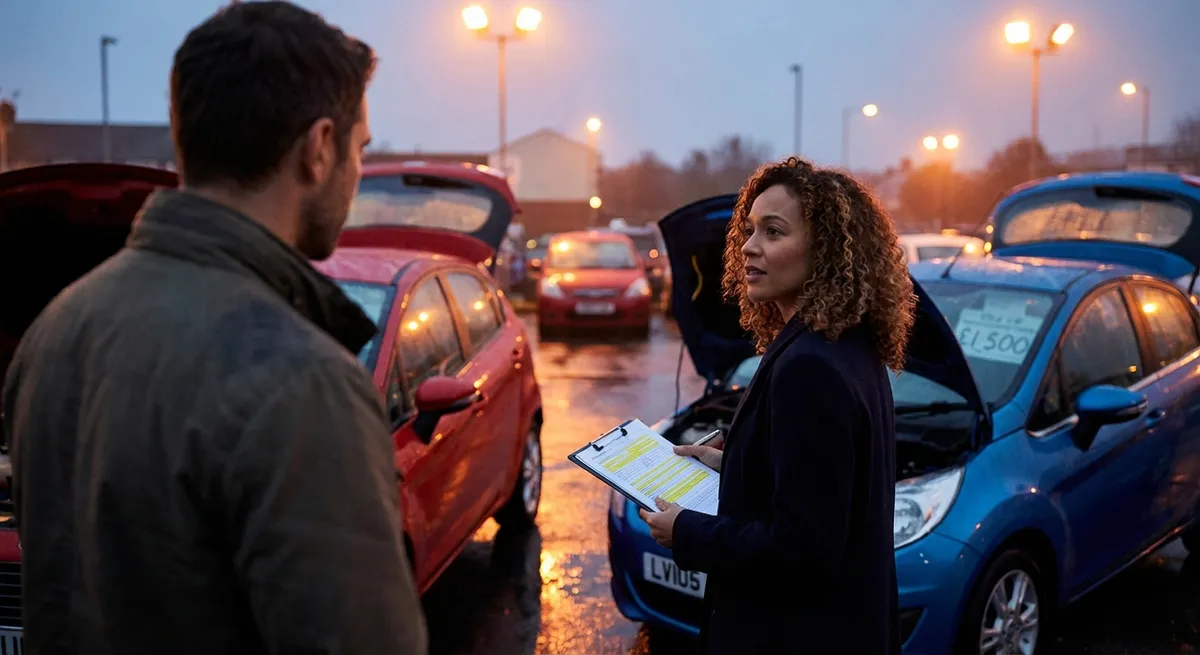
This guide focuses on practical, real-world moves you can use before you sign anything. Whether you’re shopping for your first car or upgrading from an older ride, these steps help you avoid overpaying, buying the wrong model, or getting stuck with expensive surprises later.
Clarify How You’ll Really Use the Car (Not How You Imagine Using It)
Most people shop for the life they wish they had, not the life they actually live. That’s how weekend campers end up with three-row SUVs they mostly drive to the office, and city commuters end up with oversized trucks they struggle to park.
Start by mapping your real use case, not the fantasy version:
- Track your current driving for a couple of weeks: average daily mileage, highway vs. city, typical passengers, cargo needs, and parking situation.
- Identify your “non-negotiables” (safety features, seating capacity, fuel type) versus “nice-to-haves” (panoramic roof, premium audio, bigger wheels).
- Be honest about where you drive: tight city streets and small garages reward compact models; rural or snowy areas may justify AWD and higher ground clearance.
- Think in terms of total time in the car: if you sit in traffic daily, seat comfort, visibility, and driver-assist features matter more than 0–60 times.
- Plan for the next 3–5 years, not 10–15: family changes, job changes, or moving locations can all change what “ideal car” means.
By defining your real-world needs first, you can quickly rule out vehicles that don’t fit your life—no matter how appealing the brochure makes them look.
Build a Cost Reality Check, Not Just a Monthly Payment
Dealers and lenders love talking about monthly payments because it hides the real cost of the car. You need a full cost breakdown before you ever set foot on a lot.
Here’s how to build a grounded budget:
- Start with a realistic out-the-door price target (vehicle price plus taxes, fees, and registration), not just MSRP or advertised specials.
- Use insurance quote tools with specific models and trims you’re considering—insurance can swing dramatically between similar vehicles.
- Estimate fuel or energy costs:
- For gas and hybrid vehicles, check EPA fuel economy numbers, then adjust down slightly to reflect real-world driving.
- For EVs, look at your local electricity rates and typical charging mix (home vs. public fast charging).
- Research typical maintenance and repair costs for the brands and models you’re considering—some require pricier parts or specialized service.
- Factor in financing costs: compare interest rates from your bank or credit union before you accept dealer financing; even 1% difference adds up over years.
If you’ve only looked at a comfortable monthly payment, run the numbers backward. A low monthly number stretched over a longer loan (72–84 months) often means paying far more for the car and staying upside-down on the loan for longer.
Use the VIN as Your Fact-Checking Tool, Not Just a Number on Paper
The Vehicle Identification Number (VIN) is one of your strongest tools, especially with used cars—but even new cars can hide important history, option details, or recalls.
Turn the VIN into a checklist item, not an afterthought:
- Always run a vehicle history report (Carfax, AutoCheck, or similar) on every used car you’re seriously considering. Look for:
- Title issues (salvage, flood, rebuilt)
- Past accidents and airbag deployments
- Odometer discrepancies
- Frequent ownership changes in a short time
- Check for open recalls using the VIN on official government or manufacturer sites and confirm that any safety recalls have been addressed.
- Use the VIN to verify trim level, factory options, and original equipment—this helps you confirm that the car matches the advertised features.
- If the seller refuses to share the VIN or delays providing it, treat that as a bright red flag and move on.
The VIN helps you separate what the seller says from what the data shows. If the story and the records don’t line up, you’re better off walking away.
Treat the Test Drive Like a Diagnostic Session, Not a Joyride
Too many buyers treat test drives as quick comfort checks: “It feels fine,” “Seems quiet,” “I like the seats.” That’s not enough when you’re committing thousands of dollars.
Approach the test drive with structure:
- Drive a mixed route if possible: low-speed city streets, a stretch of highway, and a few turns, merges, and braking events.
- Test basic controls as you drive: steering feel, brake response, throttle sensitivity, visibility over your shoulders and through the rear window.
- Pay attention to noise: engine, wind, tire, and rattles from the interior. A genuinely quiet cabin stands out when you switch from one model to another.
- Check ergonomics while you’re seated:
- Can you adjust the steering wheel and seat to a comfortable position and still reach all controls?
- Are the key buttons, knobs, and screen elements intuitive and easy to use while moving?
- For used vehicles, watch for warning lights, rough shifts, vibrations, or strange smells (burning, coolant, fuel).
- If something feels “off,” ask to drive a second example of the same model—this helps you tell what’s normal for that car and what’s a specific vehicle problem.
Whenever possible, bring a second person—another set of eyes and ears catches things you might ignore in the moment, especially if you’ve already emotionally locked onto the car.
Separate the Car Decision from the Deal Negotiation
The quickest way to get overwhelmed in the buying process is to negotiate everything at once: car choice, trade-in, financing, extras, and price. You can regain control by breaking the process into clear stages.
Use this sequencing to keep the upper hand:
- Decide on the exact car you want (model, trim, and must-have options) before you talk numbers. If a dealer doesn’t have it, don’t let them pressure you into a bad fit.
- If you have a trade-in, get independent offers from online car-buying services or local used dealers before visiting the showroom. This gives you a price benchmark.
- Secure pre-approved financing from a bank or credit union before you shop. You can still take dealer financing if it’s better, but you’ll know the rate you deserve.
- When you’re finally at the dealership, keep discussions separate and simple:
- First: negotiate the purchase price of the new/used car
- Second: discuss your trade-in value (with your outside offers in hand)
- Third: compare financing options and look at the full terms, not just the monthly payment
- Be cautious with add-ons in the finance office: extended warranties, paint protection, wheel insurance, and service packages can add thousands of dollars. Only accept what you’ve researched in advance and truly plan to use.
If the process starts to feel rushed or confusing, pause. You can walk away, think overnight, and come back or buy elsewhere. Any deal that “expires today” is almost always replaceable.
Conclusion
A smart car purchase doesn’t rely on insider tricks or aggressive haggling—it relies on structure. When you define your real needs, understand total ownership costs, verify history with the VIN, treat test drives like diagnostics, and separate the car choice from the deal negotiation, you remove most of the surprises that turn a good car into a bad decision.
The result is simple: a vehicle that fits your life, a payment that matches your budget, and fewer regrets the day after you drive it home.
Sources
- [U.S. Department of Energy – Fuel Economy Guide](https://www.fueleconomy.gov/feg/findacar.shtml) - Official fuel economy data to estimate running costs for different vehicles
- [National Highway Traffic Safety Administration (NHTSA) – Recalls Lookup](https://www.nhtsa.gov/recalls) - VIN-based recall checker for safety and defect information
- [Consumer Reports – Car Buying Guide](https://www.consumerreports.org/cars-buying-guide/) - Independent testing and advice on pricing, reliability, and ownership costs
- [Kelley Blue Book – Car Values and Pricing](https://www.kbb.com/car-values/) - Market-based pricing info for new, used, and trade-in values
- [U.S. Federal Trade Commission – Buying a Used Car](https://www.consumer.ftc.gov/articles/buying-used-car) - Government guidance on vehicle history, contracts, and avoiding common purchase pitfalls