Start With the Paper Trail, Not the Paint
Before you fall for the shine of fresh wax, dig into the car’s history and documents. A clean title is non‑negotiable—avoid “salvage,” “rebuilt,” or “flood” titles unless you fully understand the risks, lower resale value, and potential insurance complications. Cross‑check the VIN (Vehicle Identification Number) on the dashboard, door jamb, and documents to be sure everything matches and there’s no sign of tampering.
Ask for service records and look for consistency: regular oil changes, scheduled maintenance like timing belt or spark plug replacement, and any major repairs. A stack of invoices from reputable shops is more important than a seller’s verbal assurance that the car was “always taken care of.” If possible, run a vehicle history report to check for prior accidents, odometer rollbacks, or frequent ownership changes, which can be a red flag. Treat missing or vague paperwork as information—it tells you how seriously the previous owners treated the car.
Use Your Senses for a Real-World Walkaround
A systematic walkaround will reveal more than a quick glance ever will. Start with body panels: look down the sides of the car for waviness or slightly mismatched paint, which can indicate previous body repairs. Check panel gaps (around doors, hood, and trunk) for uneven spacing that might signal accident damage. Surface scratches and small dings are normal; uneven paint texture or overspray on rubber trim isn’t.
Open and close every door, the trunk, and the hood. Listen for creaks or grinding, and check that the doors latch smoothly. Inspect glass for cracks or large chips, especially in the windshield, which can be costly to replace. Look at all four tires for even tread wear—uneven wear can point to alignment or suspension issues. While you’re there, peek through the wheels at the brake rotors; heavy scoring or deep grooves may mean brake work is coming sooner than you’d like. Finally, crouch down and look underneath for rust, wet spots (possible fluid leaks), or hanging components.
Listen to the Engine Before You Drive
Cold starts tell the truth about an engine’s condition. If possible, ask the seller not to warm up the car before you arrive. When you turn the key, note how quickly it starts and whether the idle is smooth or rough. Look at the dashboard for warning lights; the check engine, ABS, or airbag lights should illuminate briefly at startup and then go out. Anything that stays on—or never lights up at all—deserves follow‑up.
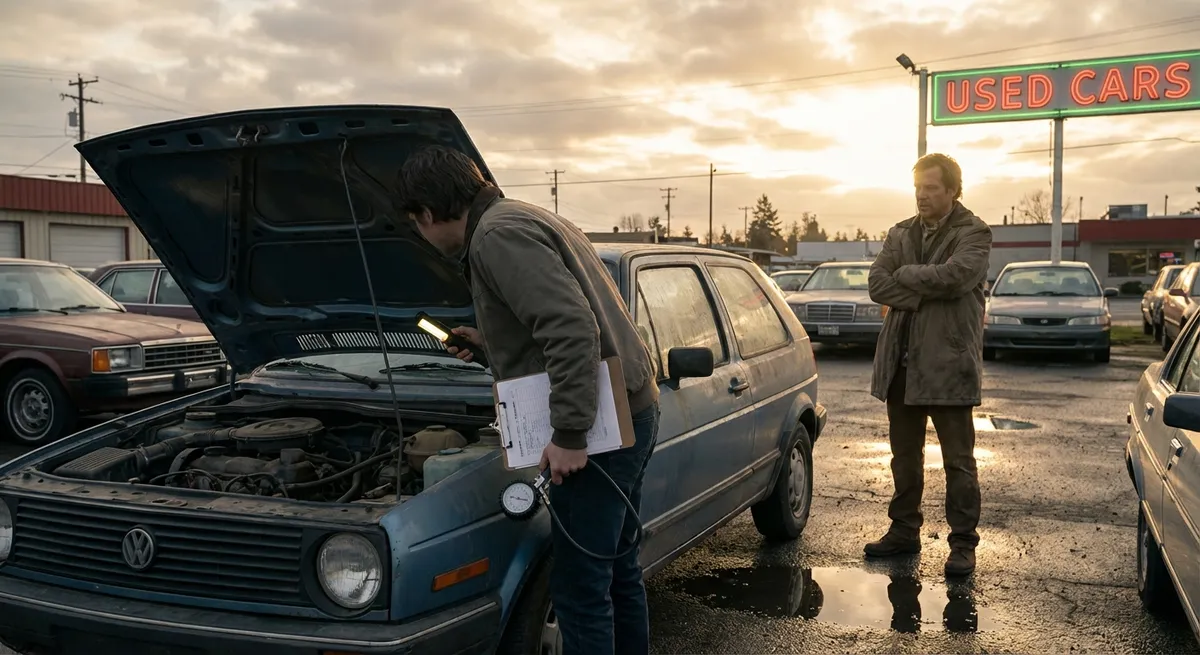
Pop the hood while it’s running. Listen for knocking, ticking, or loud belt squeals. Some faint mechanical noise is normal, but sharp or repetitive sounds can indicate valve, timing, or accessory problems. Check for visible leaks, frayed belts, or swollen hoses. Pull the oil dipstick: the oil should be within the marked range and not look like thick sludge or milkshake-colored foam (which can indicate coolant mixing with oil). These quick checks won’t replace a professional inspection, but they can help you spot obvious trouble before you get emotionally attached.
Make the Test Drive About Data, Not Feelings
Use the test drive to gather specific observations instead of just asking, “Does it feel good?” Start in a quiet area so you can focus on sounds and behavior. Pay attention to how the transmission shifts—automatic shifts should be smooth without harsh jolts or long delays, while manuals should engage gears cleanly without grinding or clutch slippage. If the engine revs but the car doesn’t accelerate accordingly, that’s a bad sign, especially on manuals and older automatics.
Take hands lightly off the wheel on a straight, flat road (when safe) to see if the car drifts; persistent pulling can signal alignment, tire, or suspension issues. Apply the brakes firmly—there should be no vibration in the steering wheel or pedal, and the car should stop in a straight line. Listen for clunks over bumps, rattles from the dashboard, or humming that changes with speed, all of which can hint at worn suspension or wheel bearings. Finish the drive by parking and checking under the car again after it’s been running; fresh drips are a clear warning.
Protect Yourself With a Pre-Purchase Inspection and a Walk-Away Plan
Even if everything looks and feels right, backing up your impressions with a pre‑purchase inspection (PPI) from an independent mechanic is one of the best investments you can make. A good shop will put the car on a lift, scan for fault codes, and check components you can’t see at ground level. The modest cost of a PPI often saves buyers thousands by revealing hidden problems or giving leverage to renegotiate the price. If a seller refuses an independent inspection, treat that as a signal to move on.
Go into negotiations with a clear ceiling price, factoring in upcoming maintenance the car is due for (like tires, brakes, or timing belt). Base your expectations on current market data, not asking prices alone. If the seller won’t budge and the numbers don’t add up, stick to your walk‑away plan. There will always be another car; there won’t always be another chance to avoid a financially draining mistake. The goal isn’t just to buy a car—it’s to buy one you can live with, afford, and enjoy long after the excitement of purchase day fades.
Conclusion
A used car that looks good in photos can hide expensive issues, but a methodical approach puts the odds in your favor. Start with documents, then inspect with your eyes, ears, and common sense, turn the test drive into a structured evaluation, and let a trusted mechanic confirm what you’ve found. With a clear plan and the discipline to walk away when needed, you’re not just buying transportation—you’re buying predictable ownership and fewer surprises down the road.
Sources
- [Federal Trade Commission – Buying a Used Car](https://www.consumer.ftc.gov/articles/buying-used-car) - Covers your rights, the Buyer’s Guide, and key steps in the used-car buying process
- [U.S. Department of Justice – Odometer Fraud](https://www.justice.gov/usao/justice-101/odometer-fraud) - Explains odometer fraud, red flags, and legal considerations for buyers
- [National Highway Traffic Safety Administration (NHTSA) – Vehicle History and Recalls](https://www.nhtsa.gov/recalls) - Allows you to check open recalls by VIN and understand safety-related defects
- [Consumer Reports – Used Car Buying Guide](https://www.consumerreports.org/cars/buying-a-car/how-to-buy-a-used-car-a2179668448/) - Provides expert guidance on inspections, test drives, and model reliability
- [Kelley Blue Book – What Is a Pre-Purchase Inspection?](https://www.kbb.com/car-advice/pre-purchase-inspection/) - Details what a PPI includes and why it’s valuable before finalizing a used-car purchase