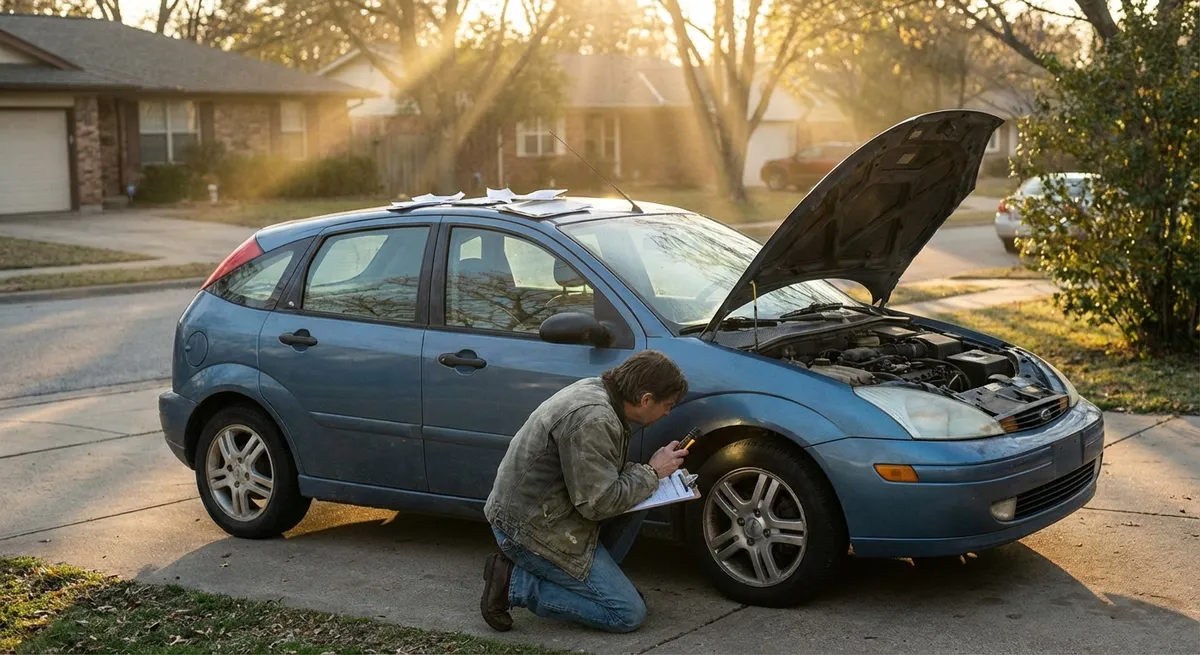
Start Online Like an Investigator, Not a Window Shopper
Most private-sale success or disaster is decided before you ever see the car.
Begin with a short, realistic target list of models that fit your budget, usage, and repair tolerance. Then, when you start browsing listings (Facebook Marketplace, Craigslist, local forums, classifieds), treat each ad like a data point—not a promise.
Actionable points:
- Scan the photos for patterns, not perfection.
Consistent panel gaps, matching paint across panels, and clear shots of the engine bay and interior suggest a seller who isn’t hiding things. Cropped, dim, or oddly angled photos can be a red flag—especially if they avoid close-ups of known rust areas or wheel wells.
- Decode the description for honesty.
Phrases like “needs nothing” or “just needs a sensor” are vague; you want specifics: “timing belt and water pump replaced at 105k,” “new tires in 2023,” “clutch replaced last year.” The more precise and documented the claims, the more likely the seller is conscientious.
- Check the VIN before contact if possible.
Some sellers include it in the ad. Run it through a service like Carfax or AutoCheck to catch title issues, prior total loss, odometer rollbacks, or repeated auction history. If the VIN isn’t listed, ask for it upfront—resistance here is a warning sign.
- Compare the asking price with real market data.
Use tools like Kelley Blue Book, Edmunds, or NADA Guides to see typical retail and private-party ranges for that year, trim, mileage, and condition. If a price is way under market, assume there’s a story you haven’t heard yet.
- Pre-filter with smart questions before you ever drive over.
Ask about ownership length, reasons for selling, accident history, major repairs, and whether they have maintenance records. Sellers who answer quickly and clearly are worth your time; vague or defensive answers are not.
Treat Paperwork as a Diagnostic Tool, Not Just a Form
Documentation tells you how the car has been treated—often better than a quick visual inspection.
Enthusiasts know: a car with proper maintenance, done on time with quality parts, is almost always a safer bet than a newer, lower-mile car with a mystery past.
Actionable points:
- Request maintenance records in advance, not on the driveway.
Receipts for oil changes, brake jobs, timing belt service, coolant flushes, and transmission service matter. A gap of many years with no paperwork on a modern car is a concern, especially for engines with known timing chain or cooling issues.
- Look for evidence of major interval services.
Many vehicles have specific “big ticket” service milestones (e.g., timing belt at ~100k miles, spark plugs around 60–100k, transmission fluid intervals). If these aren’t documented, mentally subtract the cost from your offer because you’ll likely be doing them soon.
- Check the name on the title and records.
The name on the title should match the seller’s ID. Lots of cars flipping through multiple short-term owners, especially with frequent auction entries, can indicate problems. A “curbstoner” (unlicensed dealer posing as a private seller) is a major red flag.
- Verify lien status before you fall in love with the car.
Ask if the title is in hand and clear. If there’s a loan, understand how payoff and title transfer will work with that lender. Calling the bank with the seller present is reasonable and smart.
- Match mileage on records to the odometer.
Service invoices should show a logical progression in mileage over time. Any backward jump or large unexplained gap deserves explanation.
Inspect Like a Practical Enthusiast, Not Just a Casual Driver
You don’t need to be a professional mechanic, but you do need a structured inspection routine. The goal is to quickly separate “honest wear and tear” from “this will drain your savings.”
Actionable points:
- Walkaround with a systematic checklist.
Check panel alignment, paint consistency, and look along the body at a low angle for ripples that can indicate prior repairs. Inspect glass for cracks and all lights for operation. Look underneath for wet spots, fresh undercoating, or obvious leaks.
- Open the hood and look, don’t just glance.
You’re looking for:
- Fresh, wet oil or coolant leaks
- Crusty, dried coolant residue around hoses or radiator
- Frayed belts or obvious cracks
- Makeshift wiring or “hack” repairs (electrical tape bundles, random aftermarket modules)
Pull the dipstick; oil shouldn’t be metallic or thick sludge. Check coolant color (typically green, orange, or pink—milky means trouble).
- Inspect the interior for clues about use and care.
Excessive wear on the driver’s seat, pedals, and steering wheel versus the odometer reading can hint at tampering. Damp carpets, musty smells, or fogged windows suggest water leaks. Check all electronics: windows, locks, HVAC, infotainment, backup camera, sunroof.
- Drive it like you plan to live with it.
On the test drive, vary speed and conditions: neighborhood streets, a stretch of highway if possible, some stop-and-go. Pay attention to:
- Steering feel and straight-line tracking
- Braking vibration or pulling
- Transmission shifts (harsh, delayed, or slipping)
- Unusual noises over bumps or while turning
Keep the radio off; listen to the car.
- Run the “heat test.”
Some issues only appear when the car is fully warmed up. Let it idle after the drive for several minutes. Watch for overheating, rough idle, new warning lights, or cooling fans failing to turn on. If a seller rushes you or doesn’t want you to take your time, that’s information too.
Make a Pre-Purchase Inspection Non-Negotiable
Even experienced enthusiasts can miss expensive problems without a lift and proper tools. A pre-purchase inspection (PPI) by an independent shop is one of the best investments you can make.
Actionable points:
- Choose the shop, not the seller.
Pick a reputable, independent mechanic or specialist for that brand—ideally one with strong online reviews and a clear inspection checklist. Avoid any “buddy’s shop” the seller pushes on you.
- Tell the shop your priorities.
Ask them to focus on common failure points for that model (rust spots, oil leaks, timing components, suspension wear, transmission health). Many enthusiast forums and manufacturer resources list known issues by model and year.
- Use PPI results as a negotiation tool, not a reason to panic.
No used car is perfect. Distinguish between wear items (brakes, tires, minor leaks) and serious issues (structural rust, major engine/transmission problems, flood damage). Reasonable wear items can justify a price adjustment; serious issues may justify walking away entirely.
- Walk away if the seller refuses an inspection.
A legitimate private seller should have no problem with a PPI, as long as you’re paying and not wasting their time. Refusal is a major red flag you shouldn’t ignore.
- Get the report in writing.
A written inspection gives you a clear picture of immediate needs vs. future maintenance. It also keeps emotions out of the decision; you can sit down, run the numbers, and decide rationally.
Negotiate With Numbers, Then Close the Deal Correctly
Once you’ve done your homework, the negotiation is less about “winning” and more about reaching a fair number that matches the car’s real condition.
Actionable points:
- Base your offer on documented facts, not feelings.
Reference your market research, PPI results, and upcoming maintenance. For example: “Given it needs tires and brakes soon and the timing belt hasn’t been done, I’m seeing about $1,500 in immediate work. Here’s where that puts my offer.”
- Be ready to walk—calmly.
If the seller won’t budge and the math doesn’t add up, leaving is your strongest tool. There will always be another car; sunk time shouldn’t push you into a bad deal.
- Use secure, traceable payment methods.
Cash, bank cashier’s checks from a local branch, or a bank wire are common. Meet at your bank when possible so funds can be verified. Avoid odd payment splits or digital transfers that can’t be reversed or verified in real time.
- Handle the title and bill of sale cleanly.
Make sure:
- Names and VIN on the title match the car and seller
- Odometer reading is filled in and accurate
- The seller signs in the correct places
Draft a simple bill of sale with buyer/seller info, VIN, sale price, date, and “sold as-is” language (unless otherwise agreed).
- Close the loop with registration, insurance, and emissions.
Before driving away, have insurance in place (many insurers can activate coverage by phone or app). Understand your state’s emissions and inspection requirements. Some states require recent tests or special forms for private sales—check before you finalize.
Conclusion
Buying a used car from a private seller isn’t about getting lucky; it’s about running a solid process. When you treat the search like an investigation, use paperwork as a history lesson, lean on a proper inspection, and negotiate from data instead of emotion, you dramatically reduce your risk of surprises. The payoff is a better car for your money, with a history and condition you actually understand—exactly what thoughtful car enthusiasts should aim for.
Sources
- [National Highway Traffic Safety Administration (NHTSA) – Vehicle History & Recalls](https://www.nhtsa.gov/vehicle-history) - Official U.S. government resource to search a vehicle’s VIN for safety recalls and some history data.
- [Kelley Blue Book – Used Car Values](https://www.kbb.com/what-is-my-car-worth/) - Widely used pricing guide for estimating fair market values for used vehicles in private-party and dealer scenarios.
- [Edmunds – Used Car Buying Guide](https://www.edmunds.com/car-buying/how-to-buy-a-used-car.html) - Detailed consumer guide on inspecting, test-driving, and negotiating for used cars.
- [FTC – Buying a Used Car](https://consumer.ftc.gov/articles/buying-used-car) - Federal Trade Commission advice on used-car purchases, including paperwork, payment, and avoiding scams.
- [Consumer Reports – Tips for a Safe Used Car Purchase](https://www.consumerreports.org/buying-a-car/how-to-buy-a-used-car-a5757088524/) - Independent testing organization’s recommendations on inspections, test drives, and spotting potential problems.