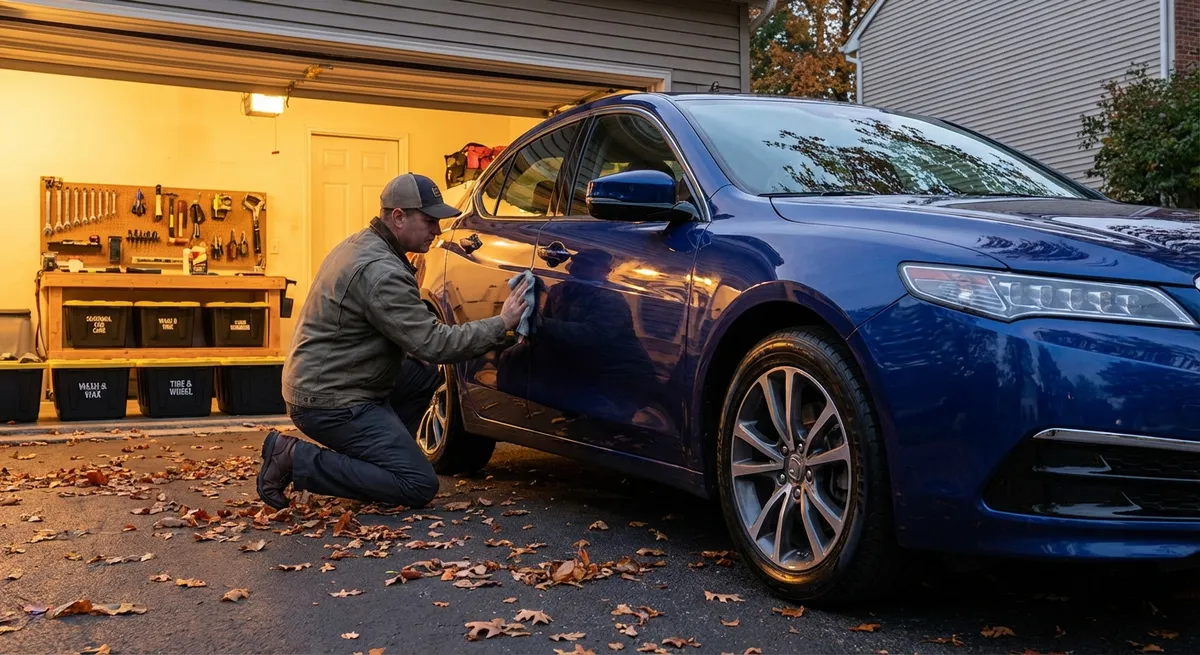
This guide walks through a practical, repeatable maintenance rhythm tied to the seasons, with five specific actions you can apply right away. Whether you wrench on your own car or rely on a shop, these checks will make your vehicle feel newer, longer.
Start With a Baseline: Build Your Personal Maintenance Log
Before you think seasonally, you need a clear picture of where your car stands today.
Most owners rely only on the odometer and the occasional oil-change sticker. That’s not enough if you want predictable reliability and performance.
Actionable steps:
- Create a simple log (digital or notebook).
Record date, mileage, what was done, and by whom (you or a shop). Include oil changes, filters, tires, brakes, fluids, battery, and any repairs.
- Read your maintenance schedule, not just the oil interval.
In your owner’s manual or manufacturer’s website, find the full maintenance schedule. Note mileage- or time-based items like brake fluid, coolant, spark plugs, transmission fluid, and drive belts.
- Document “baseline” condition now.
In your log, capture current tire tread depth, brake pad thickness (a shop can measure this or you can with a gauge), battery age, and when major fluids were last changed. This becomes your reference going forward.
- Set reminders ahead of due dates.
Don’t wait for the exact mileage. Set reminders 500–1,000 miles before major intervals or 1–2 months before time-based ones. Preventive scheduling gives you time to price-shop and plan.
- Review the log briefly every season.
At the start of each season, read your last few entries. You’ll see patterns—like which tires wear faster or if you’re putting on more miles than you thought—which can influence when (and how aggressively) you maintain.
Enthusiasts benefit from this level of tracking because you can correlate changes (like new tires or pads) to how the car feels and performs. For everyone else, it’s cheap insurance against “I thought that was done already.”
Treat Fluids Like Components, Not Afterthoughts
Fluids aren’t just “liquids in the car”—they’re active components that cool, lubricate, clean, and protect. Degraded fluid quietly erodes parts long before you see a leak or warning light.
Focus on these areas in your seasonal routine:
- Engine oil: match interval to your real driving.
If most of your trips are short (under 10–15 minutes) or in extreme temps, you’re in “severe service” territory. That usually means shorter oil-change intervals than the marketing claims. Follow the severe schedule in your manual, not a generic sticker.
- Brake fluid: time-based, not mileage-based.
Brake fluid absorbs moisture over time, which raises its boiling point and can corrode components. Many manufacturers recommend changing it around every 2–3 years, even if you drive low miles. If your pedal feels softer or you’ve noticed corrosion on brake hardware, don’t delay this.
- Coolant: check condition, not just level.
Pop the hood (when the engine is cold) and visually inspect coolant color in the reservoir. Dark, rusty, or sludgy coolant is a red flag. Even modern long-life coolant has a service life; fresh coolant maintains corrosion protection inside the engine and radiator.
- Transmission and differential fluids: prevent, don’t react.
These often get ignored until shifting gets weird or a noise develops. For automatics and CVTs, follow the manufacturer’s interval strictly—especially if you tow, drive in traffic, or live in hilly areas. For manuals and differentials, a fluid change is relatively cheap insurance against very expensive failures.
- Windshield washer fluid: treat it like safety equipment.
It’s not just water. Use proper fluid, especially in winter, to avoid freezing lines and to improve cleaning. Top it off at the beginning of each season so you’re not caught blind by road grime or bug splatter.
A seasonal fluid check doesn’t mean you’re replacing everything every three months; it means you routinely inspect everything and service what’s due before it becomes a problem.
Make Tires and Alignment Part of Your Routine, Not a Mystery
Tires are the only part of your car that actually touches the road. Enthusiasts know that tire condition changes how the entire car feels—steering response, braking distance, grip, and even fuel economy.
A seasonal routine for tires and alignment should include:
- Check pressures cold, monthly at minimum.
Temperature swings dramatically affect tire pressure—roughly 1 psi for every 10°F change. Underinflated tires wear faster, run hotter, and increase stopping distances. Use the placard in your door jamb, not the max pressure on the sidewall.
- Inspect tread wear patterns, not just depth.
- Inner/outer wear → possible alignment or camber issue
- Center wear → overinflation
- Cupping or scalloping → possible worn suspension components or shocks
Catching these early can save a set of tires and alert you to suspension problems.
- Rotate your tires on a consistent schedule.
Many manufacturers recommend every 5,000–8,000 miles. Tie rotations to oil changes if that helps you remember. Rotation evens out wear and extends tire life, especially on front-heavy or front-wheel-drive cars.
- Plan alignment checks after impacts or suspension work.
Hit a significant pothole, a curb, or have suspension components replaced? Add an alignment check to your seasonal plan. Even slight misalignment can cause subtle pull, steering wheel off-center, or faster tire wear.
- Season-specific tire strategy.
If you live where winters are harsh, budget and plan for dedicated winter tires—installed before consistent low temps, not after the first snow. Enthusiasts can plan a “summer performance / winter safety” setup; casual drivers still gain massive safety and control benefits from proper seasonal tires.
Building tires and alignment into your routine transforms them from consumables you “run until they’re bald” into controlled variables that you manage for safety and feel.
Use the Seasons to Time Undercarriage and Brake Inspections
The parts you can’t easily see—undercarriage, brakes, and suspension—often hide problems until they become expensive or dangerous. Seasonal changes are the perfect reminder to get eyes on these components.
Here’s how to structure it:
- Spring: post-winter underbody and brake check.
After winter, especially in salted regions, inspect (or have a shop check) for:
- Surface rust on suspension arms, brake lines, and fuel lines
- Excessive corrosion on brake rotors and calipers
- Rubber bushings that are cracked or deteriorated
Addressing minor corrosion with cleaning and rust-inhibiting coatings can significantly slow long-term damage.
- Summer: heat and load focus.
Warm months often mean road trips, towing, or spirited driving. Before the season:
- Inspect brake pad thickness and rotor condition
- Check shock/strut bodies for leaks and bushings for play
- Listen for clunks or knocks over bumps that indicate worn joints or mounts
This helps ensure the car remains stable and confident under heavy use.
- Fall: prep for low-traction conditions.
With wet leaves and early frosts:
- Confirm brakes engage smoothly and straight, with no pulsing or grinding
- Check parking brake operation (especially on cars with rear drums or electronic park brakes)
- Consider having a shop check ABS and traction control error codes if any warning lights are present
- Winter: salt, grime, and wash discipline.
- Use touchless or underbody-wash options regularly if you drive on salted roads
- Inspect wheel wells for packed snow/ice that can affect steering and braking
- After heavy storms, visually check brake components when you wash the car to ensure there’s no excessive ice buildup or obvious damage
- Use every wheel-off moment wisely.
In winter, your focus is on preventing accumulation:
Any time wheels are off—tire rotations, swaps, or brake work—treat it as a free undercarriage inspection. Look for torn CV boots, seeping shocks, rusty fasteners, or loose shields. You’re already there; a few extra minutes can catch issues early.
Enthusiasts often find undercar inspections rewarding because they reveal how the car is aging mechanically, not just cosmetically. For everyone, it’s a high-value practice that dramatically reduces surprise failures.
Protect the Electrical System and Interior from Slow, Silent Damage
Modern cars are rolling networks of computers, sensors, and wiring. Electrical issues can be some of the most confusing and costly problems to diagnose. Seasonal habits can keep systems healthier and prevent many headaches.
Key actions to work into your routine:
- Battery health checks before extreme seasons.
Batteries struggle most in very hot and very cold weather. Test or have voltage and cold-cranking performance checked before winter and, ideally, before peak summer. Clean corrosion from terminals and ensure the hold-down is secure to prevent internal damage from vibration.
- Keep drains and seals clear.
Sunroof drains, door drains, and cowl areas (at the base of the windshield) can clog with leaves, dirt, and debris. When they back up, water can leak into the cabin, saturate carpets, and attack wiring and modules. Clear visible debris each season and consider a quick water test (light hose spray) to confirm drainage.
- Protect plastics and soft-touch surfaces from UV.
Use a UV-protectant interior cleaner on the dashboard, door panels, and other plastic surfaces, especially before summer. Cracked dashes and faded plastic aren’t just cosmetic; they can also affect how well airbags deploy and how clips and panels hold up over time.
- Visually inspect wiring where you can see it.
In the engine bay and trunk/hatch area, look for:
- Frayed or pinched wires
- Rodent damage (chewed insulation, nests)
- Aftermarket wiring that’s poorly routed or loosely secured
Catching this early can prevent shorts, no-start issues, or intermittent electrical gremlins.
- Exercise all switches and features a few times a year.
Power windows, locks, mirrors, seat adjustments, and folding mirrors all benefit from occasional use. Mechanisms that never move can stick or seize. Run them through their ranges during your seasonal check; if something’s slow or struggling, address it before it fails completely.
These habits are particularly important as vehicles get more complex. For enthusiasts who enjoy adding electronics or doing retrofits, a clean, dry, and well-maintained electrical environment is the foundation for reliable upgrades.
Conclusion
A seasonal care routine is about intention, not perfection. You’re not turning your life into a full-time maintenance schedule—you’re building a practical rhythm that keeps your car feeling tight, responsive, and dependable.
By:
- Keeping a simple maintenance log
- Treating fluids as critical components
- Making tires and alignment a managed variable
- Scheduling undercar and brake inspections with the seasons
- Protecting electrical systems and interior materials
…you shift from reacting to problems to quietly preventing them. The payoff is a car that feels newer for longer, fewer surprises at the shop, and a driving experience that stays enjoyable year after year.
Sources
- [National Highway Traffic Safety Administration (NHTSA) – Vehicle Maintenance Tips](https://www.nhtsa.gov/equipment/tires) - Includes official guidance on tire care, pressures, and inspection routines related to safety
- [U.S. Department of Energy – Fuel Economy: Keeping Your Car in Shape](https://www.fueleconomy.gov/feg/maintain.jsp) - Explains how proper maintenance, fluids, and tire care affect performance and efficiency
- [AAA – Seasonal Car Care Tips](https://exchange.aaa.com/automotive/automotive-travel-tips/seasonal-vehicle-checklist/) - Provides season-by-season checklists for preparing your vehicle for different weather conditions
- [Car Care Council – Be Car Care Aware](https://www.carcare.org/car-care-resource/car-care-guide/) - Offers a comprehensive guide to regular maintenance, including fluids, brakes, tires, and seasonal inspections
- [Bridgestone Tires – Tire Tread & Safety Basics](https://www.bridgestonetire.com/learn/maintenance/how-to-check-tire-tread/) - Details how to inspect tread depth and wear patterns to catch alignment and suspension issues early