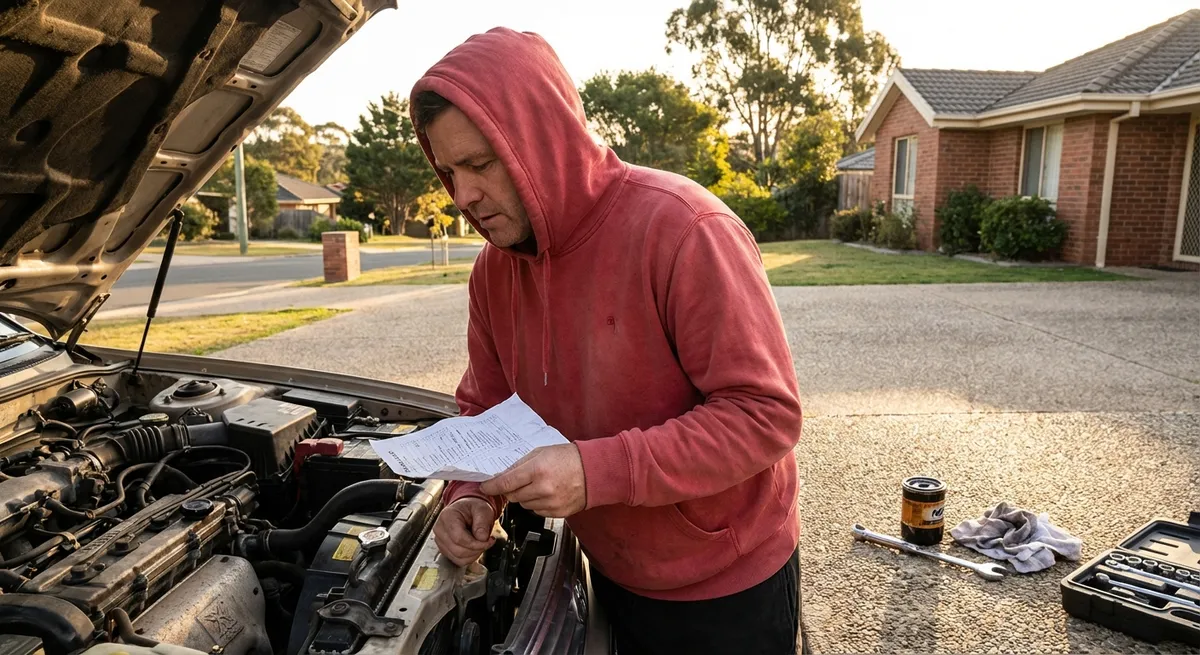
This guide focuses on five practical, repeatable maintenance moves you can turn into a personal checklist—not vague advice, but specific actions you can track over time.
Treat Fluids Like Your Car’s Vital Signs
Your car’s fluids do the quiet work: cooling, lubricating, stopping, and steering. Let any of them drop too low or deteriorate, and you’ll feel it in performance, repair bills, or both.
Make a habit of checking these regularly:
- Engine oil: Use the dipstick on a cool, level surface. Look for the level between min and max marks and an oil color that’s not thick and gritty. Dark oil isn’t always bad (it can mean it’s doing its job), but sludge or metal flakes are red flags. If your car burns oil, log how much you add over 1,000 miles—this gives you a baseline trend.
- Coolant: Check the overflow reservoir, not the radiator cap (never open a hot cooling system). The level should sit between “Low” and “Full.” If you’re topping up often, start looking for leaks or overheating signs. Use the type specified in your manual—mixing random coolants can cause corrosion and deposits.
- Brake fluid: The level dropping can indicate worn pads or a leak. Brake fluid also absorbs moisture over time, which reduces braking performance and can corrode internal components. If it’s turned from clear/amber to dark brown, it’s probably due for a flush.
- Transmission and power steering fluids (if applicable): Some newer cars have “sealed” transmissions with no dipstick, but if yours is serviceable, check color and smell. Burnt or very dark fluid is a warning. For power steering, low fluid can explain groaning or heavy steering at low speeds.
- Washer fluid: Simple but safety-critical. If you drive in bugs, dust, or winter slush, a dry reservoir can turn a clean windshield into a visibility nightmare in seconds.
Actionable move: Set a recurring reminder—once a month or every fuel fill-up—for a quick under-hood fluid check. It’s a five-minute habit that can prevent catastrophic failures.
Make Tires Your First Line of Defense
Tires are the only part of your car that actually touches the road, yet they’re often neglected until they’re bald or flat. For both performance and safety, they deserve regular attention.
Focus on four things:
- Pressure: Use a quality gauge—don’t rely on gas station inflators. Set pressure to the numbers on the driver’s door jamb, not what’s printed on the tire sidewall (that’s a maximum rating). Underinflated tires run hotter, wear faster, and increase fuel consumption; overinflated tires reduce grip and ride comfort.
- Tread depth: Use a tread depth gauge or the classic penny/quarter test. When the tread is worn down to 2/32" (or you’re close), it’s effectively done, especially in rain. Enthusiasts often replace earlier (around 4/32") for better wet performance.
- Wear pattern: Uneven wear tells a story. More wear on one edge often points to alignment issues; cupping or scalloping can indicate worn suspension or shocks; center wear suggests over-inflation. Photograph your tires every few months to compare patterns over time.
- Age: Even if they look fine, most manufacturers recommend replacing tires around the 6–10 year mark because rubber hardens and loses grip. There’s a four-digit DOT date code (e.g., “3119” = 31st week of 2019) stamped on the sidewall to tell you when they were made.
Actionable move: Add “pressure + quick visual” to your fuel stops. A 30-second walk-around and a monthly detailed check can dramatically reduce your risk of blowouts and poor wet-weather performance.
Build a Simple Service Log You’ll Actually Use
The factory maintenance schedule in your owner’s manual isn’t a suggestion—it’s the baseline for how long your car is designed to last. But many owners never read it, and even fewer track what’s been done when.
Instead of guessing:
- Start with the manual: Find the maintenance schedule section. It will often list services at mileage or time intervals (e.g., 5,000 mi/6 months, 30,000 mi/2 years). Identify the “big” intervals (30k, 60k, 90k miles) when more substantial services are due (like spark plugs, transmission fluid, or timing belts on some engines).
- Create a simple log: Use a notebook in the glove box, a spreadsheet, or a notes app. Record date, mileage, work performed, parts used, and who did the work (you vs. shop). Keep receipts. This helps diagnose patterns later and builds trust if you ever sell the car.
- Group services logically: If a major service requires disassembling certain areas (e.g., timing belt access), consider proactively doing related components while it’s open—like the water pump, tensioners, and accessory belts. The added parts cost is often small compared to repeating labor later.
- Follow severe-use schedules if applicable: Short trips, hot climates, dusty roads, towing, or frequent stop-and-go driving are usually classified as “severe” conditions. Many drivers fall into this category without realizing it, meaning they should follow the more frequent service intervals.
Actionable move: One evening, sit down with your manual and your best guess of previous work. Create a “next 12 months” maintenance roadmap with target dates/mileages and estimated costs. This turns surprise repairs into planned expenses.
Listen, Smell, and Feel: Use Your Senses as Early Warning Tools
Your car usually tells you something is wrong long before a warning light appears. Paying attention to subtle changes can help you catch problems at the “cheap fix” stage.
Watch (and log) for:
- New noises: Squeaks over bumps (bushings), clunks when shifting or turning (mounts or joints), grinding or squealing while braking (pads/rotors), or whistling/hissing under the hood (vacuum/exhaust leaks). Record when the noise happens: cold vs. hot, braking vs. accelerating, left vs. right turns.
- Vibrations: Steering wheel shake at certain speeds can point to wheel imbalance, bent rims, or alignment issues. A pulsating brake pedal under braking suggests warped rotors or uneven pad deposits. Vibration through the seat or floor may indicate driveline or rear suspension issues.
- Smells: Sweet, syrupy odor can indicate coolant; burnt plastic or rubber might be electrical or belt-related; raw fuel smell can indicate a leak or evaporative system issue; burning oil can come from leaks dripping onto hot components.
- Behavior changes: Hard starts, rough idle, sluggish acceleration, or decreased fuel economy can be early signs of ignition, fuel system, or sensor problems. These might not trigger a check engine light immediately, but they’re worth investigating.
Actionable move: When something feels “off,” don’t just hope it goes away. Write a short note describing symptoms, conditions (speed, temperature, weather), and timing. If you go to a shop, this information helps them diagnose faster and more accurately, saving labor hours and guesswork.
Protect What You Can See: Exterior and Interior as Functional Maintenance
Cosmetic care isn’t just about looks; it preserves structural integrity and resale value. Neglecting paint, trim, and interior surfaces can accelerate rust, leaks, and electrical gremlins.
Key habits to build:
- Wash and protect regularly: Road salt, bird droppings, tree sap, and industrial fallout can eat into paint and clear coat. Regular washing plus a protective layer (wax, sealant, or ceramic coating) extends the life of your exterior and makes future cleaning easier.
- Inspect for rust and chips: Catch stone chips on the hood and rocker panels early and touch them up to prevent rust from spreading. Pay special attention to wheel arches, door sills, and underbody areas where water and debris collect.
- Keep drains and seals clear: Sunroof drains, cowl drains (near the base of the windshield), and door seals can clog with leaves and dirt, leading to interior leaks. Water intrusion can damage carpets, wiring, and control modules. Periodically clear visible debris and monitor for damp carpets or foggy windows.
- Interior protection: UV rays fade dashboards, crack plastics, and dry out leather. Use sunshades, UV-protectant interior cleaners, and periodic leather conditioning if applicable. Clean floor mats and carpets to reduce moisture retention and mildew.
- Lighting check: Once a month, do a quick full-light check: headlights (low and high beam), turn signals, brake lights, reverse lights, fog lights if equipped. Cloudy headlight lenses can often be restored instead of replaced, improving night visibility.
Actionable move: Pair your wash routine with a quick inspection checklist—paint chips, rust spots, weatherstrips, lights, and visible underbody. It turns a cosmetic chore into a functional maintenance habit.
Conclusion
Maintenance isn’t about memorizing complex repair procedures—it’s about consistency and awareness. By regularly checking fluids, taking tire health seriously, tracking services, paying attention to new sights/sounds/smells, and protecting your car’s exterior and interior, you build a maintenance routine your car can trust.
These five habits don’t require a lift or a full toolbox, just a bit of time and attention. Over the life of the vehicle, they pay you back in fewer surprises, lower repair bills, better performance, and a car that feels solid and dependable every time you turn the key.
Sources
- NHTSA – Tire Maintenance and Safety – U.S. government guidance on proper tire care, tread depth, and inflation for safety
- U.S. Department of Energy – Fuel Economy: Keeping Your Car in Shape – Explains how maintenance like tire pressure and tune-ups affects efficiency and operating cost
- AAA – Vehicle Maintenance Checklist – Practical overview of routine inspection points and service intervals
- Consumer Reports – Car Maintenance and Repair Guide – Evidence-based advice on what services matter most and how to avoid unnecessary work
- YourMechanic – Understanding the Car’s Fluids – Step-by-step explanations of different automotive fluids and how to inspect them