Know Your “Total Cost to Own,” Not Just the Monthly Number
Most buyers get anchored on one question: “Can I swing the monthly payment?” Dealers know this—and structure deals around that number. A payment that looks comfortable can still be a bad deal if it hides high interest, long terms, or expensive upkeep.
Before you shop, estimate total cost to own for each car on your shortlist: loan payment, insurance, fuel or electricity, maintenance, repairs, taxes, and registration. Tools from insurers and ownership-cost calculators can give you realistic numbers. Pay close attention to interest rate and loan length: stretching to 72–84 months may lower your monthly bill but can leave you upside down (owing more than the car is worth) for years. Also factor in long-term costs like timing belt replacement, battery pack warranties on hybrids/EVs, and known issues from owner forums and reliability data. When you compare cars based on five-year total cost instead of this month’s payment, some “cheap” cars suddenly look expensive—and a slightly pricier, more reliable model can become the smarter choice.
Test the Car Like You’ll Actually Use It
A quick loop around the block with the salesperson chatting beside you doesn’t tell you much. To get a realistic feel, you need to drive the car in the situations you’ll face every day. That means planning your test drive like a mini real-world trial instead of a casual spin.
Ask for a route that includes highway speeds, stop-and-go traffic, rough roads, and parking maneuvers. If you commute in heavy traffic, see how the car’s transmission behaves at low speeds and whether the brakes feel progressive or grabby. If you’ll carry family or gear, open the hatch, fold the seats, and actually load something bulky if possible. Pair your phone, run the navigation, and test driver-assistance features like adaptive cruise and lane keeping to see if they feel intuitive or annoying. Do a second test drive at night if you can—headlight quality, glare, and instrument brightness matter more than you think. The goal is simple: confirm that the car supports your actual life, not just your five-minute first impression.
Use Independent Data to Anchor Your Negotiation
Walking into a dealership without your own numbers is like sitting at a card table without knowing the rules. Instead of relying on whatever price the salesperson prints out, come equipped with independent data that backs up your target.
Before you visit, research market value for your exact trim, mileage, and region using multiple pricing tools and classified listings. Print or save a few examples that show realistic transaction prices. If you’re buying used, pull a vehicle history report and cross-check the VIN against recall databases and maintenance records. When you sit down to talk price, reference your research calmly and specifically: “Based on recent sales and listings in this area, similar cars are going for about $X. That’s the range I’m aiming for.” Data won’t guarantee a rock-bottom deal, but it gives you leverage and credibility. If the seller’s price is far above what the market shows and they won’t move, you’re not losing a deal by walking—you’re dodging an overpriced one.
Protect Yourself with an Independent Pre-Purchase Inspection
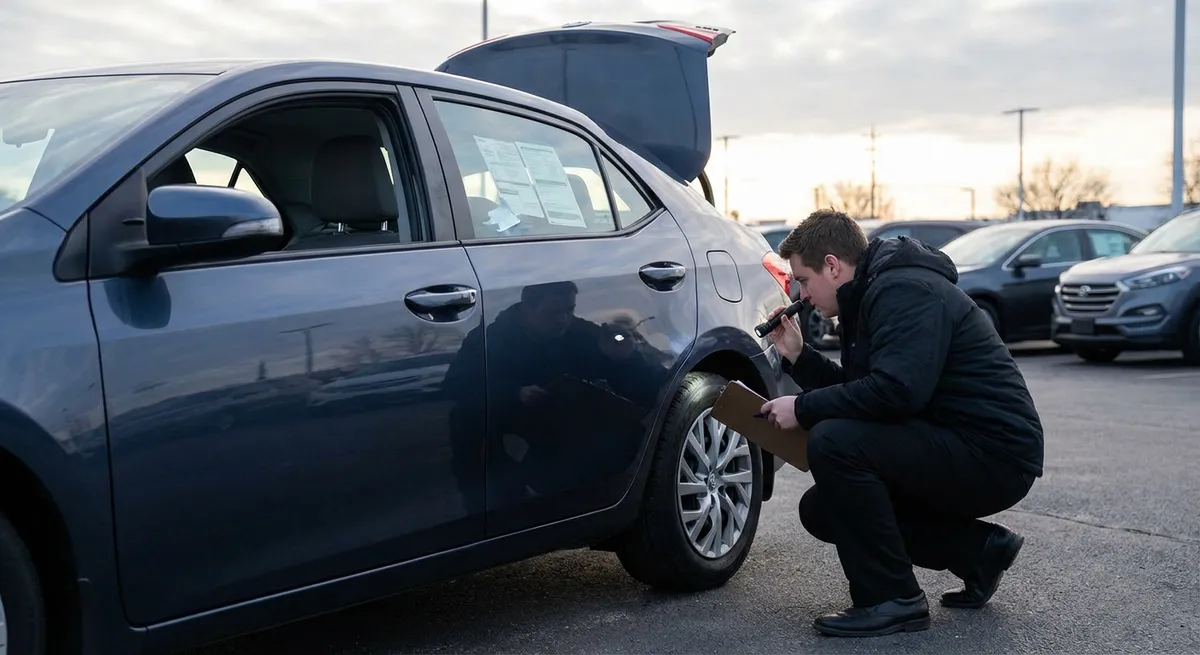
Even if a used car looks spotless and drives well, there’s a lot you can’t see from the driver’s seat. A pre-purchase inspection (PPI) by a trusted, independent mechanic is one of the highest-value steps you can take—especially for out-of-warranty vehicles.
Arrange an inspection with a shop that specializes in the brand or type of car you’re buying. They’ll put the vehicle on a lift, scan for fault codes, check for hidden accident damage, look for fluid leaks, and evaluate wear items like brakes, tires, and suspension components. Ask for a written report and use it in two ways: to decide whether you should buy at all, and to renegotiate if issues are found. A car that needs $1,500 in near-term maintenance isn’t necessarily a bad buy—but that cost should be reflected in the final price. If the seller refuses a reasonable inspection or insists you use “their guy” only, treat that as a red flag. The cost of a PPI is small compared with discovering a transmission problem or structural rust after you’ve already signed.
Read the Contract Line by Line—Then Strip the Extras
By the time you reach the finance office, you may be tired and eager to get it over with. That’s exactly when expensive add-ons slip into your contract. Protect yourself by assuming every line that isn’t required by law or lender needs justification.
Go through the buyer’s order and finance documents slowly. Look for items like paint protection, nitrogen tire fills, VIN etching, fabric guard, “loyalty” packages, or vague fees that don’t clearly tie to tax, title, or registration. Many of these add minimal real-world value but carry big markups. Ask what each fee is, whether it’s mandatory, and whether it can be removed. If you want an extended warranty or service contract, get the details in writing: what’s covered, what’s excluded, deductible amounts, and claim process. You can often buy similar coverage later or from third parties at lower cost, so don’t feel pressured to decide on the spot. If the numbers don’t match what you agreed on or the pressure gets heavy, you can always pause, take the contract home to review, or walk away. The deal is only real when the paperwork matches your understanding.
Conclusion
Smart car buying isn’t about winning a battle with a salesperson; it’s about controlling what you can: your research, your test drive, your inspection, and your contract. When you focus on total ownership cost, drive the car like you’ll actually use it, anchor your negotiations in data, get an independent inspection, and clean up the paperwork before you sign, you turn a stressful, high-stakes decision into a controlled process. The car may be new to you, but the traps are very old—and now you know how to step around them.
Sources
- Consumer Reports – Car Buying & Pricing - Independent guidance on pricing, negotiating, reliability, and total cost of ownership
- Edmunds – True Cost to Own - Ownership cost calculator that estimates depreciation, taxes, fees, fuel, insurance, and maintenance
- National Highway Traffic Safety Administration (NHTSA) – Vehicle History & Recalls - Official database for checking open recalls and safety issues by VIN
- Federal Trade Commission – Buying a Used Car - U.S. government advice on inspections, contracts, and avoiding common used-car pitfalls
- Insurance Information Institute – Auto Insurance Basics - Explains how vehicle choice affects insurance costs and what factors impact premiums