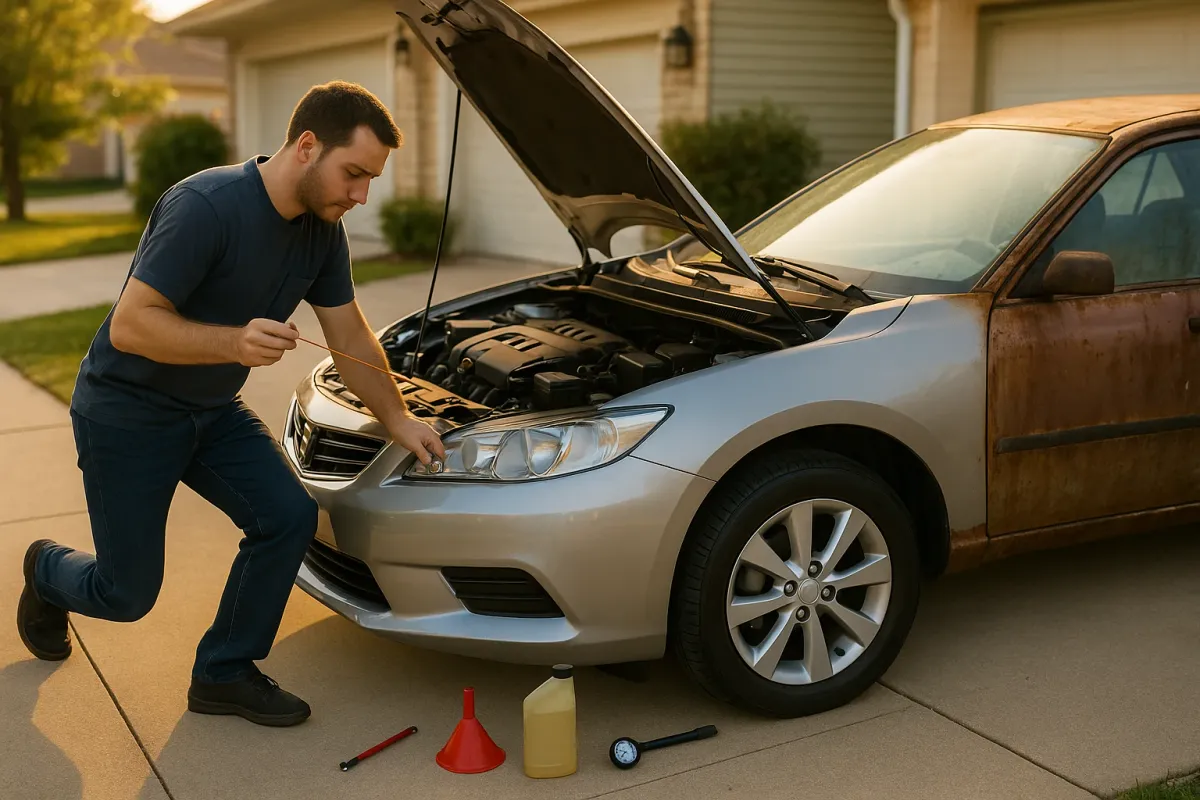
The good news: you don’t need a shop full of tools or a mechanic’s certification to keep your car out of the “maintenance from hell” category. Focusing on a few precise, repeatable habits will save you money, keep your car safer, and make every drive feel better.
Below are five practical, detail-focused maintenance routines you can start this week.
1. Treat Tire Pressure Like Your Car’s “Font Size” — Check It Monthly
Tire pressure is the “spacing” of your car’s contact with the road. Too low or too high and everything behaves strangely—just like mis‑spaced text.
- Check at least once a month and before long trips. Use a digital gauge; gas station gauges are often beaten up and inaccurate.
- Use the pressure on the driver’s door jamb, not the sidewall. The door sticker is what your suspension and stability systems were designed around.
- Check when the tires are cold. Driving even a few miles can raise readings 2–4 psi. Aim for a morning check before you’ve gone anywhere.
- Watch for uneven wear. More wear in the center usually means over‑inflation; more on the edges often means under‑inflation or alignment issues.
- Why it matters now: With winter in full swing in many regions, cold air drops tire pressure—often 1 psi per 10°F. That can quietly push you into under‑inflated territory, hurting grip on wet/icy roads and increasing stopping distance.
Action: Set a recurring calendar reminder once a month labeled “Check tire pressure,” and keep a $15 digital gauge in your glove box.
2. Stop Doing “Cursed” Oil Changes — Match Oil, Interval, and Driving Style
Oil is where small mistakes really add up. The wrong viscosity, cheap filters, or stretched intervals can turn into sludge, timing chain wear, or turbo failure years earlier than necessary.
- Start with the manual, then be honest about your driving. The manufacturer gives “normal” and “severe” intervals. Short trips, lots of idling, extreme heat/cold, or heavy loads all count as severe. Most city commuters are closer to severe use than they think.
- Use the correct viscosity and spec. Modern engines (especially from BMW, Mercedes, VW, Hyundai/Kia, Ford EcoBoost, etc.) often require oils that meet specific standards (Dexos, VW 504/507, MB 229.5, etc.). Don’t guess—match the spec exactly.
- Don’t cheap out on filters. A quality filter (OEM or a reputable brand) protects better, especially at cold start when most wear happens. Bargain-bin filters can bypass or collapse internally.
- Track it in miles and months. Even if you don’t hit the mileage, change oil at least once a year; moisture and fuel dilution build up over time, especially in cars that do lots of short trips.
- Why it matters now: With more people holding onto cars longer because of higher new-vehicle prices and financing costs, long‑term engine health is becoming a real financial issue. Good oil discipline is the cheapest way to push your engine well past 150–200k miles.
Action: Create a simple note in your phone with: last oil change date, mileage, oil type/viscosity, and filter brand. Update it every service.
3. Battery Hygiene: Keep Your Electrical System Out of “Listing From Hell” Territory
Online, a bad photo can tank a real estate listing. Under your hood, a “bad picture” is a corroded, weak battery that makes everything else worse—cranky starts, random warning lights, even transmission or ABS weirdness.
- Know your battery’s age. Most last 3–5 years. The date code is usually stamped or stickered on top or on the side (format varies by brand). If you’re past year four in a harsh climate, plan ahead instead of waiting for a no‑start.
- Check for corrosion quarterly. White, green, or blue crust on terminals adds resistance. If you’re comfortable, disconnect (negative first), clean with a battery brush and a baking‑soda-and-water solution, dry, and reinstall (positive first).
- Watch for slow cranks and flickering lights. These early signs of a tired battery often appear before the outright failure that strands you in a cold parking lot.
- If you have an EV or hybrid, don’t ignore the 12‑volt system. Even cars with big high‑voltage packs still rely on a small 12‑volt battery for control systems. Many late-model EVs from brands like Tesla, Hyundai, and VW log 12‑volt issues before they become hard failures; check your app or service menu periodically.
- Why it matters now: As cars pack in more electronics, from advanced driver-assistance to giant touchscreens, borderline battery voltage is causing more strange behavior than ever. A healthy battery prevents hours of pointless diagnostics.
Action: Next time you’re in for any service, ask for a printed battery health test and note the “state of health” percentage and cold-cranking amps in your records.
4. Fluids Are Your Car’s “Micro‑Copy” — Ignore the Fine Print and You Pay Later
Just like subtle wording changes can completely shift the meaning of a sentence, small differences in fluid types can make or break components like transmissions and cooling systems.
- Coolant: Don’t mix types unless you’re absolutely sure they’re compatible. Many modern cars (Toyota, Honda, VW/Audi, BMW, Hyundai/Kia) use specific long‑life formulas. Topping with “universal green” can shorten life or create deposits.
- Transmissions: Modern automatics, DCTs, and CVTs often require proprietary fluids. Using “close enough” fluid is a fast track to harsh shifts or premature failure that shows up years later. Always match the exact spec number in the manual.
- Brake fluid: Hygroscopic (absorbs water) by design. Most manufacturers recommend changing every 2–3 years. Fresh fluid improves pedal feel and protects ABS components from internal corrosion.
- Power steering and differentials: Often ignored until there’s a problem. Check the service schedule; some units have specific intervals, especially on trucks and performance cars.
- Why it matters now: As drivetrains get more specialized and complex, manufacturers are quietly tightening fluid specs. Cutting corners might not break anything today—but it can become a four‑figure repair once the car is out of warranty.
Action: Open your owner’s manual (or the official PDF online) and make a list of every fluid and its change interval. Keep that list with your maintenance records.
5. Seasonal “Walk‑Around”s: Catch Issues Before They Go Viral In Your Wallet
The same way designers proof layouts before publishing, you should be proof‑checking your car at least four times a year. It takes 10–15 minutes and can save you from dangerous or expensive surprises.
Do this at the start of each season:
- Lights: Turn on headlights, high beams, fogs, hazards, brake lights, and reverse lights. Walk around and confirm everything works. Replace bulbs in pairs when possible; consider LED upgrades where legal.
- Wipers and washer fluid: If the blades streak or chatter, replace them. Top up washer fluid with a winter-grade mix in cold climates to avoid frozen nozzles.
- Tires and alignment: Beyond pressure, look for sidewall bubbles, cuts, or cords showing. If the steering wheel is off-center or the car drifts, schedule an alignment before it eats your tires.
- Leaks and smells: Look under the car after it’s been parked overnight. Fresh spots of coolant (usually green/pink/orange), oil (brown/black), or fuel need prompt attention. A strong fuel smell or sweet coolant odor inside the cabin is an immediate safety concern.
- Undercarriage rinse (especially now): In snowy areas, road salt builds up quickly in winter and early spring. Run through a car wash with an underbody spray or use a hose to rinse the underside and wheel wells to slow rust.
Action: Tie your walk‑around to something you already do—first weekend of every new season, or the day you change clocks for daylight saving—so it becomes automatic.
Conclusion
The viral “cursed spacing” images making the rounds online are a reminder that tiny details can have huge consequences. Cars are the same: it’s rarely one big disaster that kills them, but a slow drip of overlooked maintenance choices—wrong fluids, low tire pressure, a tired battery, never‑changed brake fluid.
If you focus on:
- Monthly tire checks
- Honest, spec‑correct oil changes
- Basic battery care
- Matching the right fluids to the right systems
- A quick seasonal walk‑around
you’ll keep your car out of the “maintenance horror story” category and in the reliable, enjoyable, ready‑for-anything lane. Share this with a friend who’s great at driving but terrible at maintenance—one or two of these habits might quietly save them thousands.